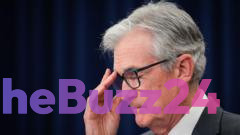
Federal Reserve Maintains Interest Rates Amid Political Transition and Economic Headwinds
The Federal Reserve has officially decided to hold interest rates steady within the 3.5% to 3.75% range. This decision reflects a cautious stance as the central bank balances persistent inflationary pressures—which reached 3.3% in March—against a backdrop of global geopolitical instability, specifically the ongoing conflict between the United States and Iran. Rising energy costs have further complicated the economic landscape, prompting officials to adopt a wait-and-see approach regarding future monetary policy adjustments.
Amid these economic challenges, a significant leadership transition is underway at the central bank. Jerome Powell, who is concluding his tenure as chair, has confirmed his intention to remain on the Federal Reserve Board of Governors until 2028. Powell stated that he will not step down until current administrative investigations into his conduct and the bank’s operations reach a conclusion. He has publicly expressed concern regarding the impact of these legal challenges, warning that they could undermine the institution’s independence and its ability to manage monetary policy without political influence.
Meanwhile, the path for Kevin Warsh to assume the role of chair has become increasingly clear. Following the Department of Justice’s decision to drop its probe into Powell, legislative obstacles have been removed, allowing the Senate Banking Committee to move forward with Warsh’s nomination. With a full Senate vote expected to be a formality, Warsh is positioned to take leadership by mid-May. Powell has sought to reassure markets by pledging to maintain a low profile during the handover, explicitly denying any intention to act as a shadow chair during the remainder of his term on the board.
Key Takeaways
- The Federal Reserve has kept interest rates unchanged at 3.5% to 3.75% due to inflationary concerns and geopolitical tensions.
- Jerome Powell plans to remain on the Board of Governors until 2028 despite ongoing political and legal scrutiny.
- Kevin Warsh is expected to be confirmed as the new Federal Reserve Chair by mid-May following the resolution of recent investigations.
Editor’s Analysis & Impact
The Federal Reserve’s decision to hold rates steady underscores the delicate balancing act required when domestic economic indicators, such as 3.3% inflation, collide with external geopolitical shocks like the US-Iran conflict. The transition of power from Jerome Powell to Kevin Warsh represents a pivotal moment for the institution’s perceived independence. Markets are likely to react favorably to the removal of legal uncertainty surrounding the leadership change, as stability is paramount for investor confidence. However, the broader implication remains the tension between political oversight and central bank autonomy. As Warsh takes the helm, his primary challenge will be navigating the ‘wait and see’ policy while managing the fallout of rising energy costs and the potential for long-term institutional friction caused by the recent investigations into the Fed’s operations.
Frequently Asked Questions
Q: What is the current interest rate range set by the Federal Reserve?
A: The Federal Reserve has maintained interest rates between 3.5% and 3.75%.
Q: Will Jerome Powell leave the Federal Reserve entirely after his term as chair ends?
A: No, Jerome Powell has stated he intends to remain on the Federal Reserve Board of Governors until 2028.
Q: When is Kevin Warsh expected to take over as the new chair?
A: Kevin Warsh is expected to take the helm by mid-May, following the expected confirmation by the full Senate.
AI Disclosure: This article is based on verified data and official reports. Our Team and AI have cross-referenced every financial detail with primary sources to ensure total accuracy.
More from this Category