Fragile Peace in Lebanon as US-Iran Truce Leaves Key Geopolitical Questions Unresolved
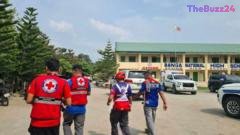
Following the announcement of a landmark ceasefire agreement between the United States and Iran, a tentative and fragile quiet has settled over Lebanon. Despite official warnings regarding safety hazards, displaced families have begun returning to their devastated communities in southern Lebanon. The truce, brokered with mediation from Pakistan, aims to halt the intense hostilities that have ravaged the region, though local residents remain deeply skeptical about whether the cessation of violence will hold.
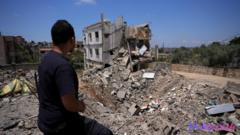
The conflict, which escalated dramatically in March following the assassination of Iranian Supreme Leader Ayatollah Ali Khamenei, has resulted in a catastrophic humanitarian crisis. According to Lebanese health authorities, more than 3,800 people have lost their lives, and approximately one million individuals remain displaced. On the military front, Israel reports having neutralized over 2,500 Hezbollah fighters, while sustaining casualties of 30 soldiers and four civilians. Despite the declared truce, Israeli armored units remain positioned in several southern villages, highlighting the precarious nature of the current peace.
Significant geopolitical hurdles persist as the details of the US-Iran agreement remain largely undisclosed. While Iran insisted on including Lebanon in the ceasefire to protect its ally Hezbollah and maintain regional influence, Israel has expressed reluctance to halt its operations. Israeli Defence Minister Israel Katz recently asserted that Israeli forces intend to maintain an indefinite presence in seized southern Lebanese territories to establish a secure buffer zone. This ongoing occupation of roughly five percent of Lebanese territory, coupled with the massive destruction of dozens of villages, leaves critical questions regarding reconstruction funding and long-term stability unanswered.
Furthermore, the future of Hezbollah’s extensive arsenal remains a highly contentious issue. While domestic critics in Lebanon accuse the group of dragging the nation into proxy conflicts for Tehran, Hezbollah has firmly rejected any immediate discussions regarding disarmament. Lebanese authorities maintain that any disarmament must occur through diplomatic channels, a prospect that appears distant. With memories of previous failed ceasefires still fresh, the path to a permanent peace remains fraught with complexity and mutual distrust.
Key Takeaways
- A US-Iran brokered ceasefire has brought a fragile quiet to Lebanon, prompting displaced residents to return despite safety warnings.
- The conflict has left over 3,800 dead in Lebanon and displaced one million people, with massive destruction across southern villages.
- Major unresolved issues remain, including Israel's ongoing occupation of southern Lebanese territory and Hezbollah's refusal to disarm.
Editor’s Analysis & Impact
The US-Iran ceasefire represents a significant diplomatic shift, but its long-term viability in Lebanon is highly questionable. By tying the Lebanese conflict to broader US-Iran negotiations, the deal temporarily cools regional tensions but fails to address the structural drivers of the Israel-Hezbollah conflict. Israel’s insistence on maintaining a security zone in southern Lebanon and Hezbollah’s refusal to disarm create a volatile status quo. For international markets, particularly energy and shipping, this truce offers temporary relief from fears of a wider Middle Eastern escalation. However, without a clear framework for Lebanese reconstruction, the withdrawal of Israeli forces, and the integration of Hezbollah into a state-controlled security apparatus, this “fragile quiet” is likely a temporary pause rather than a permanent resolution.
Frequently Asked Questions
Q: Why are Lebanese residents skeptical about the ceasefire?
A: Residents are skeptical because previous ceasefire agreements failed to bring lasting peace, and Israeli military forces remain positioned inside southern Lebanese territory.
Q: What are the main obstacles to long-term peace under this agreement?
A: Key obstacles include Israel's declared intention to maintain an indefinite military presence in seized southern Lebanese land and Hezbollah's refusal to negotiate the disarmament of its arsenal.
Q: How has the conflict impacted the population of Lebanon?
A: The conflict has been devastating, resulting in over 3,800 deaths, the displacement of approximately one million people, and the destruction of dozens of villages in the south.
AI Disclosure: This article is based on verified data and official reports. Our Team and AI have cross-referenced every financial detail with primary sources to ensure total accuracy.
More from this Category