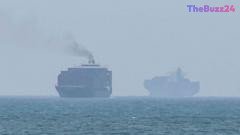
Fragile Progress: Oman and Iran Discuss Hormuz Shipping Route Amid Standoff
Oman has reported constructive discussions with Iran aimed at establishing a secure shipping corridor through the strategically vital Strait of Hormuz. While both nations indicated progress in talks, Tehran has cautioned that any agreement would not lead to an immediate, unconditional reopening of the waterway, which has been effectively blockaded since February following actions by the United States and Israel. The Strait of Hormuz is a critical global chokepoint, through which approximately one-fifth of the world’s oil and natural gas typically transits.
Iranian Foreign Minister Abbas Araghchi confirmed that negotiations were nearing their conclusion, but stressed that the full resumption of traffic remained contingent on “other conditions.” Elaborating on these demands, Iran’s security chief, Mohammad Baqer Zolqadr, stated that the strait would not reopen until the U.S. “corrects” its behavior. This includes meeting six specific Iranian demands, such as an end to threats against Iran, the removal of the U.S. naval blockade on Iranian ports, and the unfreezing of Iranian assets. Additionally, Tehran is seeking compensation from the U.S. for alleged violations of a Memorandum of Understanding signed in June, which quickly collapsed.
The U.S. perspective on the negotiations has been mixed. President Donald Trump expressed optimism for a swift resolution, while Vice-President JD Vance adopted a more cautious tone, emphasizing that significant work remains despite progress. Vance affirmed that the U.S. is employing a comprehensive array of diplomatic, economic, and military tools to secure a favorable outcome. He also addressed earlier reports suggesting Iran might impose a toll of 5-7% on vessels transiting the strait, stating that Iranian officials have denied any such plans and that the focus is on establishing a safe “traffic scheme” for ships.
Despite the ongoing diplomatic efforts, the region remains volatile. The United Arab Emirates reported that an Iranian missile struck an Adnoc-affiliated tanker as it passed through the strait, though no casualties were reported. Separately, the UK Maritime Trade Operations agency documented a vessel being hit by an “unknown projectile” off the coast of Oman, resulting in a fire that was subsequently extinguished, also without casualties. It remains unclear if these two incidents refer to the same event, but they underscore the persistent security challenges in the critical maritime route.
Key Takeaways
- Oman and Iran are engaged in advanced talks to secure a shipping route through the Strait of Hormuz, a vital global waterway for oil and gas.
- Iran has set stringent conditions for the full reopening of the strait, including demands for U.S. compensation and a change in U.S. policy, following a previous failed agreement.
- The region continues to experience instability, with recent reports of attacks on tankers highlighting ongoing security concerns amidst diplomatic efforts.
Editor’s Analysis & Impact
The ongoing negotiations over the Strait of Hormuz are a critical barometer for global energy markets and international trade. Continued uncertainty or blockades in this vital chokepoint could lead to significant volatility in oil and gas prices, impacting supply chains and energy-dependent economies worldwide. Shipping insurance premiums are likely to remain elevated, adding to operational costs for maritime transport.
The future outlook for a stable resolution appears complex and protracted. Iran’s firm conditions, rooted in historical grievances and a failed prior agreement, suggest that a quick and easy solution is unlikely. A full, stable reopening requires substantial trust-building and concessions from all parties involved, which is challenging given the current geopolitical climate. The recent reports of attacks on tankers further underscore the fragility of the situation and the potential for rapid escalation.
Broader implications include the continued demonstration of the vulnerability of international maritime security and the strategic importance of such choke points. The outcome of these talks will set precedents for how future disputes over vital trade routes are managed, reflecting the ongoing power dynamics and challenges of de-escalation in the Middle East.
Frequently Asked Questions
Q: What is the Strait of Hormuz and why is it important?
A: The Strait of Hormuz is a narrow waterway connecting the Persian Gulf to the Arabian Sea and the open ocean. It is critically important because approximately one-fifth of the world's oil and natural gas passes through it, making it a vital chokepoint for global energy supplies and international trade.
Q: What are Iran's main conditions for fully reopening the Strait of Hormuz?
A: Iran's conditions include receiving compensation from the United States for alleged violations of a previous agreement, a halt to U.S. threats against Iran, the removal of the U.S. naval blockade on Iranian ports, and the release of Iran's frozen assets.
Q: Have there been recent security incidents in the Strait of Hormuz?
A: Yes, recent reports indicate continued instability. The UAE reported an Iranian missile attack on an Adnoc-affiliated tanker, and the UK Maritime Trade Operations agency reported a separate incident of a ship being struck by an unknown projectile off the coast of Oman, causing a fire. It is unclear if these incidents refer to the same event.
AI Disclosure: This article is based on verified data and official reports. Our Team and AI have cross-referenced every financial detail with primary sources to ensure total accuracy.
More from this Category