From 1936 Gallows to Digital Streams: The Resurgence of Public Executions in the US Sparks Fierce Debate
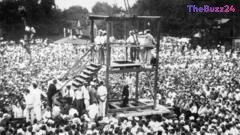
Nearly nine decades after public executions were discarded as remnants of a bygone era, the United States faces a startling revival of state-sanctioned spectacles. In August 1936, an estimated 20,000 spectators gathered in Owensboro, Kentucky, to witness the hanging of Rainey Bethea, an event that devolved into a chaotic carnival atmosphere with vendor stands and revelry. The national backlash against the undignified circus prompted state officials to outlaw public hangings shortly thereafter, marking the effective conclusion of broadly publicized capital punishment in modern American history.
That historical consensus is now being disrupted by recent federal directives. US Secretary of Defense Pete Hegseth announced plans to execute Nidal Hasan—the former Army major convicted of killing 13 people during the 2009 Fort Hood mass shooting—and make the proceedings viewable via a public livestream. Proponents argue that broadcasting the execution delivers a stern message of accountability and severe consequences for acts of terror. President Donald Trump has voiced approval for the broadcast, reaffirming that the death penalty serves as appropriate retribution.
However, legal scholars, civil rights advocates, and religious leaders have expressed deep alarm over the transition of capital punishment into broadcast entertainment. Academics point out that overall domestic support for the death penalty has steadily declined over recent decades, with public approval falling from roughly 80 percent in the mid-1990s to near 52 percent today. Critics warn that televising an execution normalizes state violence and mirrors authoritarian practices rather than modern democratic standards, rekindling ethical dilemmas that lawmakers believed had been resolved in the 20th century.
While high-ranking officials remain divided—with figures like Vice President JD Vance signaling they will decline to watch—the impending broadcast sets a profound legal and cultural precedent. Rather than deterring crime, opponents contend that turning lethal punishment into a mass digital spectacle risks desensitizing society to violence and degrading foundational human rights norms.
Key Takeaways
- The US Department of Defense announced plans to publicly livestream the execution of Fort Hood shooter Nidal Hasan, ending a nearly 90-year absence of public executions.
- The last major public execution in America occurred in 1936 in Kentucky, drawing widespread criticism for its carnival-like atmosphere and prompting legal reforms.
- Scholars and religious leaders caution that broadcasting lethal punishment risks turning executions into entertainment amid declining nationwide support for the death penalty.
Editor’s Analysis & Impact
The decision to broadcast an execution over digital platforms represents a radical departure from nearly a century of jurisprudence aimed at making capital punishment clinical and private. From a policy perspective, this shift challenges the evolving standards of decency that federal courts frequently use to evaluate Eighth Amendment claims regarding cruel and unusual punishment. While the administration seeks to project uncompromising deterrence and retribution, the legal fallout is expected to be swift, likely triggering intense constitutional challenges regarding prisoners’ privacy, governmental overreach, and media ethics. Culturally, broadcasting lethal actions across internet platforms risks inflaming ideological polarization and further diminishing America’s diplomatic standing on human rights issues relative to international peers.
Frequently Asked Questions
Q: When was the last public execution carried out in the United States?
A: The last high-profile public execution took place on August 14, 1936, in Owensboro, Kentucky, when Rainey Bethea was hanged before a crowd of roughly 20,000 people. A lesser-known public hanging followed in Missouri in 1937 before states moved executions behind closed prison walls.
Q: Who is Nidal Hasan and why is he facing execution?
A: Nidal Hasan is a former US Army psychiatrist who fatally shot 13 unarmed military personnel and wounded more than 30 others at Fort Hood, Texas, in November 2009. He was sentenced to death by a military court in 2013.
Q: How has public opinion on capital punishment changed over time?
A: Support for capital punishment in the United States has dropped significantly over the past three decades, declining from roughly 80 percent in 1994 to just over 50 percent in recent nationwide surveys, especially when alternatives like life imprisonment without parole are presented.
AI Disclosure: This article is based on verified data and official reports. Our Team and AI have cross-referenced every financial detail with primary sources to ensure total accuracy.
More from this Category