Thea Energy Secures $100 Million to Accelerate Commercial Fusion Power
Thea Energy has successfully closed an oversubscribed $100 million Series B funding round, marking a pivotal advancement in the global pursuit of commercial fusion energy. This latest investment, led by the U.S. Innovative Technology Fund, brings the company’s total private funding to $130 million. The capital is designated for scaling the manufacturing of the firm’s proprietary magnet technology and launching the construction of Eos, a demonstration reactor slated for development beginning next year.
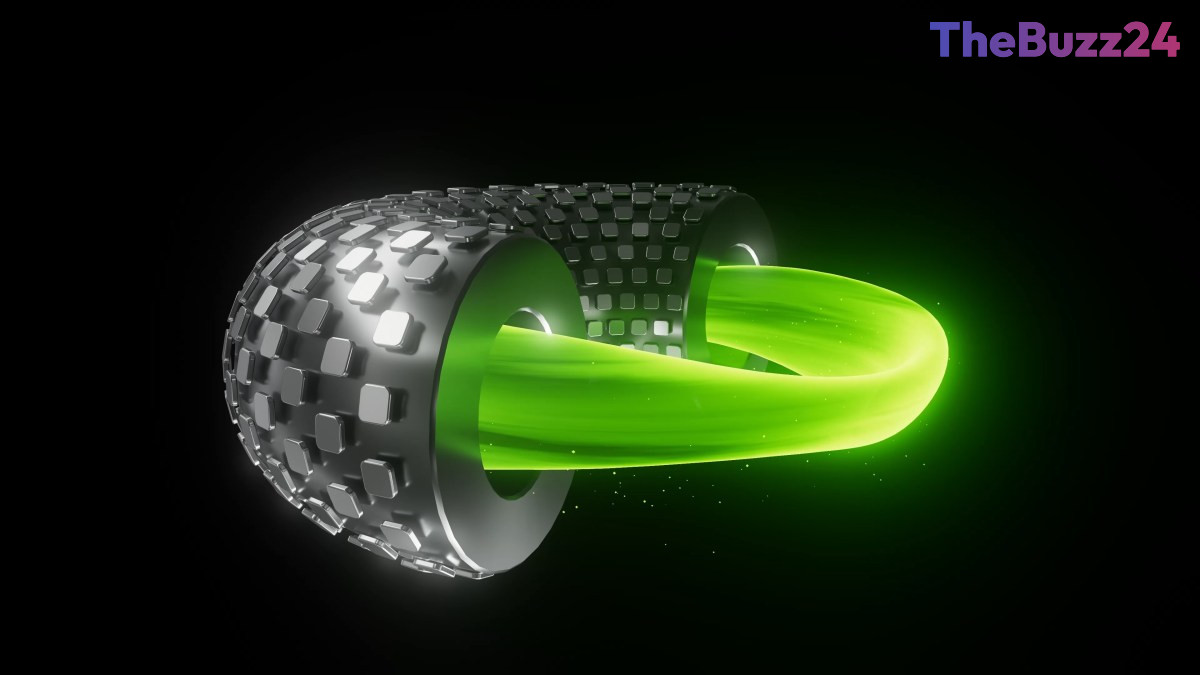
Central to Thea Energy’s innovation is a modular approach to stellarator design. While traditional fusion reactors, such as tokamaks, rely on massive, rigid structures to confine plasma, Thea employs a system of smaller, tunable magnets. These components act similarly to pixels on a digital screen, allowing advanced software to dynamically shape the magnetic fields necessary for plasma stability. This design philosophy is intended to bypass the extreme manufacturing complexities and high costs that have historically hindered stellarator development.
By leveraging software to compensate for physical alignment variations, the company expects to reduce the need for the specialized, large-scale assembly facilities required by many of its industry peers. Having already validated full-scale magnet prototypes at its Jersey City facility, Thea Energy is maintaining an aggressive development schedule. The company aims to complete its Eos demonstration device by 2030, with a roadmap to deploy a commercial-scale reactor, known as Helios, by 2034.
The funding round attracted a diverse group of investors, including General Innovation Capital Partners, Linse Capital, and several others, signaling strong market confidence in the company’s unique architectural approach. As the fusion sector evolves, Thea Energy’s focus on modularity and software-defined control positions it as a significant contender in the transition toward sustainable, carbon-free energy.
Key Takeaways
- Thea Energy raised $100 million in Series B funding, bringing its total investment to $130 million to advance fusion reactor technology.
- The company uses a modular, software-controlled magnet system to stabilize plasma, aiming to simplify the manufacturing process compared to traditional tokamak designs.
- The firm plans to complete its Eos demonstration reactor by 2030, followed by a commercial-scale Helios reactor by 2034.
Editor’s Analysis & Impact
The fusion energy sector is currently experiencing a surge in private capital as startups move from theoretical physics to engineering-heavy development phases. Thea Energy’s modular approach represents a shift toward ‘software-defined’ hardware, which is a critical trend in reducing the capital expenditure (CapEx) associated with fusion infrastructure. By moving away from the monolithic, high-precision manufacturing required by traditional stellarators, the company is addressing the primary barrier to commercial viability: cost and scalability. If successful, this modular strategy could significantly shorten the timeline for fusion to enter the energy grid. However, the company faces stiff competition from established tokamak-based projects and must prove that its software-controlled magnets can maintain plasma stability at the extreme temperatures required for net-energy gain. The next five years will be decisive as the company transitions from laboratory testing to the construction of the Eos demonstration device.
Frequently Asked Questions
Q: How does Thea Energy’s reactor design differ from traditional fusion reactors?
A: Unlike traditional tokamaks that use large, rigid magnets, Thea Energy uses a modular system of smaller, tunable magnets controlled by software to shape magnetic fields and stabilize plasma.
Q: What is the timeline for Thea Energy’s reactor development?
A: The company plans to begin construction on its Eos demonstration reactor next year, with a target completion date of 2030, followed by a commercial-scale Helios reactor by 2034.
AI Disclosure: This article is based on verified data and official reports. Our Team and AI have cross-referenced every financial detail with primary sources to ensure total accuracy.
More from this Category