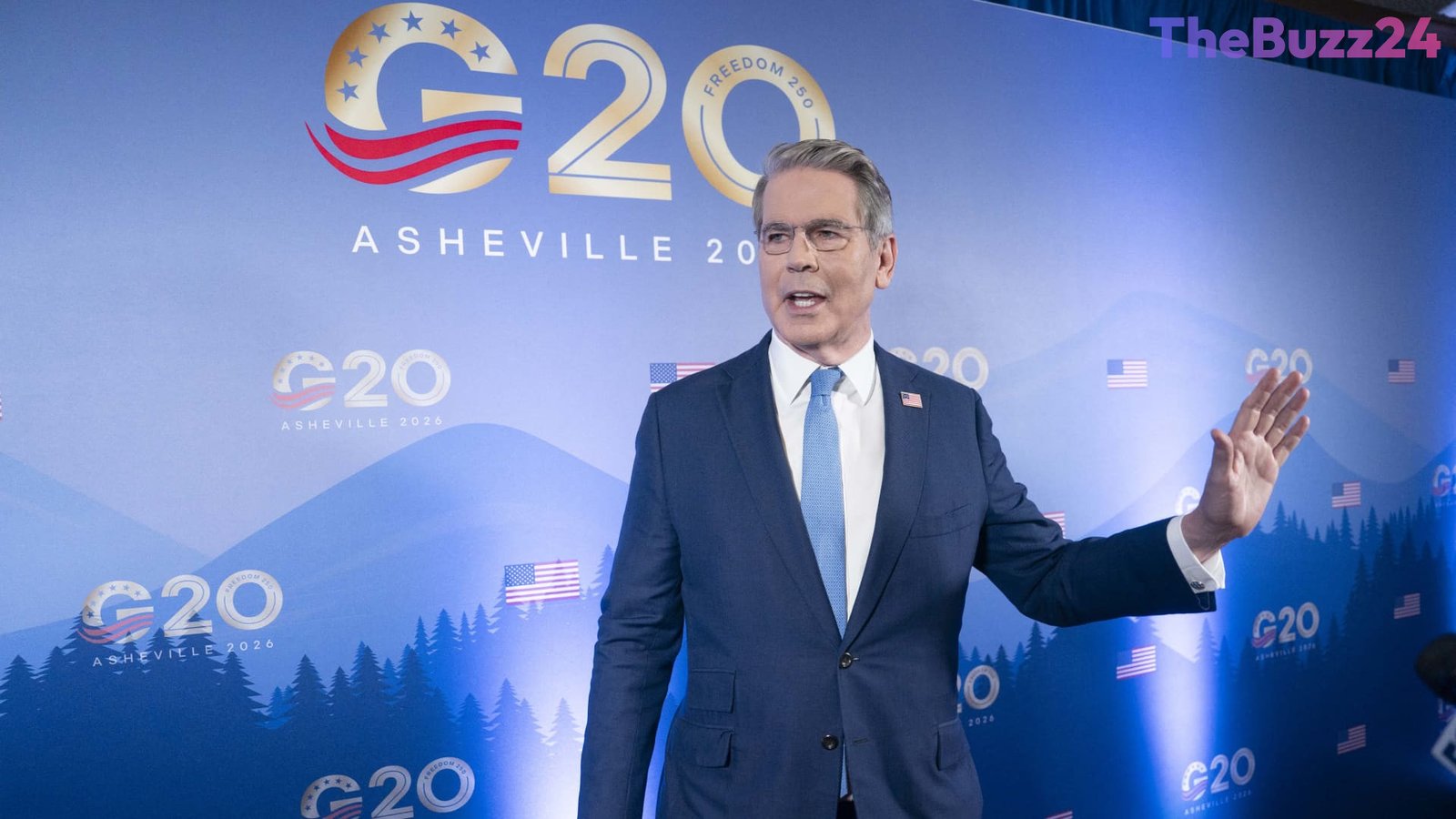
G20 Summit in Asheville: Bessent and Warsh Champion ‘Secular Growth’ Amid Debt and Geopolitical Headwinds
The Group of 20 finance ministers and central bank governors gathered in Asheville, North Carolina, under a unified message of economic expansion. U.S. Treasury Secretary Scott Bessent and Federal Reserve Chairman Kevin Warsh opened the two-day summit by advocating for a growth-first approach to resolve the mounting global debt crisis. Bessent emphasized that the only viable path forward for heavily indebted nations is to stimulate robust economic activity, rejecting the notion of austerity. In a historic first for the G20 finance meetings, the administration integrated prominent private-sector leaders into the discussions, including JPMorgan Chase CEO Jamie Dimon, Goldman Sachs CEO David Solomon, and Eli Lilly CEO Dave Ricks, signaling a deeper collaboration between policymakers and corporate executives.
Federal Reserve Chair Kevin Warsh echoed this optimistic outlook, declaring an end to the era of “secular stagnation”—the academic theory that technological and economic progress had plateaued. Instead, Warsh characterized the current era as one of “secular growth,” fueled by a massive global surge in business investment and technological innovation, particularly in artificial intelligence. Despite this optimism, the summit takes place against a backdrop of significant macroeconomic challenges, including a $40 trillion U.S. national debt, projected multi-trillion-dollar deficits, and persistent inflationary pressures that have kept government bond yields elevated.
Geopolitical strategy also dominated the summit’s sidelines. Bessent highlighted “Operation Economic Outcast,” a U.S.-led initiative aimed at crippling Iran’s economy by targeting its international financial enablers with secondary sanctions. The European Union has formally backed the campaign, which Bessent predicted could push the Iranian economy toward collapse within weeks or months. Additionally, Bessent engaged in bilateral talks with international counterparts, including Chinese central bank Governor Pan Gongsheng and Russian Finance Minister Anton Siluanov, the latter focusing on potential peace frameworks.
On the corporate front, Eli Lilly CEO Dave Ricks discussed the expanding economic footprint of GLP-1 weight-loss and diabetes treatments, noting that the market remains largely untapped with over a billion potential users globally. Ricks also highlighted the company’s aggressive expansion strategy, including a $2.88 billion acquisition of Merida Biosciences to bolster its immunology portfolio. Meanwhile, the summit faced some domestic controversy as the Treasury Department restricted several major national news outlets from attending, drawing criticism over press access and public transparency.
Key Takeaways
- U.S. financial leaders at the G20 summit championed 'secular growth' and a global investment surge as the primary solutions to managing historic sovereign debt levels.
- The U.S. is ramping up international pressure on Iran through 'Operation Economic Outcast,' a secondary sanctions campaign that has secured formal backing from the European Union.
- For the first time, major corporate CEOs from the banking, pharmaceutical, and manufacturing sectors were formally integrated into the G20 finance minister sessions to align public policy with private investment.
Editor’s Analysis & Impact
The G20 summit in Asheville highlights a strategic pivot by U.S. policymakers to leverage private-sector momentum and technological innovation to address a staggering $40 trillion national debt. By framing the current economic climate as one of ‘secular growth’ rather than stagnation, officials are banking on productivity gains—particularly from artificial intelligence and healthcare breakthroughs—to outpace fiscal deficits. However, this optimistic outlook faces immediate structural challenges. Elevated Treasury yields continue to increase the cost of servicing public debt, while aggressive unilateral trade policies and geopolitical maneuvers, such as the economic blockade of Iran, introduce volatility into global markets. While securing EU support for ‘Operation Economic Outcast’ is a diplomatic victory, maintaining long-term stability will require a delicate balance between aggressive domestic growth policies and cooperative international diplomacy.
Frequently Asked Questions
Q: What is 'Operation Economic Outcast'?
A: It is a U.S.-led economic campaign designed to isolate Iran by targeting its global financial enablers with secondary sanctions. The initiative has recently received formal endorsement and support from the European Union.
Q: Why were corporate CEOs invited to this G20 finance meeting?
A: In a first for the G20 finance ministers meeting, the administration invited top business executives to foster direct collaboration between public policymakers and the private sector, focusing on driving investment, productivity, and economic growth.
Q: How do financial leaders plan to address rising government debt?
A: Treasury Secretary Scott Bessent and other officials argue that the most effective way to handle the global debt burden is to 'grow out of it' by reducing regulatory barriers, reforming tax systems, and encouraging private-sector capital expenditure.
AI Disclosure: This article is based on verified data and official reports. Our Team and AI have cross-referenced every financial detail with primary sources to ensure total accuracy.
More from this Category