Desperate Search Underway for Hundreds Trapped in Nepal Hydropower Tunnels After Devastating Floods
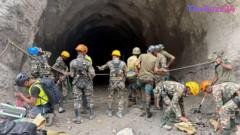
A catastrophic flood disaster along the Nepal-Tibet border has left more than 600 hydropower workers trapped inside a vast network of mud-filled tunnels along the Trishuli River. Rescuers are racing against time, using explosives to blast through massive boulders and pumping oxygen into subterranean sites like the Trishuli-3A project in a desperate bid to keep survivors alive. The overall death toll from the disaster has climbed to 939 in Nepal, with authorities revising the number of missing persons to 3,925, including nearly 600 foreign nationals.
An international coalition of military personnel and experts from Nepal, China, India, Korea, and Australia is leading the grueling rescue effort. While Prime Minister Balendra Shah confirmed that 279 workers have been successfully rescued from various sites, families of those still trapped are growing increasingly frustrated with the pace of the operation. Experts, including Australian engineer Arnold Dix, described the disaster zone as a lunar landscape littered with house-sized boulders, making it incredibly difficult to locate the tunnel entrances. Despite the grim conditions, some hope remains that the underground chambers may have shielded workers from the worst of the deluge.
Hydropower is a cornerstone of Nepal’s economy, and the floods have severely damaged at least 11 completed or under-construction projects, including the Upper Trishuli-1 plant. Prime Minister Shah emphasized that this disaster is a stark warning of the escalating environmental risks in the Himalayan region. He urged the international community to address the intensifying impacts of climate change, which are driving increasingly volatile weather patterns in the high-altitude region.
Downstream in the Chitwan district, local authorities are overwhelmed as hundreds of bodies have washed up on riverbanks. Chief District Officer Ganesh Aryaal explained that due to a lack of refrigeration facilities, workers are conducting temporary burials after extracting DNA samples for future identification. Meanwhile, both Nepalese and Chinese authorities have cracked down on information flow; China has heavily censored footage of the floods in Tibet—where 16 are dead and 546 are missing—and penalized online speculation, while Nepal has ordered the removal of content deemed to be misinformation.
Key Takeaways
- Over 600 hydropower workers remain trapped in mud-filled tunnels along Nepal's Trishuli River following catastrophic floods.
- The disaster has claimed at least 939 lives in Nepal, with nearly 4,000 people still missing, severely impacting at least 11 key hydropower projects.
- An international rescue coalition is utilizing explosives and oxygen pumping to reach survivors, amid warnings from officials about climate change risks in the Himalayas.
Editor’s Analysis & Impact
This disaster highlights the extreme vulnerability of Nepal’s critical infrastructure to climate-induced hazards. Hydropower is central to Nepal’s economic development and energy security goals, with billions invested in mountainous river basins. The destruction of at least 11 projects will not only delay transition targets and cause severe financial strain but also likely increase insurance premiums and deter future foreign investment in Himalayan clean energy. Furthermore, the transboundary nature of the disaster—affecting both Nepal and Tibet—underscores the urgent need for coordinated regional disaster management and early-warning systems. As climate change accelerates glacial melt and intensifies monsoon seasons, engineering standards for high-altitude infrastructure must be radically overhauled to withstand unprecedented geological shocks.
Frequently Asked Questions
Q: Why are rescuers using explosives in the search operation?
A: The floods have triggered massive landslides, depositing house-sized boulders and thick mud over the tunnel entrances. Rescuers must blast through these obstructions to locate and access the subterranean chambers where workers are trapped.
Q: How has this disaster affected Nepal's energy infrastructure?
A: Nepal relies heavily on run-of-the-river hydropower. The floods have damaged at least 11 completed or under-construction hydropower projects along its river systems, representing a major setback for the country's energy sector and economic development.
Q: What measures are being taken downstream to handle casualties?
A: In downstream districts like Chitwan, where hundreds of bodies have washed ashore, overwhelmed local authorities are conducting temporary burials. Before burial, medical teams are extracting DNA samples so that families can identify and claim their loved ones' remains in the future.
AI Disclosure: This article is based on verified data and official reports. Our Team and AI have cross-referenced every financial detail with primary sources to ensure total accuracy.
More from this Category