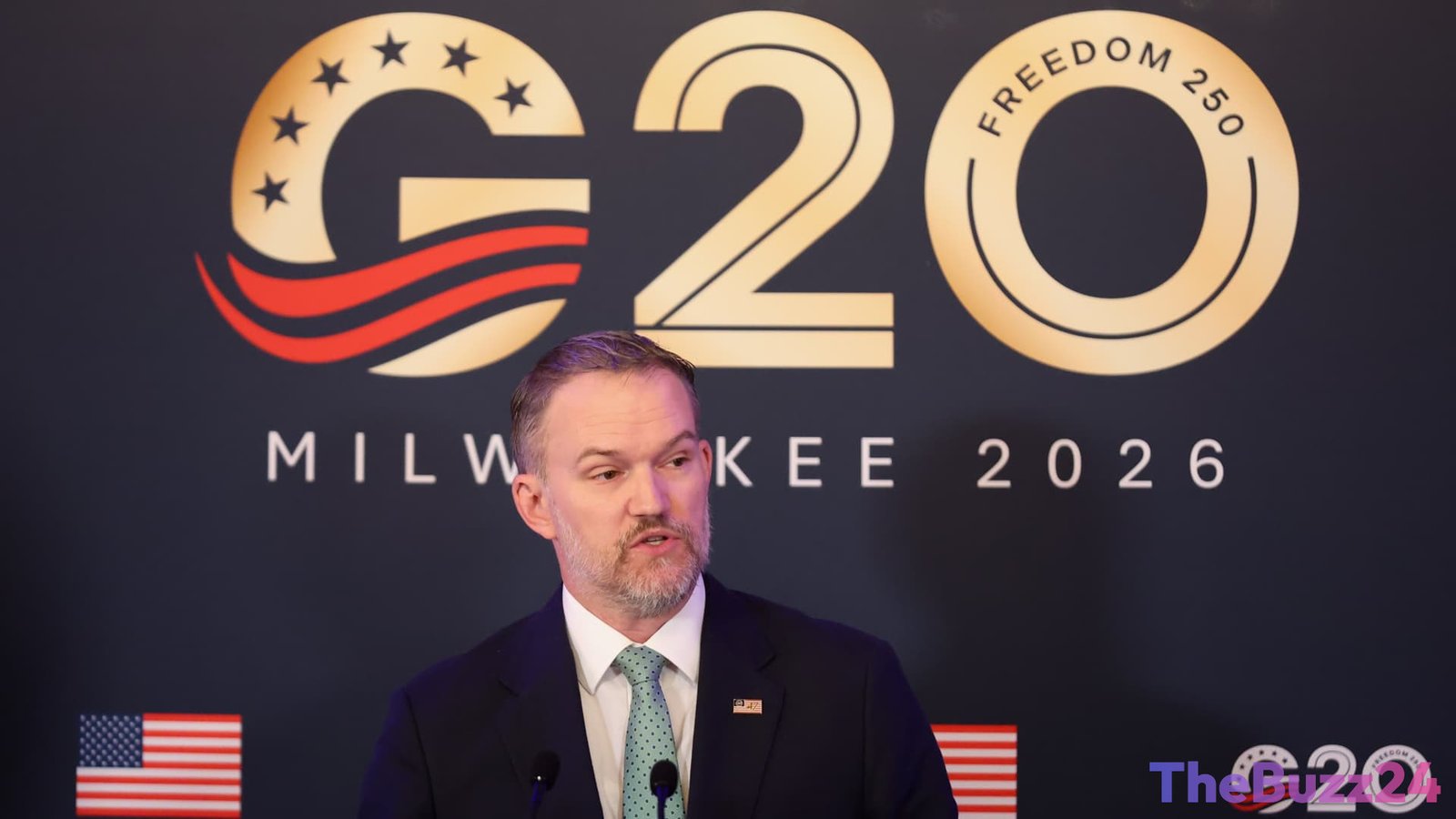
G20 Trade Talks Stumble as Key Nations Reject U.S. Push Against Excess Industrial Capacity
A major rift has emerged within the Group of 20 (G20) as several member nations rejected a United States-led push to crack down on excess industrial capacity and non-market economic policies. During a recent high-level trade summit in Milwaukee, the U.S.—which currently holds the G20 presidency—faced significant pushback, highlighting deep divisions among the world’s largest economies over global trade rules and industrial subsidies.
The friction extended beyond industrial capacity to labor standards. Only Mexico and Argentina agreed to sign a U.S.-backed declaration aimed at purging goods produced with forced labor from global supply chains. This widespread resistance follows aggressive trade maneuvers by the Trump administration, which recently slapped tariffs of 10% to 12.5% on 59 nations and the European Union for alleged failures in enforcing forced labor bans. Furthermore, the U.S. Trade Representative (USTR) is currently pursuing a “Section 301” investigation into 16 trading partners over excess capacity, a move expected to trigger fresh import duties.
While the U.S. did not explicitly name the dissenting nations, China has historically opposed similar initiatives, arguing that Western allegations of “excess capacity” are merely pretexts for protectionism. Despite these sharp disagreements, G20 ministers managed to find common ground on food security. The coalition reached a consensus to condemn the “weaponization” of food trade, agreeing that agricultural goods and inputs must not be used as leverage for geopolitical coercion.
The summit also touched on structural reforms to the global trading system. U.S. Trade Representative Jamieson Greer raised the possibility of reforming the World Trade Organization’s “most favored nation” (MFN) tariff system. Greer argued that non-market economies, particularly China, exploit the MFN principle through heavily subsidized domestic industries. While no joint agreement was reached on the matter, some G20 members expressed openness to exploring exceptions to the historic post-WWII tariff framework.
Key Takeaways
- A majority of G20 nations rejected a U.S. proposal to curb excess industrial capacity and non-market economic policies.
- Only Mexico and Argentina supported a U.S.-led initiative to eliminate forced labor products from global supply chains.
- G20 ministers successfully reached a consensus to condemn the weaponization of food and agricultural trade for geopolitical leverage.
Editor’s Analysis & Impact
The pushback from G20 nations underscores a growing resistance to U.S. economic hegemony and unilateral tariff policies. By failing to secure a broad consensus on excess industrial capacity and forced labor, the U.S. faces uphill battles in aligning global trade standards with its domestic economic agenda. China’s defense against “protectionism” resonates with several developing economies that rely heavily on industrial subsidies for growth. However, the willingness of some G20 members to discuss reforming the World Trade Organization’s “most favored nation” (MFN) status indicates that the post-WWII global trade architecture is under serious pressure. If the U.S. continues to leverage Section 301 investigations and unilateral tariffs, we may see a further fragmentation of global trade, leading to regionalized trade blocs rather than a cohesive global market.
Frequently Asked Questions
Q: Why did G20 nations reject the U.S. proposal on excess capacity?
A: Many nations view the U.S. focus on 'excess capacity' as a protectionist strategy designed to shield domestic industries from foreign competition, particularly from highly subsidized Chinese manufacturing.
Q: What was the consensus reached regarding food trade?
A: G20 trade ministers unanimously condemned the weaponization of food trade, agreeing that agricultural products and inputs should not be blocked or redirected to exert geopolitical pressure.
Q: What is the 'most favored nation' (MFN) principle, and why does the U.S. want to reform it?
A: The MFN principle requires WTO members to offer equal tariff treatment to all other members. The U.S. argues this system is abused by non-market economies like China, which use state subsidies to undercut global competitors while still enjoying low tariff rates.
AI Disclosure: This article is based on verified data and official reports. Our Team and AI have cross-referenced every financial detail with primary sources to ensure total accuracy.
More from this Category