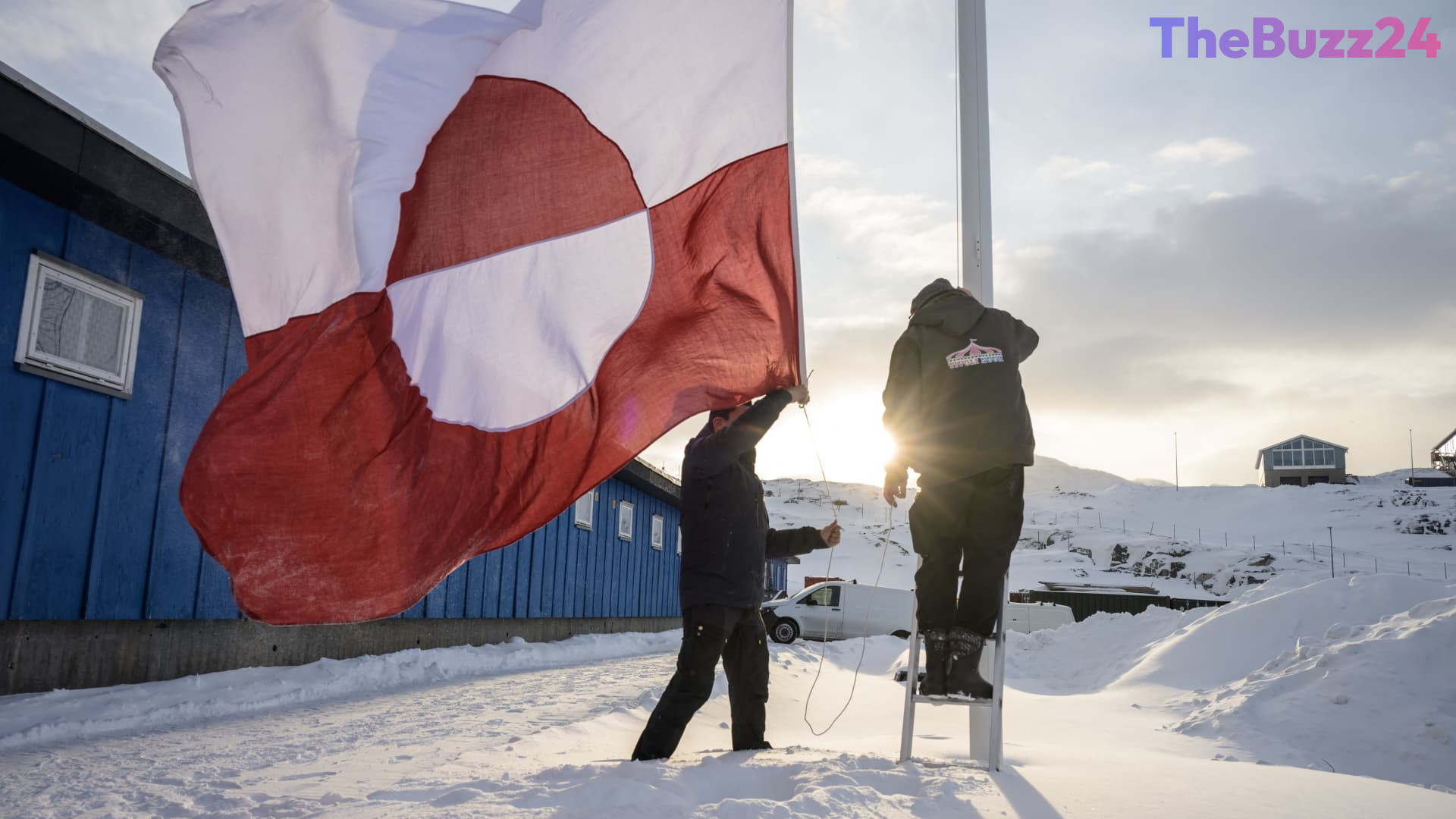
Geopolitical Tensions Rise as U.S. Renews Push for Greenland Sovereignty
The debate over the future of Greenland has intensified as U.S. leadership continues to advocate for American control over the Arctic territory. During recent discussions, it was argued that the island is vital for global security, with claims that the U.S. should have never relinquished its historical influence over the region. The rhetoric has sparked a firm response from Denmark, which maintains that Greenland is a sovereign territory and is not available for acquisition.
Danish Prime Minister Mette Frederiksen has reiterated that her government is committed to defending the territorial integrity of the NATO alliance, including Greenland. Emphasizing the importance of self-determination, Frederiksen stated that the island’s status is non-negotiable and that all allies must respect the sovereignty of the Danish state. This diplomatic friction has been exacerbated by suggestions that the U.S. might reconsider its military commitments in Europe if its strategic goals regarding the Arctic are not met.
Despite the tension, there is a growing recognition among some international leaders regarding the strategic importance of the Arctic. NATO Secretary General Mark Rutte acknowledged that there are legitimate concerns regarding the influence of foreign powers like China and Russia in the region. A trilateral working group involving representatives from the U.S., Denmark, and Greenland is currently tasked with navigating these complex geopolitical interests to prevent the Arctic from becoming a theater for increased adversarial presence.
Key Takeaways
- The U.S. is actively pursuing greater control over Greenland, citing global security and the need to counter Russian and Chinese influence in the Arctic.
- Denmark remains steadfast in its refusal to sell Greenland, emphasizing the island's right to self-determination and the importance of territorial sovereignty within NATO.
- A trilateral working group has been established to address the strategic concerns of the U.S., Denmark, and Greenland while attempting to de-escalate diplomatic tensions.
Editor’s Analysis & Impact
The ongoing dispute over Greenland highlights the shifting strategic value of the Arctic as climate change opens new shipping lanes and resource extraction opportunities. For the U.S., the island represents a critical defensive perimeter against rising powers like China and Russia. However, the aggressive diplomatic approach risks straining the transatlantic alliance, particularly with Denmark, a key NATO partner. The future outlook suggests that while a formal ‘sale’ of the territory is highly improbable due to international law and local sentiment, the region will likely see increased military and economic cooperation. The broader implication is a move toward a more militarized Arctic, where traditional sovereignty is increasingly challenged by the necessity of collective security and the race for regional dominance.
Frequently Asked Questions
Q: Is Greenland for sale?
A: No, the Danish government and Greenlandic officials have consistently maintained that the island is not for sale and that its status as a sovereign territory must be respected.
Q: Why is the U.S. interested in Greenland?
A: The U.S. views Greenland as a critical strategic asset for global security, specifically to monitor and counter the growing influence of Russia and China in the Arctic region.
AI Disclosure: This article is based on verified data and official reports. Our Team and AI have cross-referenced every financial detail with primary sources to ensure total accuracy.
More from this Category