Global AI and Semiconductor Stocks Face Massive $1 Trillion Sell-Off
The global technology sector is currently experiencing a significant downturn, with major artificial intelligence and semiconductor companies shedding over $1 trillion in market value this week. The decline, which has impacted markets across the United States, Europe, and Asia, reflects growing investor anxiety regarding the sustainability of massive capital expenditures in an environment of rising borrowing costs and shifting macroeconomic conditions.
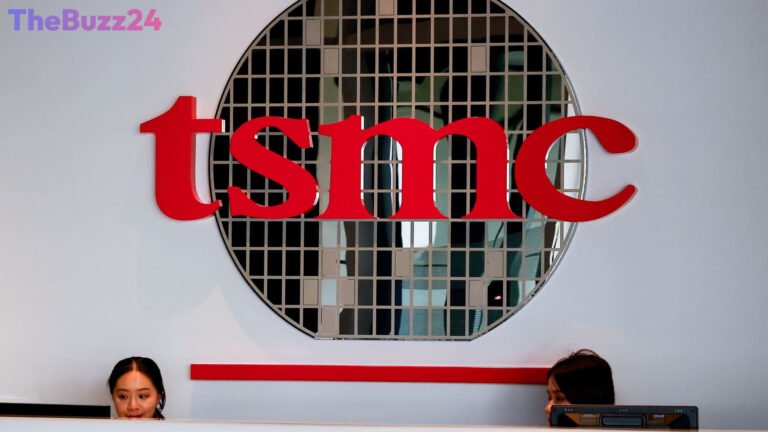
In the United States, industry leaders such as Nvidia, Micron, and AMD saw notable premarket declines, following a broader retreat on Wall Street. The trend is mirrored internationally, with significant losses reported by major players including South Korea’s SK Hynix and Samsung Electronics, Japan’s SoftBank and Tokyo Electron, and European giants like ASML and Infineon Technologies. Taiwan’s TSMC, a critical pillar of the global chip supply chain, also faced downward pressure as the sell-off deepened.
Market analysts suggest that the primary catalyst for this volatility is the rising cost of capital, which threatens to constrain the infrastructure build-out necessary for AI expansion. Beyond interest rate concerns, investors are weighing the potential for long-term memory chip oversupply and intensifying competition from emerging players like China’s CXMT. While some industry leaders have warned that financing could become a more significant hurdle than hardware shortages, others maintain that the underlying demand for AI computing power remains fundamentally strong, suggesting that the current market correction may be driven more by financial logistics than a decline in technological adoption.
Key Takeaways
- Global AI and semiconductor stocks have lost over $1 trillion in market value this week due to widespread investor sell-offs.
- Rising interest rates and the high cost of financing infrastructure projects are cited as primary drivers for the market decline.
- Despite the volatility, analysts suggest that the fundamental demand for AI computing power remains robust, distinguishing this as a financing challenge rather than a demand-side failure.
Editor’s Analysis & Impact
The current market correction in the AI and semiconductor space represents a critical inflection point for the sector. For the past two years, the ‘AI boom’ has been fueled by aggressive capital expenditure and speculative growth. However, as U.S. Treasury yields climb and inflation data remains stubborn, the market is forcing a transition from ‘growth at any cost’ to a more disciplined focus on balance sheets and return on investment. The long-term outlook remains bullish, provided that hyperscalers continue their infrastructure spending. If, however, we see a contraction in capital expenditure plans or a softening in GPU rental prices, it would signal a deeper structural issue. Investors should view this volatility as a necessary recalibration of valuations rather than the end of the AI cycle, though short-term pain is likely to persist as the market tests the limits of current financing models.
Frequently Asked Questions
Q: Why are AI stocks falling despite high demand for technology?
A: The decline is primarily driven by concerns over rising interest rates, which increase the cost of financing the massive infrastructure projects required to build AI systems. Investors are worried that these higher costs could slow down future growth.
Q: Is the current sell-off a sign that the AI boom is over?
A: Most analysts argue that the sell-off is a financial correction rather than a sign of waning demand. While financing is becoming more expensive, the underlying need for AI computing power remains strong, suggesting the industry is still in its early stages of development.
AI Disclosure: This article is based on verified data and official reports. Our Team and AI have cross-referenced every financial detail with primary sources to ensure total accuracy.
More from this Category