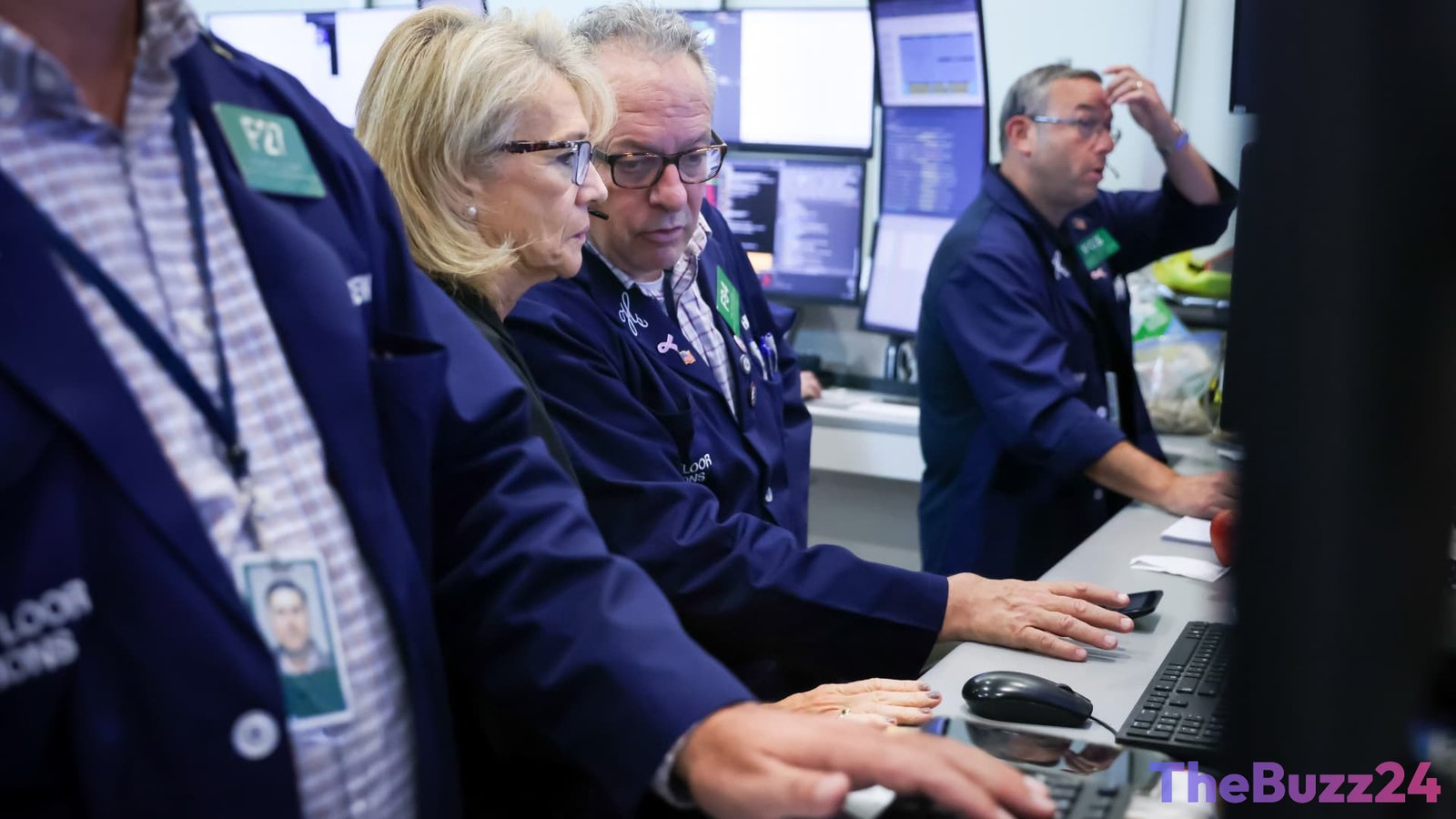
Global Markets React to Fed Hike: Tech Leads Rally, Asia Gains, as Central Banks Chart New Course
Following the Federal Reserve’s initial interest rate increase in three years, U.S. stock futures showed minimal movement overnight, consolidating gains made during Thursday’s trading session. This stability comes after major averages experienced a significant rebound, with the Dow Jones Industrial Average climbing 316 points (0.6%), the S&P 500 rallying 1.1%, and the tech-heavy Nasdaq Composite jumping 1.7%.
This market resurgence occurred just one day after the Fed’s decision to raise rates by a quarter percentage point, accompanied by indications of at least one more hike this year, initially sent major market averages sharply lower. However, Thursday’s rally, particularly within the technology sector, suggests that many investors are looking beyond the immediate implications of a potentially prolonged period of higher interest rates or inflation. Instead, market sentiment appears to be gravitating towards the enduring narrative of artificial intelligence, which is expected to continue bolstering corporate profits. Brian Levitt, chief global market strategist at Invesco, suggested that the current market cycle’s conclusion might not be triggered by rising Fed rates or oil prices. Instead, he posited that a significant shift in the artificial intelligence investment trend, such as a major player reducing investment or the market perceiving overinvestment relative to expected returns, would be the more likely catalyst.
As the week draws to a close, U.S. markets are poised for a mixed performance. The Dow Jones Industrial Average is on track for its third consecutive weekly decline, down 1.5% week-to-date, while the S&P 500 is also slightly lower by 0.3%. In contrast, the Nasdaq Composite stands out with a 0.3% gain for the week, underscoring the strength of technology stocks. Investors are now awaiting further insights from Federal Reserve officials, including Governor Michelle Bowman and Kansas City Fed President Jeffrey Schmid, who are scheduled to speak, potentially offering greater clarity on the unanimous rate hike decision.
Across Asia, markets largely opened higher, influenced by Wall Street’s gains, a dip in oil prices, and a pullback in treasury yields. Japan’s Nikkei 225 advanced over 1%, though the broader Topix saw a slight dip. South Korea’s Kospi surged 2.3%, with the small-cap Kosdaq also gaining 0.89%. Australia’s S&P/ASX 200 recorded a 0.41% increase. Hong Kong’s Hang Seng index rose 0.65%, led by basic materials and industrials, while mainland China’s CSI 300 added 0.58%. Easing concerns over energy supply disruptions, partly due to Saudi Arabia reportedly increasing crude cargo availability, contributed to lower oil prices, further supporting market sentiment.
Meanwhile, Japan’s August inflation rate held steady at 1.9%, ahead of a widely anticipated policy rate decision by the Bank of Japan. Core inflation, excluding fresh food and energy, softened slightly to 1.7%, while the ‘core-core’ rate, which also strips out energy, remained unchanged at 1.9%. The Bank of Japan is broadly expected to raise its policy rate by 25 basis points to 1.25%, marking its highest level since 1995, signaling a potential shift in its long-standing ultra-loose monetary policy.
Key Takeaways
- U.S. markets experienced a rebound after the Federal Reserve's first rate hike in three years, with technology stocks leading the rally.
- Despite prospects of further rate increases, investors appear to be prioritizing the long-term potential of artificial intelligence as a key market driver.
- Asian markets generally saw gains, while Japan prepared for a significant Bank of Japan rate hike amidst steady inflation figures, signaling divergent global monetary policies.
Editor’s Analysis & Impact
The market’s swift rebound following the Federal Reserve’s rate hike underscores a remarkable resilience and a shift in investor focus. While higher interest rates typically dampen equity markets, the strong performance, particularly in technology stocks, indicates that the compelling narrative of artificial intelligence is currently outweighing concerns about monetary tightening. This suggests a market willing to look past immediate economic headwinds in favor of long-term growth potential. Globally, the divergence in central bank actions, with the Fed tightening and the Bank of Japan poised for its first significant hike in decades, highlights varying economic conditions and policy approaches. The sustained interest in AI, as noted by market strategists, could continue to drive corporate profits and market valuations, but also introduces a potential vulnerability if the AI investment narrative falters. The coming weeks will be crucial for observing how these dynamics evolve and whether the AI-driven optimism can sustain itself against a backdrop of rising global rates.
Frequently Asked Questions
Q: Why did U.S. stocks rally after the Federal Reserve's interest rate hike?
A: U.S. stocks rallied because investors, particularly in the technology sector, appeared to look past the immediate impact of higher interest rates. The prevailing sentiment shifted towards the long-term growth potential offered by artificial intelligence, which is expected to continue boosting corporate profits, thus outweighing concerns about monetary tightening.
Q: What role is artificial intelligence playing in current market sentiment?
A: Artificial intelligence is playing a significant role by providing a strong growth narrative that is attracting investor capital. Despite rising interest rates, many investors are betting on AI's ability to drive future corporate profits and innovation, making it a key factor in market resilience and the strong performance of tech stocks.
Q: What is the significance of the Bank of Japan's anticipated rate decision?
A: The Bank of Japan's anticipated rate hike to 1.25%, its highest since 1995, signifies a potential major shift from its long-standing ultra-loose monetary policy. This move would reflect a growing confidence in Japan's economic recovery and its ability to sustain inflation, marking a divergence from its previous stance and potentially impacting global financial markets.
AI Disclosure: This article is based on verified data and official reports. Our Team and AI have cross-referenced every financial detail with primary sources to ensure total accuracy.
More from this Category