Google Launches Playground: Democratizing Game Development Through Generative AI
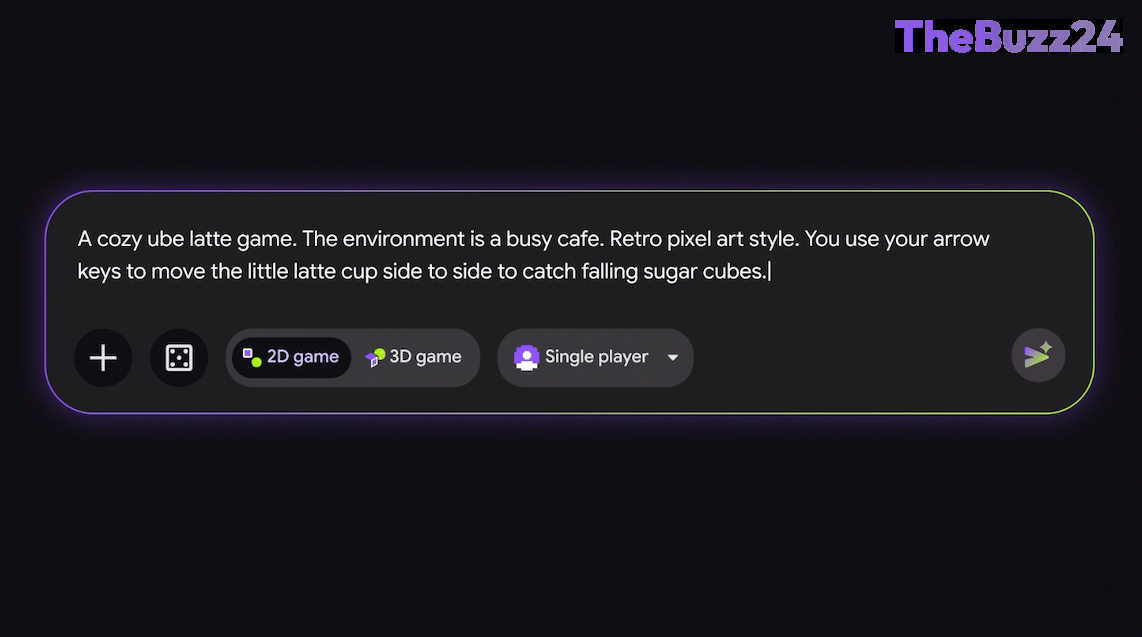
The landscape of digital entertainment is undergoing a radical transformation as the technical barriers to game creation begin to dissolve. Google Labs has officially introduced Playground, an experimental AI-powered platform that enables users to construct browser-based games using nothing more than simple text prompts. This innovation effectively removes the necessity for traditional programming, complex design, or professional illustration skills, allowing anyone with an idea to become a developer.
Playground offers a versatile suite of creation tools, allowing users to select specific genres such as racing or trivia, choose between 2D and 3D environments, and decide between single-player or multiplayer formats. The platform’s generative capabilities extend to visual assets; users can upload existing images, which the AI then transforms into stylized game elements that match the project’s aesthetic. Once a game is finalized, it can be played across mobile and desktop browsers, shared via direct links, or published to a public ‘Explore’ gallery featuring competitive leaderboards.
Looking ahead, Google intends to bolster the platform’s professional capabilities through a planned integration with Unity Spark. This update is expected to provide creators with access to advanced 3D capabilities and sophisticated game mechanics typically reserved for professional studios. This move places Google in direct competition with established user-generated content ecosystems like Roblox, which has also been exploring natural-language development tools.
Currently, Playground is available to users aged 18 and older within the United States, with plans for international expansion. While the ability to browse and play existing games is free, the creation process operates on a weekly token system. Users on the free tier receive a limited number of tokens, while those with Google One AI subscriptions will benefit from increased usage limits.
Key Takeaways
- Google's new Playground platform allows users to create browser-based games using text prompts, eliminating the need for coding.
- The tool supports 2D and 3D game creation and plans to integrate Unity Spark for professional-grade mechanics.
- Playground is currently available in the U.S. for users 18+, utilizing a token-based system for game generation.
Editor’s Analysis & Impact
The introduction of Playground marks a pivotal moment in the convergence of generative AI and interactive media. By lowering the barrier to entry, Google is not just launching a tool; they are fostering a new class of ‘micro-developers’ who can iterate on ideas in real-time. This shift mirrors the evolution of social media, where the line between consumer and creator is increasingly thin. The strategic move to integrate Unity Spark suggests that Google is serious about moving beyond simple novelties toward tools that can produce high-quality, complex experiences. As competition intensifies with players like Roblox, the industry will likely see a surge in user-generated content, potentially disrupting traditional development cycles and forcing established studios to rethink how they engage with community-driven creativity.
Frequently Asked Questions
Q: Do I need programming experience to build a game on Playground?
A: No. The platform is designed to use natural language prompts, meaning you can describe your game's mechanics and style in plain text to generate the game.
Q: Is there a cost associated with creating games?
A: While playing games is free, creating them requires tokens. A free tier is available with limited weekly tokens, while Google One AI subscribers receive higher usage limits.
Q: What devices can I use to play these games?
A: The games created on Playground are browser-based, making them compatible with both mobile devices and desktop computers.
AI Disclosure: This article is based on verified data and official reports. Our Team and AI have cross-referenced every financial detail with primary sources to ensure total accuracy.
More from this Category