Gen Z Rebels Against the Machine: Why New Graduates Are Jeering Silicon Valley’s AI Hype
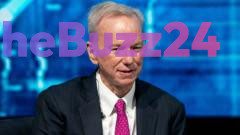
University graduation ceremonies across the United States have recently evolved into unexpected battlegrounds over the future of work. The Class of 2024 is expressing deep skepticism toward the rapid integration of artificial intelligence into the workforce. A prime example of this tension occurred at the University of Arizona, where former Google CEO Eric Schmidt was met with audible jeers during his commencement address. Although Schmidt sought to compare the current AI revolution to the transformative personal computer wave of the 1980s, his optimistic outlook fell flat with a crowd of graduates facing immediate employment anxieties.
This friction is part of a broader, nationwide pushback by students against corporate narratives that champion automation. Similar protests occurred at graduation ceremonies in Central Florida and Middle Tennessee. Prominent speakers, such as real estate executive Gloria Caulfield and Big Machine Records CEO Scott Borchetta, faced vocal disapproval from graduating classes after praising the role of AI in their industries. These confrontations underscore a growing divide between the bullish projections of corporate leaders and the practical economic fears of young professionals entering the job market.
In response to these anxieties, academic strategies are beginning to shift. Rather than pursuing highly technical, data-centric majors that are highly susceptible to automation, many students are pivoting toward disciplines that emphasize uniquely human traits. Skills like critical thinking, creative problem-solving, and interpersonal communication are increasingly seen as vital shields against technological displacement. As public concern over AI continues to rise, finding a balance between technological advancement and human job security is shaping up to be a defining challenge for future employers.
Key Takeaways
- Graduating students across the U.S. are actively protesting AI-centric commencement speeches, highlighting deep anxieties over future employment.
- High-profile tech and business leaders, including former Google CEO Eric Schmidt, have faced direct pushback for promoting automation to entering workforces.
- A strategic shift is occurring in higher education, with students increasingly focusing on human-centric skills like communication and critical thinking to future-proof their careers.
Editor’s Analysis & Impact
The growing friction between graduating students and corporate leaders reveals a significant cultural and economic divide. For years, Silicon Valley has operated under the assumption that technological disruption is inherently positive. However, the incoming workforce is challenging this narrative, demanding ethical guardrails and job security over raw efficiency. This pushback suggests that companies hoping to attract top-tier young talent cannot simply automate processes; they must actively demonstrate how AI will augment, rather than replace, human workers. In the long term, we may see a premium placed on roles requiring high emotional intelligence and complex decision-making. Organizations that fail to address these anxieties risk facing recruitment challenges and a disengaged workforce.
Frequently Asked Questions
Q: Why are university graduates protesting AI during commencement ceremonies?
A: Graduates are concerned that the rapid, unregulated adoption of AI will automate entry-level positions, making it significantly harder for them to secure stable careers after graduation.
Q: How are students adapting their academic focus in response to AI?
A: Many students are shifting away from purely technical, data-driven majors and are instead focusing on fields that cultivate soft skills—such as leadership, creative writing, and critical thinking—which are much harder for AI to replicate.
Q: What does this disconnect mean for future employers?
A: Employers will likely need to rebuild trust with the incoming workforce by demonstrating ethical AI practices and emphasizing 'human-in-the-loop' roles that value human creativity alongside automated tools.
AI Disclosure: This article is based on verified data and official reports. Our Team and AI have cross-referenced every financial detail with primary sources to ensure total accuracy.
More from this Category