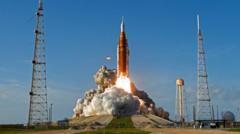
Artemis II Success Sets the Stage for Humanity’s Return to the Moon
The Artemis II mission has surpassed initial performance expectations, validating the operational integrity of the Orion spacecraft and the Space Launch System (SLS). Since its launch, the mission has consistently outperformed simulation-based projections, proving that the current hardware architecture is robust enough to sustain a human crew within the demanding environment of deep space. The flight has been characterized by high-precision execution, with the spacecraft’s trajectory proving so accurate that several planned course-correction maneuvers were deemed unnecessary.
Beyond hardware validation, the mission serves as a vital testbed for human-machine integration. Astronauts Reid Wiseman, Victor Glover, Christina Koch, and Jeremy Hansen have successfully navigated real-world operational scenarios, including managing internal system redundancies and life-support water systems. The data gathered during these operations is proving invaluable to engineers tasked with refining future spacecraft designs. While robotic probes have long provided extensive lunar mapping, the Artemis II mission has successfully reignited global public interest in space exploration, echoing the cultural impact of the historic Apollo era.
As the mission approaches its final phase, attention has shifted to the high-speed atmospheric re-entry scheduled for April 11. This stage represents the most significant stress test for the capsule’s heat shield and safety systems. A successful splashdown will serve as a critical milestone, potentially providing the necessary confidence to accelerate the timeline for future lunar surface landings. While official projections currently aim for a crewed landing by 2028, the mission’s success has fundamentally shifted the discourse from hardware viability to the logistical and political commitments required to sustain long-term lunar exploration.
Key Takeaways
- The Artemis II mission has exceeded performance benchmarks, confirming the reliability of the Orion spacecraft and SLS hardware.
- Astronauts have successfully tested critical human-machine interfaces, providing essential data for future spacecraft iterations.
- The upcoming high-speed re-entry is the final major hurdle, with success likely to influence the timeline for future lunar surface missions.
Editor’s Analysis & Impact
The success of Artemis II marks a pivotal transition in modern space exploration, moving the industry from theoretical design to proven operational capability. By demonstrating that the Orion hardware can handle deep-space conditions with high precision, the mission has effectively de-risked the program for stakeholders and policymakers. However, the gap between current technical success and the 2028 landing goal remains significant. The primary challenge is no longer just engineering; it is the sustained political and budgetary support required to maintain momentum. If the re-entry phase proves successful, it will likely trigger a surge in private sector interest and international partnerships, potentially compressing the timeline for lunar infrastructure development. The broader implication is a shift toward a permanent lunar presence, moving beyond the ‘flags and footprints’ model of the 20th century toward a sustainable, long-term economic and scientific lunar ecosystem.
Frequently Asked Questions
Q: What is the primary goal of the Artemis II mission?
A: Artemis II is designed to test the Orion spacecraft and SLS hardware with a human crew, validating life-support systems and operational procedures in deep space to pave the way for future lunar landings.
Q: Why is the upcoming re-entry phase considered the most critical part of the mission?
A: The high-speed atmospheric re-entry subjects the capsule to extreme heat and pressure, serving as the ultimate stress test for the heat shield and safety systems to ensure the crew's survival.
AI Disclosure: This article is based on verified data and official reports. Our Team and AI have cross-referenced every financial detail with primary sources to ensure total accuracy.
More from this Category