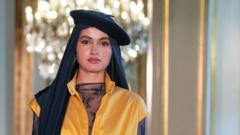
Paris Debuts First Modest Fashion Week, Signaling a Global Shift in Style
Paris recently solidified its status as a global fashion hub by hosting its inaugural Modest Fashion Week. The event, staged at the historic Hôtel Le Marois near the Champs-Élysées, brought together nearly 30 international designers to present collections that prioritize loose silhouettes, extended hemlines, and headscarves. The runway featured a diverse array of aesthetics, ranging from nature-inspired floral patterns and autumnal color schemes to contemporary, boxy streetwear designs tailored for a younger, trend-conscious audience.
The showcase served as a melting pot of global perspectives, with designers hailing from countries including Nigeria, Turkey, Indonesia, and Australia. By presenting their unique interpretations of modest elegance, these creators demonstrated that faith-based clothing can be both high-fashion and highly versatile. Notable brands such as Soutoura and Nour Turbans successfully blended traditional modest elements with modern French flair, even incorporating the iconic beret to bridge cultural aesthetics and emphasize the adaptability of the style.
Choosing Paris as the host city was a deliberate move, given France’s long-standing and complex discourse surrounding religious attire and the secular principle of laïcité. For the participants, the event functioned as a powerful statement on inclusivity and professional empowerment. By bringing these designs to the heart of the French capital, organizers aimed to shift the narrative, framing modest dress as a modern, sophisticated fashion choice rather than a point of political friction.
Beyond the artistic expression, the event highlighted the significant economic momentum behind the modest fashion sector. With global consumer spending in this category projected to exceed $400 billion in the coming year, the industry is rapidly expanding. While historically rooted in serving Muslim women, the market is increasingly capturing the interest of secular shoppers and diverse religious communities, signaling a broader cultural acceptance of modest aesthetics in mainstream fashion.
Key Takeaways
- Paris hosted its first Modest Fashion Week, featuring 30 international designers at the historic Hôtel Le Marois.
- The event showcased a fusion of traditional modest silhouettes with modern streetwear, aiming to normalize modest dress in mainstream fashion.
- The modest fashion industry is experiencing rapid growth, with global consumer spending expected to surpass $400 billion in the near future.
Editor’s Analysis & Impact
The successful execution of Modest Fashion Week in Paris marks a pivotal moment for the global apparel industry. By positioning modest fashion within the world’s most prestigious fashion capital, the event challenges long-standing biases and demonstrates that inclusivity is a significant market driver. The economic data—projecting $400 billion in spending—indicates that this is no longer a niche market but a major segment of the global economy. Future implications suggest that luxury houses and high-street retailers alike will likely increase their focus on modest collections to capture this diverse, expanding demographic. As the industry matures, we can expect to see further integration of modest aesthetics into mainstream runway trends, effectively decoupling the style from political controversy and cementing its place as a legitimate, high-growth fashion category.
Frequently Asked Questions
Q: What is the primary goal of Modest Fashion Week?
A: The event aims to celebrate modest dress as a versatile and modern fashion choice while promoting inclusivity and professional empowerment for designers globally.
Q: Is the modest fashion market only for Muslim women?
A: No, while the industry was originally established to serve Muslim women, it is increasingly attracting a broader demographic, including secular shoppers and members of various other religious communities.
AI Disclosure: This article is based on verified data and official reports. Our Team and AI have cross-referenced every financial detail with primary sources to ensure total accuracy.
More from this Category