High Court Greenlights White House Ballroom Construction Amidst Legal Scrutiny
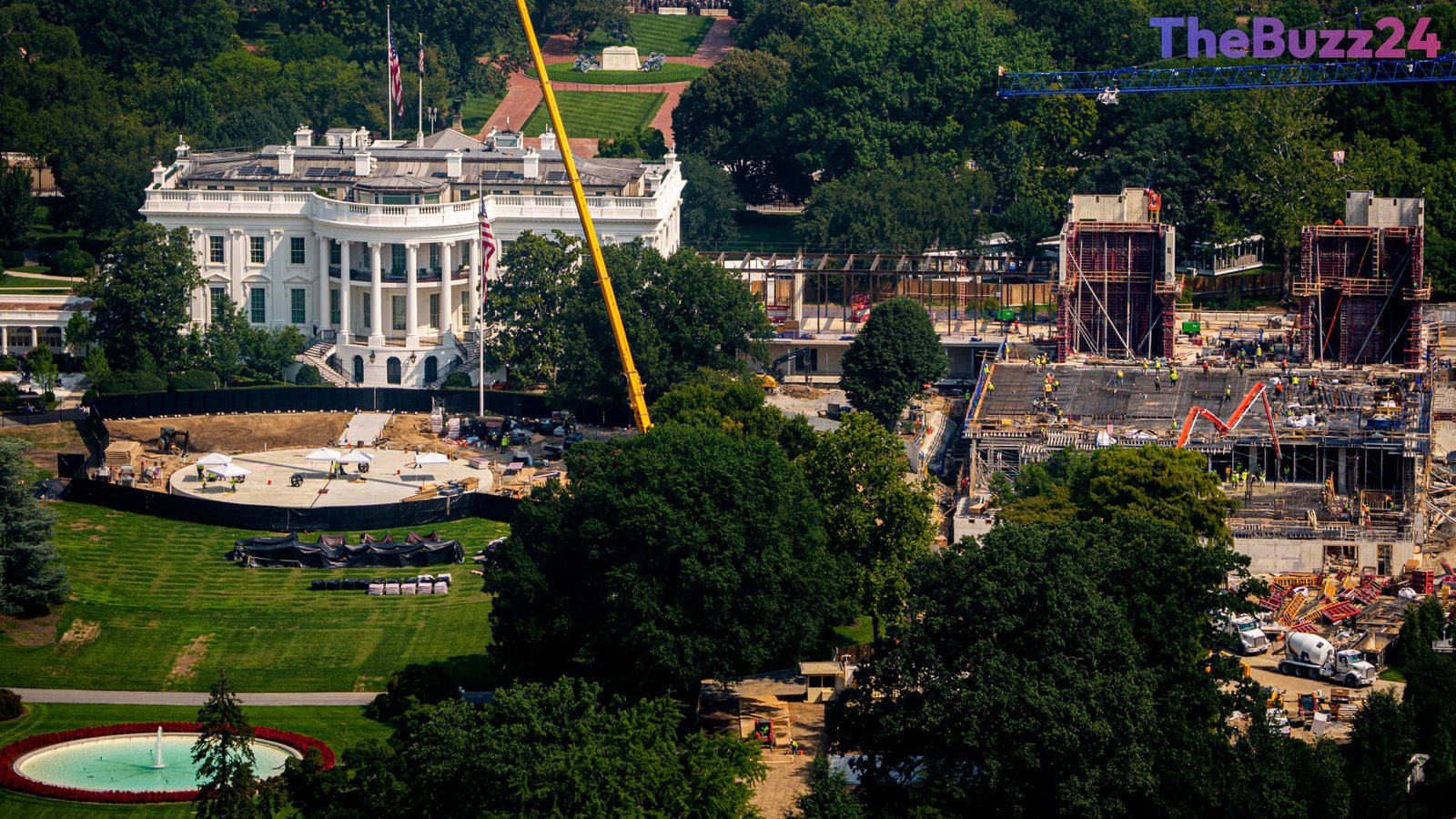
In a split decision, the Supreme Court has permitted the continued construction of a controversial ballroom at the White House, even as legal challenges against the project persist. The ruling, issued without a signed opinion from the majority, allows the roughly $400 million endeavor to move forward, temporarily sidestepping a lower court order that had previously halted the work.
The five-justice majority concluded that the plaintiff in the case, the National Trust for Historic Preservation in the United States, likely lacks the necessary legal standing to sue and block the project. The order stated that a declaration from a Trust member, citing “injuries” from viewing the finished ballroom during visits to the neighborhood, was probably an insufficient basis for standing. The court emphasized that “mere offense, disagreement, or distaste does not qualify as a concrete and particularized injury under Article III” of the U.S. Constitution, suggesting that many government actions could potentially offend someone’s sensibilities.
However, the decision was met with strong dissent from Chief Justice John Roberts and the court’s three liberal members. Roberts argued that the construction, which involves the demolition of part of the East Wing, is “likely unlawful” given that Congress has explicitly barred building on federal properties without “express authority.” He also challenged the majority’s view on legal standing, asserting that a historic preservationist could indeed suffer a concrete, particularized aesthetic injury from the transformation of an iconic building like the White House, whose symbolism and history are deeply intertwined with its architecture. The Supreme Court’s order notably did not address the critical question of whether the President possesses the legal authority to undertake such a project without congressional approval, leaving that fundamental issue unresolved as the National Trust’s lawsuit continues.
Key Takeaways
- The Supreme Court allowed the construction of a controversial White House ballroom to proceed despite ongoing legal challenges.
- The majority ruled that the plaintiff, the National Trust for Historic Preservation, likely lacked legal standing, stating that 'mere offense' is not a sufficient injury.
- Chief Justice John Roberts and three liberal justices dissented, arguing the construction might be unlawful without express congressional approval and that aesthetic injury to preservationists is valid.
Editor’s Analysis & Impact
This Supreme Court decision has significant implications for the balance of power between the executive branch and legislative oversight, particularly concerning federal property and national landmarks. While the ruling allows construction to continue, it sidesteps the fundamental question of presidential authority to undertake such projects without explicit congressional approval, leaving a critical legal ambiguity unresolved. For historic preservation groups, the decision sets a challenging precedent regarding legal standing, potentially making it harder to challenge government projects based on aesthetic or historical impact. The ongoing lawsuit will continue to test the boundaries of executive power and the effectiveness of preservation efforts, shaping future legal battles over federal development and the protection of cultural heritage.
Frequently Asked Questions
Q: What was the Supreme Court's main reason for allowing the construction?
A: The majority found that the plaintiff, the National Trust for Historic Preservation, likely lacked legal standing to sue, arguing that 'mere offense' or 'distaste' does not constitute a concrete and particularized injury under Article III of the U.S. Constitution.
Q: Does this decision mean the ballroom construction is definitively legal?
A: No, the Supreme Court's order did not address the fundamental question of whether the President has the legal authority to build the ballroom without congressional approval. This remains an open question as the lawsuit continues in lower courts.
Q: Who dissented from the Supreme Court's order?
A: Chief Justice John Roberts and the court's three liberal members dissented. Roberts argued that the construction was likely unlawful without express congressional authority and that historic preservationists could indeed suffer a concrete aesthetic injury.
AI Disclosure: This article is based on verified data and official reports. Our Team and AI have cross-referenced every financial detail with primary sources to ensure total accuracy.
More from this Category