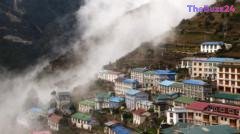
Himalayan Development Surge Traps 300,000 in Disaster Zones
A significant and alarming surge in construction across the Himalayan region has placed an estimated 300,000 individuals directly in the path of potential natural disasters. New research indicates that built-up areas within high-risk zones spanning northern Nepal, parts of southeastern Tibet, and India’s Uttarakhand state expanded by approximately 45% between 2016 and 2023. This development accelerated even faster in areas particularly vulnerable to glacial lake outburst floods, witnessing nearly a 78% increase over the same period. The true number of people facing peril could be substantially higher, as the analysis focused on specific territories.
This rapid expansion is largely driven by a boom in tourism facilities, critical infrastructure projects, and real estate ventures. Major hubs like Pokhara in Nepal, a popular tourist destination, have experienced substantial growth over the past three decades to accommodate a massive influx of visitors. However, this growth often comes with significant risks. Pokhara’s Mayor Dhana Raj Acharya highlighted the immense challenge of managing the threat posed by the Seti Gandaki River, which flows through the city, noting that many older structures are dangerously close to its banks, despite newer regulations. Similarly, the world-renowned Annapurna trekking region has seen a proliferation of settlements along riverbanks, some of which have already been impacted by recent floods and landslides, leaving local business owners like homestay operator Phurpa Chhiring Lama feeling helpless amidst unprecedented disasters.
The escalating risks are intrinsically linked to climate change, with the Himalayan region experiencing warming at twice the global average. This accelerated warming leads to faster glacier melt, expanding glacial lakes prone to bursting, and rain falling at higher altitudes where snow once dominated. These changes destabilize mountain slopes, which are also frequently affected by earthquakes, triggering devastating downstream events. Experts, including University of Leeds glaciologist C Scott Watson, warn that current development decisions will shape disaster risk for decades, especially as river valleys become increasingly populated. Despite the clear dangers, campaigners and urban planning experts lament the weak and poorly enforced building regulations. Professor Surya Raj Acharya of the University of Nepal points out that roads, hydropower projects, hotels, and market towns have often expanded onto accessible, low-lying riverine land, frequently ignoring crucial safeguards.
Authorities are beginning to acknowledge the gravity of the situation. Nepal’s national disaster agency plans to ban settlements within 15 meters of riverbanks in recently devastated corridors, with similar rules expected elsewhere. India’s Uttarakhand government has also approved new floodplain zoning rules. However, implementing these measures is challenging due to local attachments to land and property. Basanta Raj Adhikari, director of the Centre for Disaster Studies at Tribhuvan University, suggests that insurance grading based on risk levels could incentivize safer construction. Yet, despite these nascent efforts and the dire warnings, the pace of construction across the region shows little sign of abatement, underscoring the complex interplay between economic development, climate vulnerability, and human safety.
Key Takeaways
- Over 300,000 people in the Himalayan region are now at heightened risk due to a rapid increase in construction within high-danger zones.
- Built-up land in these vulnerable areas, particularly near glacial lakes, has grown by 45-78% between 2016 and 2023, driven by tourism, infrastructure, and hydropower projects.
- Climate change, leading to accelerated glacier melt and increased extreme weather, exacerbates these risks, while weak enforcement of building regulations allows unsafe development to persist.
Editor’s Analysis & Impact
The unchecked development in the Himalayas presents a critical dilemma for the region’s economy and environment. While the construction boom fuels tourism and infrastructure, it simultaneously creates immense long-term liabilities, potentially deterring future investment and tourism as disaster risks become more pronounced. Hydropower projects, vital for energy, also face increased vulnerability. Without stringent enforcement of zoning laws and sustainable development practices, the region faces a future of escalating humanitarian crises and economic setbacks. This situation highlights a global challenge where economic growth often overrides environmental safeguards, especially in fragile ecosystems. It underscores the urgent need for integrated climate adaptation strategies, robust urban planning, and international cooperation to protect both human lives and the delicate natural environment.
Frequently Asked Questions
Q: Why is construction increasing so rapidly in high-risk Himalayan areas?
A: The surge is primarily driven by economic development, including a booming tourism industry, the expansion of infrastructure, real estate ventures, and the construction of hydropower plants to meet growing energy demands.
Q: How does climate change contribute to the increased disaster risk in the Himalayas?
A: Climate change is causing the Himalayas to warm at twice the global average, accelerating glacier melt, expanding glacial lakes that can burst, and shifting precipitation patterns to higher altitudes. These factors destabilize mountain slopes and increase the frequency and intensity of floods and landslides.
Q: What measures are being proposed or implemented to address these risks?
A: Proposed measures include stricter building regulations and zoning laws (like banning construction near riverbanks), improved early-warning systems, and potentially using insurance grading to incentivize safer development. However, implementation faces challenges due to local resistance and economic pressures.
AI Disclosure: This article is based on verified data and official reports. Our Team and AI have cross-referenced every financial detail with primary sources to ensure total accuracy.
More from this Category