Historical Preservation vs. Housing: Berlin Divided Over Plan to Demolish Nazi-Era Bunker
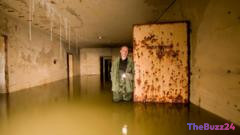
A fierce debate has erupted in Berlin over the future of a subterranean Nazi bunker located beneath a vacant lot in the city center. The underground structure, which once served the New Reich Chancellery designed by Albert Speer, has become the center of a clash between urban developers and historical preservationists. While the above-ground chancellery was severely damaged during World War II and subsequently demolished by Soviet forces in 1949, the massive underground bunker remains largely intact.
Berlin’s Housing Senator, Christian Gaebler, is leading the push to clear the site to make way for much-needed residential housing. Gaebler argues that preserving the bunker could inadvertently turn it into a pilgrimage site for far-right extremists, and asserts that municipal housing projects should not be stalled to protect such a structure.
Opponents of the demolition, however, argue that destroying the site would erase a crucial piece of history. Dietmar Arnold, chairman of the Berlin Underworlds Association, has called the proposed demolition “absolute madness,” emphasizing that the bunker represents the final physical remnants of the power center of Nazi Germany. Arnold, who last inspected the bunker in 2007 and found it in excellent condition, has proposed partnering with the Holocaust Museum to transform the 1,200-square-meter space into an educational memorial.
Experts clarify that this structure is distinct from the infamous Führerbunker, where Adolf Hitler committed suicide, which lies about 120 meters to the north. Instead, this bunker housed Reich Chancellery staff and functioned as a military hospital during the final days of World War II. The Berlin State Monuments Council has also expressed concern over the demolition plans, highlighting the site’s significant historical value. Preservationists suggest a compromise: constructing the new housing developments directly on top of the bunker’s 1.7-meter-thick concrete walls, thereby preserving the history while addressing the city’s housing needs.
Key Takeaways
- A debate has emerged in Berlin over whether to demolish a 1,200-square-meter Nazi-era bunker to build new housing.
- Proponents of demolition fear the site could become a neo-Nazi pilgrimage destination, while preservationists argue it is a vital historical artifact that should become a museum.
- The bunker in question is not the Führerbunker, but rather a nearby facility used for Reich Chancellery staff and as a wartime hospital.
Editor’s Analysis & Impact
The conflict in Berlin highlights a broader, ongoing global dilemma: how modern cities reconcile the urgent need for urban development and housing with the preservation of “dark history” sites. Demolishing remnants of oppressive regimes can be seen as a way to reclaim space and prevent the glorification of hate. However, historians argue that erasing physical evidence of past atrocities dilutes collective memory and hinders educational efforts. In Berlin, a city already deeply defined by its complex 20th-century history, the decision will set a significant precedent. A compromise—such as building atop the reinforced structure while preserving the interior—could serve as a model for other historical cities facing similar spatial and ethical challenges.
Frequently Asked Questions
Q: Is this the bunker where Adolf Hitler died?
A: No. The bunker in question is located approximately 120 meters south of the Führerbunker, where Hitler committed suicide. This specific bunker was used by Reich Chancellery staff and later served as a hospital.
Q: Why do some officials want to demolish the bunker?
A: Berlin's Housing Senator and other proponents of demolition argue that the space is needed for new housing developments. They also express concern that preserving the bunker could turn it into a pilgrimage site for neo-Nazis.
Q: What is the proposed alternative to demolition?
A: Preservationists, including the Berlin Underworlds Association, suggest partnering with the Holocaust Museum to turn the bunker into a memorial and educational exhibit. They also propose that new housing could be built directly on top of the bunker's thick concrete walls without destroying the structure.
AI Disclosure: This article is based on verified data and official reports. Our Team and AI have cross-referenced every financial detail with primary sources to ensure total accuracy.
More from this Category