How Silicon Valley Innovators Are Shaping the Future of Deep Space Discovery
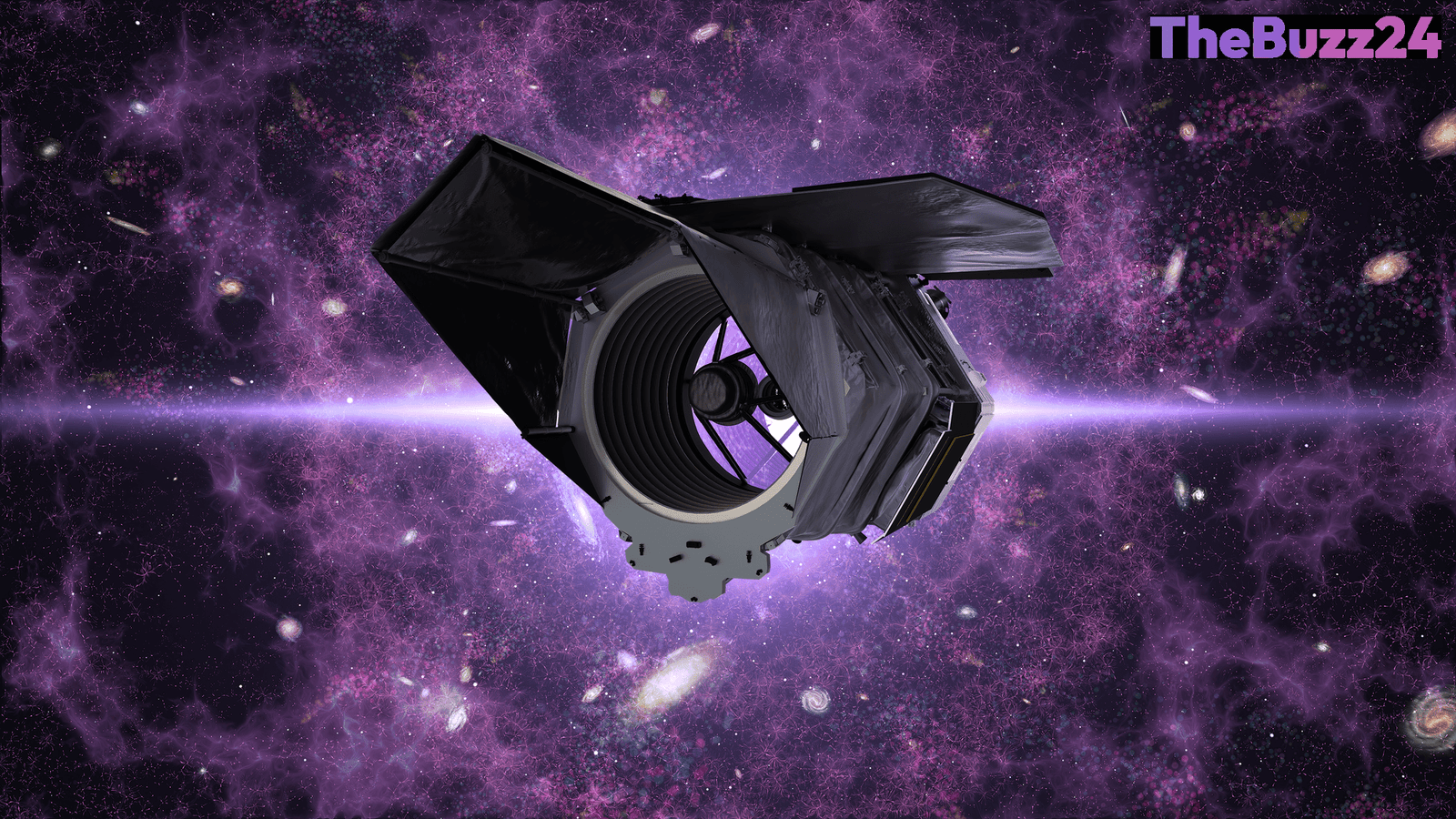
As astronomers prepare for the upcoming launch of the Nancy Grace Roman Space Telescope, researchers at a prominent California research facility are finalizing groundbreaking technologies designed to unlock the deepest mysteries of the universe. The observatory aims to tackle fundamental cosmic questions regarding dark energy, dark matter, and the formation of galaxies. Specialists at the Silicon Valley facility have developed cutting-edge software and hardware that will significantly enhance the telescope’s observation capabilities, allowing scientists to peer further into the cosmos with unprecedented clarity.
One of the primary hurdles in deep space observation is image degradation caused by various forms of optical glare. Stray light and natural phenomena like zodiacal light—caused by sunlight scattering off interplanetary dust—often obscure faint details at the edges of galaxies. To combat this, experts collaborated to create specialized software known as ROSALIA (Roman Sky Analyst for Low Surface Brightness Imaging and Astronomy). This advanced program predicts and strips away background light contamination from images captured by the telescope’s Wide Field Instrument, enabling researchers to study faint cosmic structures that were previously hidden from view.
In addition to clearing up background interference, engineers have turned their attention to the complex challenge of imaging exoplanets located within multi-star systems. While typical coronagraph instruments are designed to suppress light from a single star like our Sun, roughly half of all Sun-like stars exist in multi-star environments. To address this limitation, researchers engineered an innovative solution called Multi-Star Wavefront Control (MSWC). Utilizing custom light-blocking masks—such as a flower-shaped optical mask—and specialized software, this technology suppresses overlapping starlight from multiple sources. This breakthrough vastly improves the likelihood of detecting habitable planets and understanding planetary formation beyond our solar system.
Beyond software and hardware engineering, the mission relies heavily on advanced computational infrastructure to manage massive data pipelines. Experts in supercomputing have provided critical guidance throughout the development phases to guarantee the reliability of ground-based operations. By optimizing data processing workflows, these high-performance computing contributions ensure that the scientific data gathered by the observatory maintains the highest possible integrity and efficiency when it reaches researchers on Earth.
Key Takeaways
- Specialized software named ROSALIA has been developed to predict and remove optical glare and background zodiacal light from space telescope images.
- New Multi-Star Wavefront Control (MSWC) technology allows researchers to suppress light from multiple stars, enabling the direct imaging of exoplanets in binary and triple star systems.
- Advanced supercomputing divisions are providing critical support for data pipelines and mission operations to ensure high-quality processing of scientific data.
Editor’s Analysis & Impact
The integration of advanced software glare-reduction tools and multi-star imaging capabilities represents a major leap forward for observational astronomy. By unlocking the ability to study exoplanets in multi-star systems—which comprise roughly half of all Sun-like stars—astronomers drastically expand the search zone for potentially habitable worlds. Furthermore, the reliance on high-performance computing underscores how modern astrophysics is increasingly driven by big-data management and complex simulation tools. These technological breakthroughs not only maximize the scientific return of the upcoming space telescope mission but also lay a strong foundation for future interstellar exploration frameworks.
Frequently Asked Questions
Q: What is the primary purpose of the Nancy Grace Roman Space Telescope?
A: The observatory is designed to investigate dark energy, dark matter, infrared astrophysics, and exoplanets, helping astronomers understand the formation and evolution of galaxies.
Q: How does the ROSALIA software improve space images?
A: ROSALIA predicts and removes unwanted light contamination, including thermal background, stray light, and zodiacal emission, resulting in much sharper images of faint cosmic structures.
Q: Why is Multi-Star Wavefront Control (MSWC) important?
A: MSWC allows researchers to suppress starlight from multiple star systems simultaneously, making it possible to directly image exoplanets orbiting binary or triple stars for the first time.
AI Disclosure: This article is based on verified data and official reports. Our Team and AI have cross-referenced every financial detail with primary sources to ensure total accuracy.
More from this Category