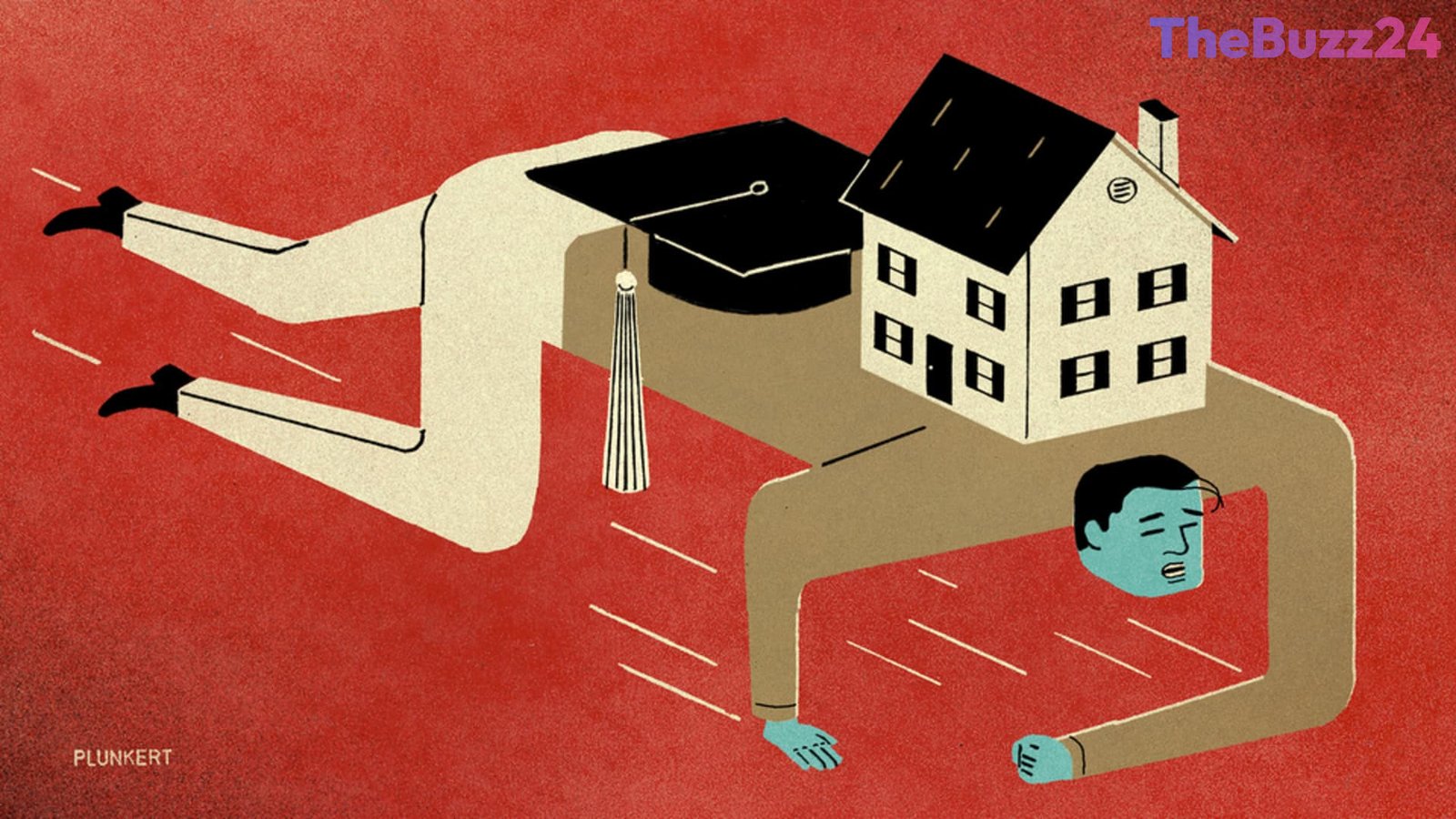
The Danger of ‘Good Debt’: Why Mortgages and Student Loans Can Backfire
The traditional financial categorization separating loans into ‘good debt’ and ‘bad debt’ is drawing scrutiny from financial professionals who argue the label masks significant underlying risks. While mortgages and student loans have historically been classified as beneficial borrowing because they theoretically build wealth or enhance earning potential, experts caution that the purpose of a loan does not guarantee affordability. Borrowers are increasingly urged to look past simplistic classifications and carefully evaluate their comprehensive financial health, total costs, and long-term repayment capabilities before committing to major financial liabilities.
Real-world cases underscore the hidden pitfalls of assuming certain types of debt are inherently safe. Homeowners who purchase properties under social and financial pressures often find themselves facing unanticipated expenses, such as higher interest rates, property tax reassessments, and expensive maintenance. These unexpected costs can quickly transform what was expected to be a wealth-building milestone into a persistent financial strain that leaves individuals living paycheck to paycheck, even as property values appreciate at modest rates.
Financial advisors emphasize that consumers should approach every borrowing decision with skepticism, treating each loan as a cold, calculated business choice rather than an emotional achievement. When evaluating a prospective mortgage or educational loan, individuals are encouraged to analyze the true total cost, maintain robust emergency reserves, and verify that their income stability can support the repayment terms over many years. Relying on lender pre-approvals or overly optimistic assumptions about future salary growth can lead to overextension and severe long-term financial stress.
Ultimately, experts advise shifting away from the rigid dichotomy of ‘good’ versus ‘bad’ debt and focusing instead on individual circumstances, risk tolerance, and realistic timelines. Whether deciding to purchase a home or fund higher education, consumers must ensure the choice aligns with their personal budget and long-term stability rather than societal expectations. By conducting rigorous independent calculations and managing expectations, borrowers can better protect themselves against the lingering financial fallout of over-leveraging.
Key Takeaways
- The traditional label of 'good debt' for mortgages and student loans can downplay real financial risks and encourage overborrowing.
- Unexpected expenses such as home repairs, tax reassessments, and higher interest rates often turn seemingly sound investments into heavy financial burdens.
- Experts recommend treating debt strictly as a business decision, avoiding emotional purchasing, and ensuring payments fit comfortably within an independent budget.
Editor’s Analysis & Impact
The pervasive narrative surrounding ‘good debt’ has long influenced consumer behavior, steering generations toward homeownership and higher education under the assumption that these financial moves are universally beneficial. However, economic volatility, shifting interest rate environments, and escalating property maintenance costs have exposed the fragility of this mindset. Financial institutions and advisors are recognizing a necessary shift toward individualized risk assessment rather than blanket categorizations. For the broader economy, a more cautious approach to consumer leverage could lead to healthier household balance sheets, though it might temporarily cool demand in sectors heavily reliant on credit, such as housing and higher education. The long-term implication is a cultural move toward conservative financial planning, emphasizing liquidity and realistic return on investment over rapid asset accumulation.
Frequently Asked Questions
Q: Why do experts advise against using the term 'good debt'?
A: The label can downplay the risks of borrowing and give a false sense of security, leading people to overextend their finances and take on burdens they cannot realistically afford.
Q: What factors should be considered before taking on a mortgage?
A: Borrowers should evaluate the total cost, interest rates, income stability, financial reserves, potential long-term price appreciation, and realistic maintenance expenses rather than relying solely on what lenders approve.
Q: How can emotional borrowing negatively impact financial health?
A: Emotional borrowing—such as buying a home to impress others, funding vacations with credit, or overspending due to lifestyle pressure—frequently leads to short-term satisfaction followed by long-term financial stress and regret.
AI Disclosure: This article is based on verified data and official reports. Our Team and AI have cross-referenced every financial detail with primary sources to ensure total accuracy.
More from this Category