Hugging Face Unveils $399 ‘Microduck’ Robot to Democratize Physical AI
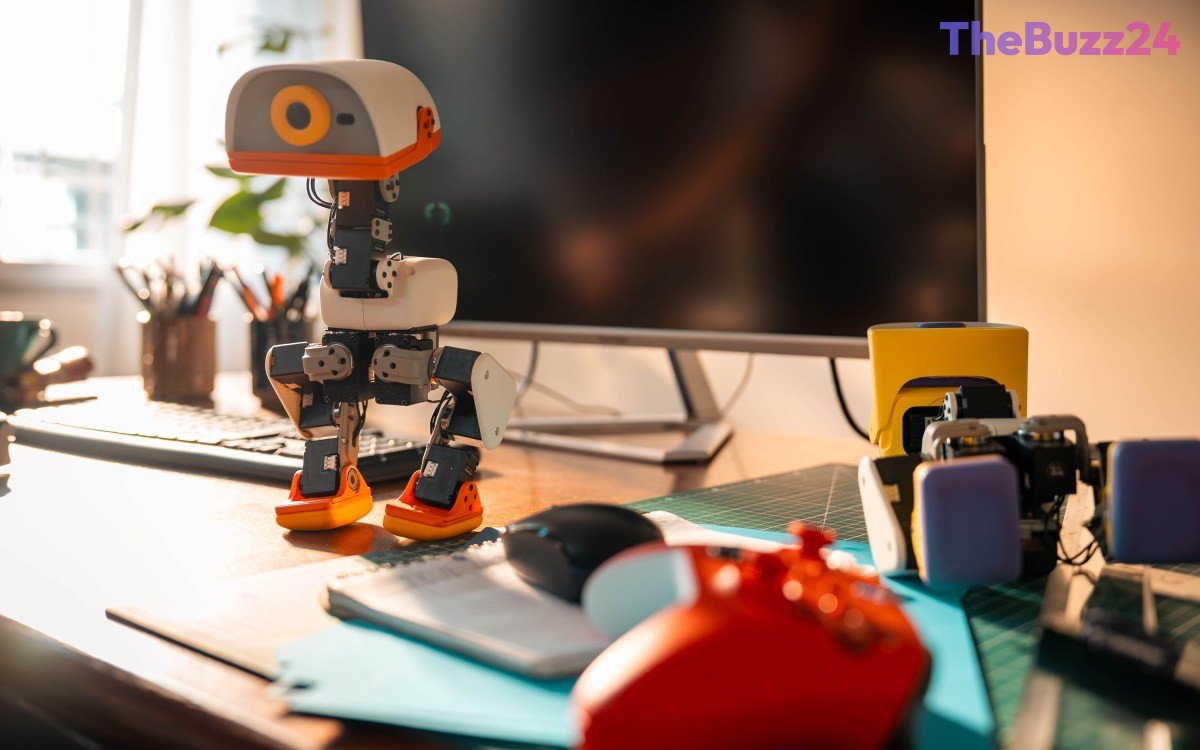
Hugging Face has officially entered the consumer robotics market with the launch of the Microduck, an open-source, duck-shaped robot priced at $399. Standing 25 centimeters tall, the device is designed to be a versatile platform for developers, capable of performing complex physical tasks such as waddling, crouching, roller skating, and lifting objects weighing up to 800 grams. The robot is scheduled to begin shipping to customers before the holiday season.
Developed in collaboration with Pollen Robotics—a startup acquired by Hugging Face earlier this year—the Microduck represents a strategic push to make physical AI and world models more accessible. The robot is equipped with a camera, lidar sensors, and dual inertial measurement units (IMUs) to navigate its environment. Developers can train behaviors in a simulation environment and deploy them directly to the hardware, with the full software development kit and training stack available via GitHub.
While the introduction of camera-equipped robots into private spaces has raised some privacy concerns, leadership at Hugging Face emphasizes that the open-source nature of the platform offers greater transparency compared to proprietary ‘black box’ systems. However, experts note that while the core model is auditable, third-party applications installed by users could potentially access sensory data, depending on their specific configurations. This launch follows a series of hardware initiatives from the company, including the Reachy Mini series, as it continues to expand its footprint in the AI-driven robotics sector.
Key Takeaways
- Hugging Face launched the Microduck, a $399 open-source robot designed for reinforcement learning and physical AI experimentation.
- The robot features advanced sensors including lidar and cameras, with a full software stack available on GitHub for developers to train and deploy custom behaviors.
- The move signals a broader company strategy to integrate open-source AI models with affordable, accessible hardware.
Editor’s Analysis & Impact
The release of the Microduck marks a significant pivot for Hugging Face, transitioning from a pure software and model-hosting platform to a hardware-integrated ecosystem. By lowering the barrier to entry for physical AI, the company is positioning itself to capture the growing developer interest in embodied intelligence. The strategic acquisition of Pollen Robotics provides the necessary hardware expertise to complement Hugging Face’s dominance in open-source model distribution. If successful, this could accelerate the development of ‘world models’ that bridge the gap between digital intelligence and physical interaction. However, the company faces the dual challenge of scaling hardware manufacturing while addressing the inherent privacy and security risks associated with deploying internet-connected, camera-enabled devices into consumer homes. The potential for deeper integration with infrastructure partners like Nvidia suggests that Hugging Face is aiming to become the foundational layer for the next generation of autonomous robotics.
Frequently Asked Questions
Q: What can the Microduck robot actually do?
A: The Microduck is designed for reinforcement learning and can perform physical tasks like waddling, crouching, roller skating, and picking up items weighing up to 800 grams.
Q: Is the Microduck's software open source?
A: Yes, the software development kit (SDK), simulation environment, and reinforcement learning training stack are all available on GitHub, allowing developers to audit and customize the robot's behaviors.
AI Disclosure: This article is based on verified data and official reports. Our Team and AI have cross-referenced every financial detail with primary sources to ensure total accuracy.
More from this Category