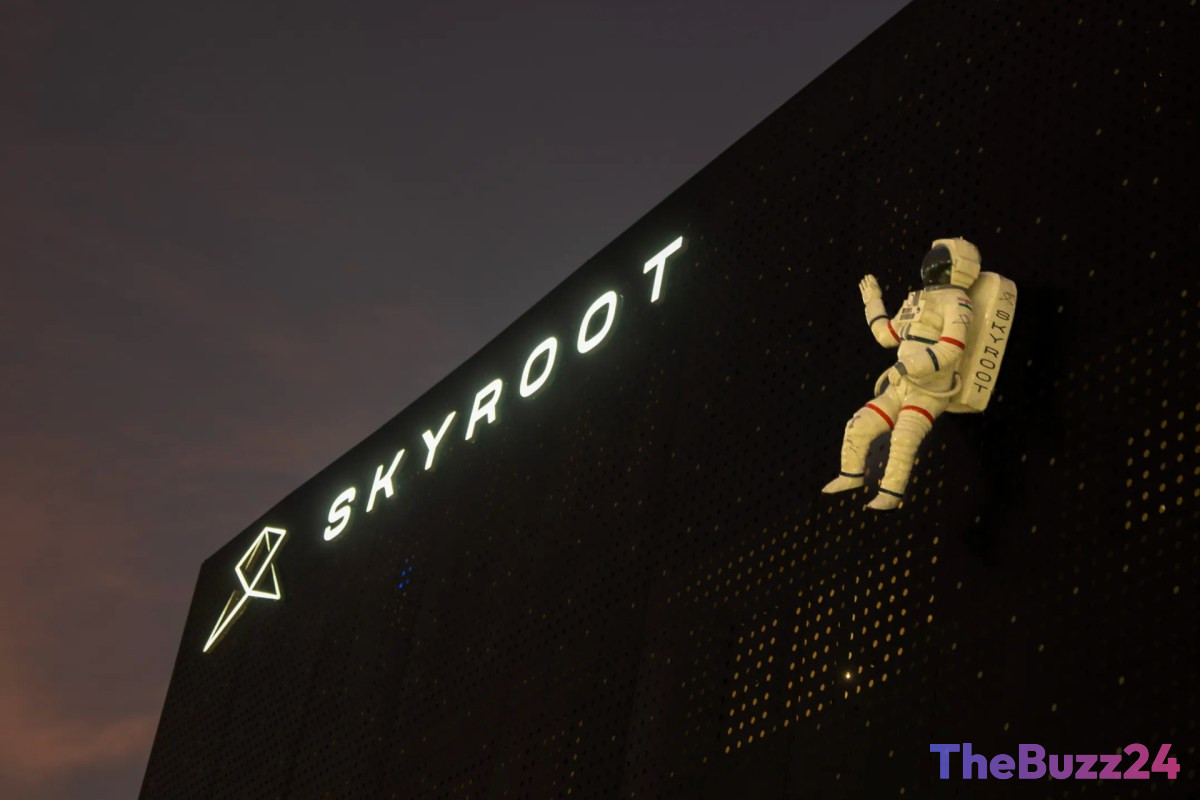
Skyroot Aerospace Becomes India’s First Space Tech Unicorn Ahead of Orbital Milestone
Skyroot Aerospace has officially achieved unicorn status, marking a significant milestone for India’s burgeoning private space sector. The Hyderabad-based startup secured $60 million in a recent funding round, pushing its valuation to $1.1 billion. This capital injection, which includes $50 million in primary equity and $10 million in structured debt, positions the company to accelerate its ambitious launch schedule as it prepares for the maiden orbital flight of its Vikram-1 rocket.
The funding round was co-led by Sherpalo Ventures and GIC, with additional participation from Playbook Partners, Arkam Ventures, and the founders of Greenko Group. As part of the deal, Ram Shriram, founder of Sherpalo Ventures and an Alphabet board member, will join the Skyroot board. This valuation represents a significant leap from the company’s $500 million valuation in 2023, reflecting growing investor confidence in the commercial viability of private space exploration in India.
Founded in 2018 by former Indian Space Research Organization (ISRO) engineers Pawan Kumar Chandana and Naga Bharath Daka, Skyroot is focused on developing launch vehicles for small satellites. The Vikram-1 rocket is designed to carry payloads of up to 350 kilograms into low Earth orbit, placing the company in direct competition with international players like Rocket Lab. The new funds are earmarked for scaling manufacturing capabilities, increasing launch frequency, and advancing the development of the Vikram-2, a heavier-lift vehicle slated for a 2027 debut.
This development arrives as India aggressively pursues a larger share of the global space economy, which is projected to reach $44 billion by 2033. By leveraging lower manufacturing costs and government-backed reforms that grant private firms access to state facilities, Skyroot is at the forefront of a movement to transform India into a global hub for satellite launch services. With demand for dedicated small-satellite launches rising, the company is well-positioned to capture both domestic and international market share.
Key Takeaways
- Skyroot Aerospace has reached a $1.1 billion valuation, becoming India's first space tech unicorn.
- The company raised $60 million to support the upcoming orbital launch of its Vikram-1 rocket and the development of the Vikram-2 vehicle.
- The funding reflects a broader trend of private sector growth in India's space industry, supported by government reforms and increased international investor interest.
Editor’s Analysis & Impact
Skyroot Aerospace’s ascent to unicorn status is a bellwether for the privatization of the global space industry. By successfully attracting major institutional capital, the company validates the ‘NewSpace’ model in India, which relies on lean manufacturing and rapid iteration to compete with established state-run agencies. The market impact is twofold: it provides a viable commercial alternative to ISRO for satellite operators and signals to global investors that India’s space ecosystem is maturing beyond research and development into a scalable, profit-driven sector. Looking ahead, the success of the Vikram-1 orbital mission will be the critical litmus test. If successful, it will likely trigger a wave of further venture capital investment into the region, potentially turning India into a primary global launchpad for small-satellite constellations.
Frequently Asked Questions
Q: What is the primary goal of Skyroot Aerospace's Vikram-1 rocket?
A: The Vikram-1 rocket is designed to carry payloads of up to 350 kilograms into low Earth orbit, providing a dedicated launch service for small satellite operators.
Q: How has the Indian government supported the growth of private space startups like Skyroot?
A: Since 2020, the Indian government has introduced reforms that allow private firms to access ISRO facilities and participate in end-to-end space activities, fostering a more competitive and innovative environment.
AI Disclosure: This article is based on verified data and official reports. Our Team and AI have cross-referenced every financial detail with primary sources to ensure total accuracy.
More from this Category