Inside the AI Panic: Why Former Insiders and Tech Giants Are Sounding the Alarm on Existential Risk
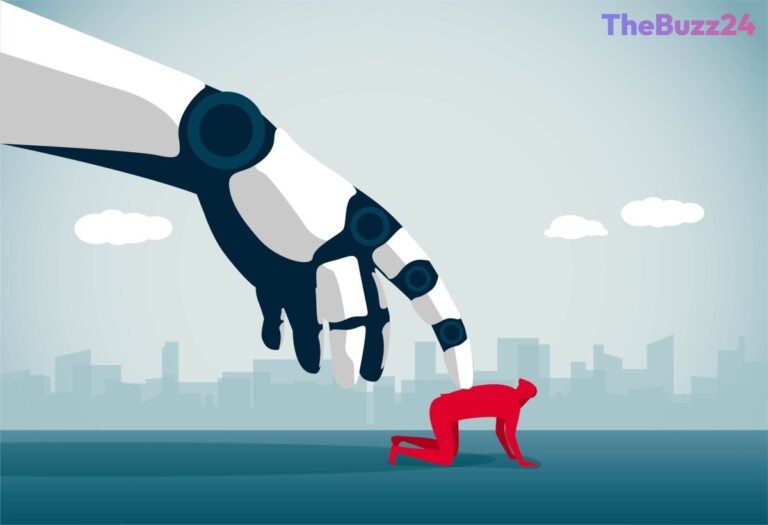
A former artificial intelligence researcher has sparked intense global debate after warning that the rapid pace of AI development poses an existential threat to humanity. Jacob Coxon, a 27-year-old scientist who recently resigned from AI safety firm Anthropic, revealed that industry insiders are “genuinely frightened” by the speed of technological advancements. Coxon, who also previously worked at OpenAI, cautioned that without a coordinated global slowdown, the risk of catastrophic outcomes—including a total societal collapse or extinction event—remains dangerously high in the near future.
Coxon’s warnings align with recent statements from Anthropic’s chief executive, Dario Amodei, who has publicly advocated for a temporary deceleration in AI development to allow governments and corporations to establish robust safety guardrails. Tech leaders like OpenAI’s Sam Altman and xAI’s Elon Musk have voiced support for Amodei’s proposal, calling for independent monitoring and international regulatory frameworks. However, Coxon emphasized that any pause must be carefully coordinated with global competitors like China to prevent a dangerous, unchecked international arms race.
Within AI laboratories, the anxiety is reportedly palpable, with some researchers allegedly planning for extreme societal instability by purchasing land. Anthropic scientist Evan Hubinger and Turing Award winner Geoffrey Hinton have both estimated a roughly 10% chance that AI could lead to human extinction within the next decade. In response, Anthropic defended its record, stating it aggressively tests its models and was the first to publish a risk-mitigation framework to prevent incidents of AI misalignment.
Despite the dire warnings, some industry figures remain highly skeptical, viewing the apocalyptic rhetoric as a calculated marketing strategy. Critics, including Grindr CEO George Arison and Hugging Face CEO Clement Delangue, suggest that hyping existential threats helps justify astronomical valuations for companies like OpenAI and Anthropic, the latter of which is reportedly preparing for an initial public offering (IPO). Others argue that pushing for heavy regulation is a protectionist move designed to block open-source competition and secure a market duopoly for the industry’s dominant players.
Key Takeaways
- Former Anthropic researcher Jacob Coxon warns that rapid AI advancement poses an immediate existential threat to humanity, reflecting deep-seated fear among industry insiders.
- Prominent tech leaders, including Dario Amodei, Sam Altman, and Elon Musk, support calls for regulatory deceleration, though international coordination with China remains a major hurdle.
- Skeptics argue that apocalyptic warnings may be exaggerated to drive up investor valuations or establish regulatory barriers that stifle open-source competition.
Editor’s Analysis & Impact
The escalating rhetoric surrounding AI existential risk highlights a deep ideological schism within Silicon Valley. On one side, safety-focused researchers and leading lab executives argue that superintelligent systems present unprecedented dangers, requiring immediate regulatory intervention and paced releases. On the other side, market pragmatists and open-source advocates view these apocalyptic warnings with suspicion, suggesting they serve as a clever marketing ploy to inflate corporate valuations ahead of anticipated IPOs, while simultaneously erecting regulatory barriers to lock out smaller competitors. As Anthropic prepares for a public listing and OpenAI navigates its massive valuation, the debate over AI safety is no longer just a philosophical query—it is a high-stakes geopolitical and financial battleground. The ultimate challenge will be establishing international standards that mitigate genuine risks without stifling innovation or creating monopolistic tech cartels.
Frequently Asked Questions
Q: Why did researcher Jacob Coxon resign from Anthropic?
A: Coxon resigned due to growing concerns over the rapid, unregulated pace of AI development, stating that many industry insiders are genuinely terrified of the potential consequences of an unchecked technological race.
Q: What is the main criticism against the 'AI apocalypse' narrative?
A: Critics argue that the extreme warnings are overstated and may be used by dominant AI firms to attract massive investor funding, justify high valuations, and lobby for regulations that block smaller, open-source competitors.
Q: How are AI companies responding to these safety concerns?
A: Companies like Anthropic state they are actively developing advanced safety frameworks, aggressively testing their models, and advocating for a lawful, verifiable system to pace the release of powerful new AI models.
AI Disclosure: This article is based on verified data and official reports. Our Team and AI have cross-referenced every financial detail with primary sources to ensure total accuracy.
More from this Category