Intel Stages Financial Comeback Driven by AI Infrastructure and Foundry Expansion
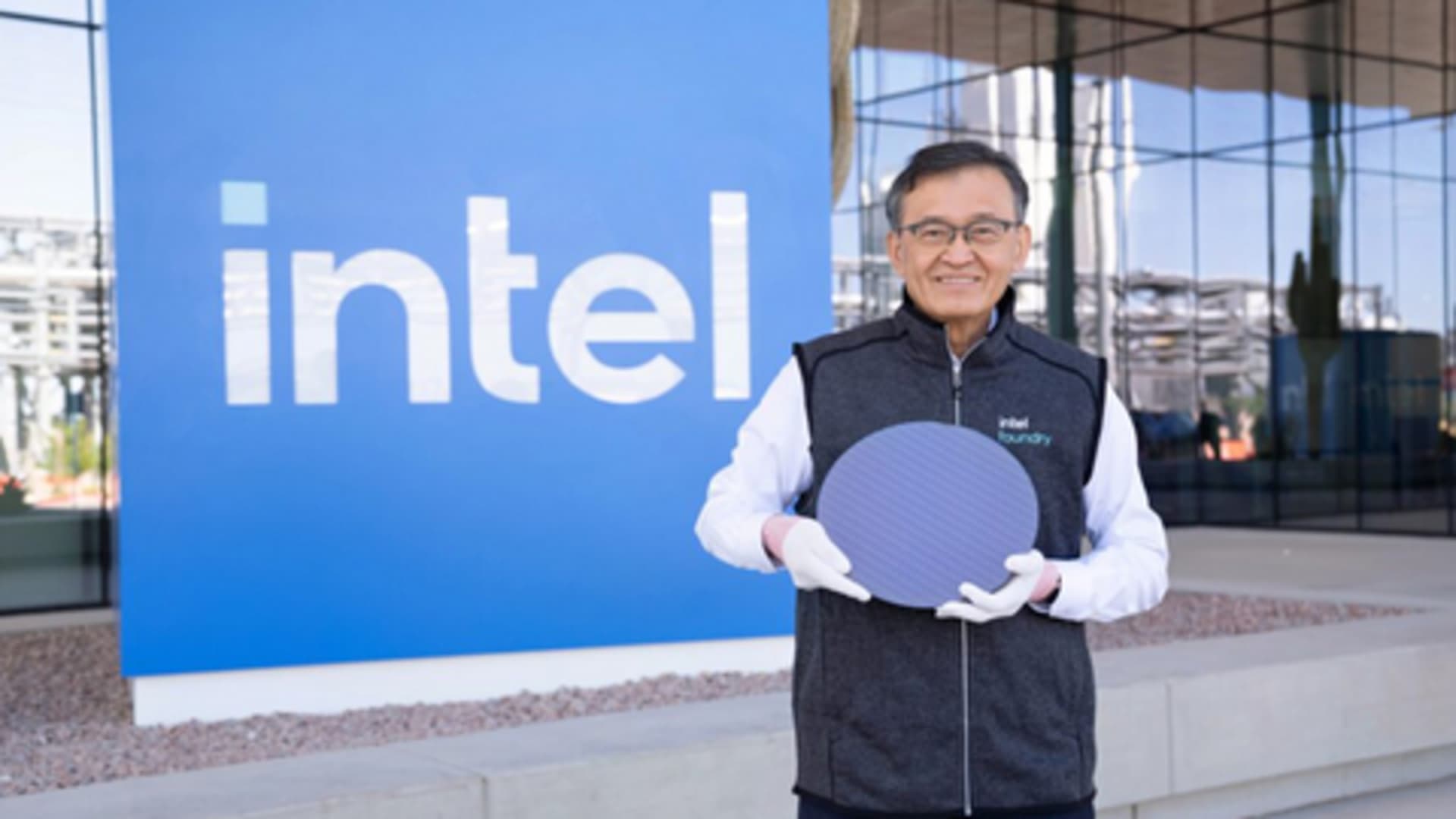
Intel has officially signaled a robust commercial turnaround, reporting first-quarter earnings that significantly outperformed market expectations. The semiconductor giant posted $13.58 billion in revenue, marking a 7.2% year-over-year increase. This growth represents a critical inflection point for the company, effectively reversing a trend of consecutive quarterly revenue declines and helping to restore investor confidence in its long-term roadmap.
The primary engine behind this resurgence is the company’s data center division, which saw a substantial 22% revenue surge to $5.1 billion. As the artificial intelligence sector matures, the industry is seeing an insatiable demand for high-performance CPUs capable of managing complex, agentic workloads. Intel leadership has emphasized that the CPU remains a foundational element of modern AI infrastructure, a claim now validated by the company’s latest financial performance.
Beyond its traditional chip business, Intel is aggressively scaling its foundry services, which recorded a 16% revenue increase to $5.4 billion. By leveraging its status as an integrated device manufacturer, the company is accelerating the development of its 18A and 14A process nodes. Furthermore, Intel has secured a high-profile partnership to design and fabricate advanced chips for Elon Musk’s ventures, including Tesla, SpaceX, and xAI, as a core participant in the Terafab chip complex initiative.
While the company reported a net deficit of $4.28 billion, it maintains a distinct competitive advantage through its sophisticated advanced packaging capabilities. By alleviating critical bottlenecks within the global AI supply chain, Intel is establishing itself as a primary manufacturing partner for industry titans such as Amazon and Cisco. These strategic alliances are expected to serve as the bedrock for sustained revenue growth throughout the upcoming fiscal periods.
Key Takeaways
- Intel achieved $13.58 billion in Q1 revenue, reflecting a 7.2% year-over-year growth and a recovery from previous downturns.
- The data center division grew by 22%, fueled by the increasing necessity for CPUs to handle complex AI-driven tasks.
- Intel has entered a strategic partnership to manufacture high-performance chips for Elon Musk’s companies, including Tesla, SpaceX, and xAI.
Editor’s Analysis & Impact
Intel’s recent performance suggests the company is successfully navigating the difficult transition from a legacy chipmaker to a critical player in the modern AI hardware ecosystem. While the net deficit remains a point of concern for conservative investors, the 16% growth in foundry services indicates that Intel’s strategy to open its manufacturing capacity to external clients is gaining significant traction. By positioning itself as a vital link in the AI supply chain—specifically through advanced packaging—Intel is carving out a niche that competitors may struggle to replicate. The partnership with Elon Musk’s companies provides a high-profile validation of Intel’s manufacturing roadmap. If the company can successfully scale its 18A and 14A process nodes, it is well-positioned to capture significant market share from rivals, provided it can balance its heavy capital expenditures with long-term profitability.
Frequently Asked Questions
Q: What is driving Intel's recent revenue growth?
A: The growth is primarily driven by a 22% increase in the data center division due to high demand for CPUs in AI applications, alongside a 16% increase in foundry services.
Q: What is the significance of Intel's partnership with Elon Musk?
A: Intel has been tapped to design and fabricate high-performance chips for Tesla, SpaceX, and xAI as part of the Terafab chip complex, which highlights Intel's manufacturing capabilities for high-end tech projects.
AI Disclosure: This article is based on verified data and official reports. Our Team and AI have cross-referenced every financial detail with primary sources to ensure total accuracy.
More from this Category