International Space Agencies Join Forces to Cultivate Crops on the Moon
NASA, the Canadian Space Agency, and the German Aerospace Center have officially joined forces by signing a joint statement of intent. The coalition will focus on launching coordinated, preparatory work for an Earth-based demonstrator designed to pioneer agricultural techniques for the Moon. This initiative is viewed as a vital step in enabling astronauts to undertake longer missions and travel deeper into the cosmos.
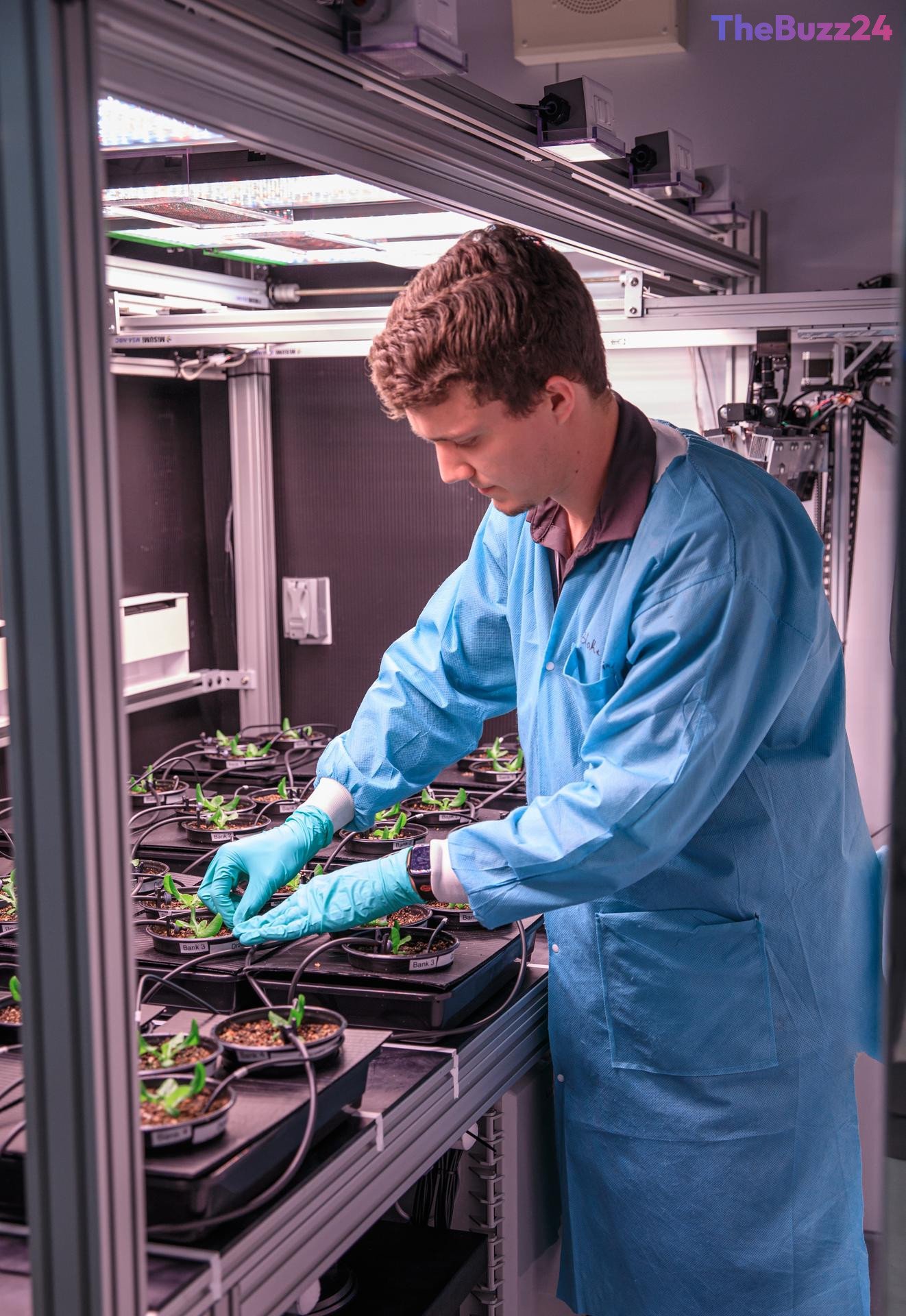
The centerpiece of this collaborative effort is the Lunar Agriculture Module-Ground Test Demonstrator. The project seeks to engineer the necessary technologies for cultivating space crops while rigorously testing their resilience under artificial atmospheres and controlled environments that mirror conditions anticipated at future lunar bases. By establishing a sustainable base near the Moon’s South Pole, space agencies aim to construct the permanent infrastructure required to support a continuous human footprint, thereby paving the way for eventual crewed missions to Mars.
Developing reliable methods for growing crops in space offers multifaceted advantages for long-duration space travel. Beyond supplying deep-space crews with essential whole-food nutrition and much-needed dietary variety, cultivated plants play a critical role in life support systems. They actively absorb carbon dioxide, generate fresh oxygen, and assist in water recycling processes, making them indispensable assets for humanity’s future expansion into the solar system.
Key Takeaways
- NASA, the Canadian Space Agency, and the German Aerospace Center signed a joint statement of intent for lunar agriculture.
- The Lunar Agriculture Module-Ground Test Demonstrator will test crop growth in environments simulating future Moon bases.
- Space crops are crucial for providing nutrition, recycling water, and producing oxygen during long-duration deep space missions.
Editor’s Analysis & Impact
The formal collaboration between major international space agencies to tackle lunar agriculture marks a pivotal shift from short-term exploration to sustained habitation. As ambitions pivot toward establishing permanent outposts on the Moon and eventually journeying to Mars, the logistics of life support become exponentially challenging. Relying entirely on resupply missions from Earth is economically and logistically unfeasible for long-duration deep space exploration. By investing in controlled-environment agriculture and bioregenerative life support systems now, the aerospace industry is addressing one of the most critical bottlenecks in interplanetary travel. This initiative not only enhances astronaut health and mission autonomy but also fosters cross-border technological innovation that could yield terrestrial benefits in arid or extreme farming environments back on Earth.
Frequently Asked Questions
Q: Which space agencies are involved in the lunar crop initiative?
A: The initiative involves NASA, the Canadian Space Agency (CSA), and the German Aerospace Center (DLR).
Q: What is the primary goal of the Lunar Agriculture Module-Ground Test Demonstrator?
A: The demonstrator aims to develop technologies for growing crops and studying their performance in controlled environments that mimic future Moon base conditions.
Q: Why are space crops important for future space missions?
A: Space crops provide whole-food nutrition, dietary variety, absorb carbon dioxide, produce oxygen, and help recycle water for astronauts on long missions.
AI Disclosure: This article is based on verified data and official reports. Our Team and AI have cross-referenced every financial detail with primary sources to ensure total accuracy.
More from this Category