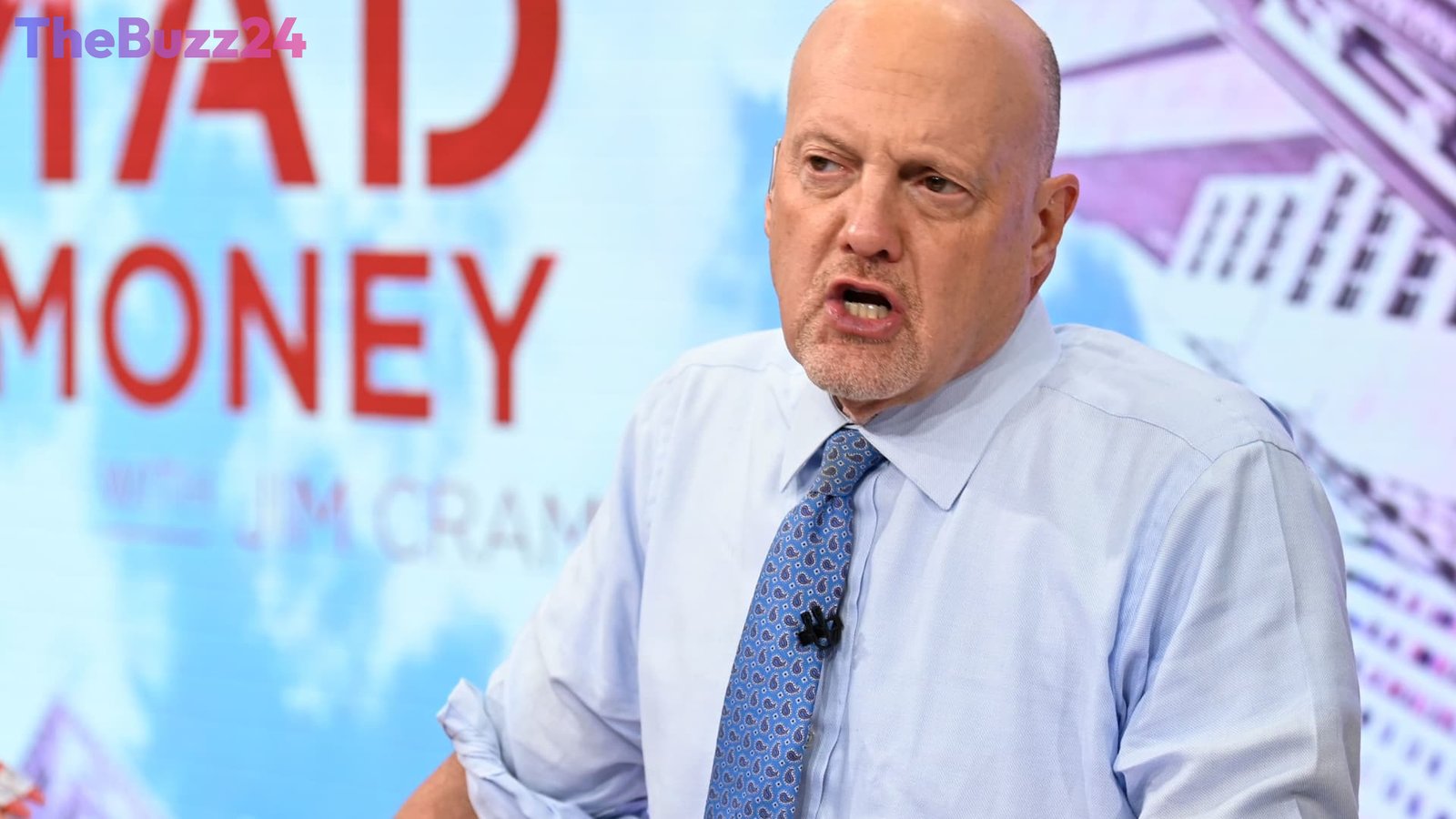
IPO Surge Threatens Market Rally, Jim Cramer Warns
A significant influx of initial public offerings (IPOs) and capital raises could potentially undermine the current stock market rally, according to veteran market commentator Jim Cramer. Cramer expressed concern that the sheer volume of new stock issuings, particularly from high-profile technology companies, may outstrip investor demand, leading to a depletion of available capital for the broader market.
The recent filing for an IPO by AI firm Anthropic, a company known for its Claude chatbot, has brought renewed attention to this potential market strain. This follows a year where companies have already secured substantial funding through public offerings, raising approximately $148 billion. Cramer highlighted that the anticipated large-scale fundraising by AI leaders like Anthropic and OpenAI could place an unprecedented demand on investor resources.
Cramer drew a parallel to the dot-com bubble of the early 2000s, not in terms of company viability, but in the sheer magnitude of capital being raised. While acknowledging that today’s leading tech firms are generally more established with proven business models compared to many dot-com era startups, he cautioned that an oversupply of new stock could still overwhelm investor capacity. This could divert funds away from existing market investments, such as those in the S&P 500, thereby pressuring overall market performance.
He further elaborated that both the debt and equity markets might be approaching a point of saturation. This scenario could lead to a situation where the capital required for companies to fund their growth and ambitions is exhausted before investors can realize returns. While not predicting an immediate market downturn, Cramer indicated a cautious outlook based on these observations.
Key Takeaways
- A surge in IPOs and capital raises could drain liquidity from the stock market, threatening the ongoing rally.
- The large fundraising needs of AI companies like Anthropic and OpenAI are a particular concern.
- Concerns are raised about investor demand being unable to keep pace with the volume of new stock issuances, potentially mirroring dynamics seen before the dot-com bubble.
Editor’s Analysis & Impact
The market’s resilience is being tested by a dual force: strong corporate fundamentals and an increasing supply of new equity. While the underlying health of many companies, particularly in the tech and AI sectors, remains robust, the sheer volume of capital being sought through IPOs and secondary offerings presents a significant challenge. If investor demand falters, it could lead to underpricing of new issues and a broader market correction as capital is reallocated. This situation warrants close monitoring, as it could signal a shift from a bull market driven by growth expectations to one constrained by available liquidity.
Frequently Asked Questions
Q: What is an IPO and why does it matter for the stock market?
A: An IPO (Initial Public Offering) is the process by which a private company first sells shares of stock to the public, becoming a publicly traded company. A large number of IPOs can impact the market by increasing the supply of stocks, potentially drawing investment capital away from existing stocks and affecting overall market valuations.
Q: What is the concern about AI companies like Anthropic and OpenAI going public?
A: AI companies like Anthropic and OpenAI are highly anticipated IPO candidates. The concern is that their potentially massive fundraising requirements could absorb a significant portion of available investor capital, straining the market's capacity to absorb new offerings and potentially impacting other stocks.
Q: How does the current situation compare to the dot-com bubble?
A: While the underlying companies today are generally considered more fundamentally sound than many during the dot-com era, the concern is similar regarding the sheer volume of capital being raised. During the dot-com bubble, an oversupply of new stock offerings eventually exhausted investor demand, contributing to a market collapse.
AI Disclosure: This article is based on verified data and official reports. Our Team and AI have cross-referenced every financial detail with primary sources to ensure total accuracy.
More from this Category