Iran Commences Massive Multi-Day Funeral Processions for Late Supreme Leader
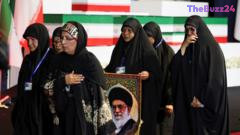
Iran has initiated a period of extensive public mourning and elaborate funeral processions for the late Supreme Leader, Ayatollah Ali Khamenei. The ceremonies, which are expected to draw millions of attendees, take place more than four months after the Ayatollah was killed during strikes involving the United States and Israel. The event, described by local authorities as the ‘funeral of the century,’ marks a significant moment of transition for the nation as it navigates a fragile ceasefire established in June.
The formal proceedings began with the body lying in state at Tehran’s Grand Mosalla, where officials have implemented strict crowd control measures to manage the massive influx of mourners. The government has mandated the closure of public and private offices in the capital from Saturday through Monday, while simultaneously imposing significant traffic restrictions and airspace closures to accommodate the scale of the event. The remains of the Ayatollah, along with family members killed in the same February strikes, will be honored throughout the capital before the procession moves to other symbolic locations.
Following the events in Tehran, the funeral route will extend to the city of Qom and eventually cross into Iraq for ceremonies at the shrines of Imam Ali and Karbala, underscoring the late leader’s regional influence. The final interment is scheduled for next Thursday in Mashhad at the Imam Reza Shrine. As the country observes these rites, attention remains fixed on the succession of Mojtaba Khamenei, the late leader’s son, whose public visibility and role in the upcoming ceremonies remain a subject of intense national and international speculation.
Key Takeaways
- Iran has launched a multi-day, large-scale funeral processional for the late Supreme Leader Ayatollah Ali Khamenei.
- The ceremonies include a cross-border procession into Iraq, highlighting the late leader's regional religious and political influence.
- The nation is currently observing a fragile ceasefire with the U.S. while managing a leadership transition to the late Ayatollah's son, Mojtaba Khamenei.
Editor’s Analysis & Impact
The funeral of Ayatollah Ali Khamenei serves as more than a religious rite; it is a critical exercise in statecraft and domestic stability. By framing the event as the ‘funeral of the century,’ the Iranian government is attempting to consolidate national identity and project strength during a period of extreme geopolitical vulnerability. The inclusion of Iraqi pilgrimage sites in the funeral route is a strategic move to reinforce Iran’s regional hegemony and influence over Shia populations abroad. However, the transition to Mojtaba Khamenei remains the primary source of uncertainty. The lack of public appearances by the new leader suggests internal friction or a cautious approach to legitimacy. Investors and geopolitical analysts should monitor the funeral’s conclusion for signs of power consolidation or potential shifts in Iran’s foreign policy posture following the recent ceasefire.
Frequently Asked Questions
Q: Where will Ayatollah Ali Khamenei be buried?
A: The late Supreme Leader will be buried in his hometown of Mashhad at the Imam Reza Shrine, which is Iran's most significant pilgrimage site.
Q: Who is the current Supreme Leader of Iran?
A: Mojtaba Khamenei, the son of the late Ayatollah, has succeeded his father as the Supreme Leader, though he has maintained a low public profile since assuming the role.
AI Disclosure: This article is based on verified data and official reports. Our Team and AI have cross-referenced every financial detail with primary sources to ensure total accuracy.
More from this Category