Japan Records First ‘Cruelly Hot Day’ as Temperatures Breach 40C
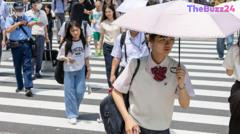
Japan has officially logged its first ‘kokushobi,’ or ‘cruelly hot day,’ as extreme temperatures surged past the 40C (104F) threshold in several central cities. This new classification, introduced earlier this year by national weather authorities, serves as a critical warning system for the public regarding the life-threatening risks associated with record-breaking heatwaves.
On Tuesday, the cities of Tajimi, Gujo, and Toyoda reached this dangerous milestone, with forecasts indicating that the sweltering conditions are likely to persist well into the coming week. The intensity of the heat has prompted widespread concern, as nearly one-third of the nation’s 914 observation points recorded temperatures exceeding 35C, a level previously categorized as ‘extremely hot.’
In response to the escalating crisis, authorities have issued heatstroke alerts across more than 40 prefectures. The Tokyo Fire Department reported a record-breaking 287 hospitalizations in a single day due to heat-related illnesses, ranging from young children to the elderly. Emergency services have since issued an ambulance overload alert, urging citizens to prioritize hydration, utilize air conditioning, and avoid unnecessary outdoor exposure.
To mitigate the impact of the rising temperatures, the government is actively promoting more flexible workplace dress codes, encouraging employees to abandon traditional suits in favor of lighter attire. This shift comes as data shows a concerning upward trend in workplace heatstroke incidents, highlighting the growing necessity for structural changes in how the country manages its increasingly dangerous summer seasons.
Key Takeaways
- Japan has officially implemented the 'kokushobi' (cruelly hot day) classification for temperatures reaching 40C or higher.
- The Tokyo Fire Department recorded its highest number of heatstroke-related hospitalizations this year, prompting an ambulance overload alert.
- Government officials are encouraging more casual workplace attire, such as shorts and T-shirts, to help workers cope with the extreme heat.
Editor’s Analysis & Impact
The introduction of the ‘kokushobi’ classification reflects a broader global trend where meteorological agencies are forced to update their terminology to account for the increasing frequency and severity of extreme weather events. From an economic perspective, this shift signals a permanent change in Japanese labor practices and public health infrastructure. As summers become more volatile, industries ranging from construction to retail must adapt to lower productivity during peak heat hours and higher operational costs for cooling. The broader implication is that climate adaptation is no longer a long-term goal but an immediate necessity for urban planning and corporate policy. Future outlooks suggest that without significant infrastructure upgrades to combat the ‘urban heat island’ effect, Japan will likely see a continued rise in heat-related morbidity and a subsequent strain on emergency medical services.
Frequently Asked Questions
Q: What is a 'kokushobi' in Japan?
A: A 'kokushobi,' or 'cruelly hot day,' is a term introduced by the Japanese weather agency to describe days where temperatures reach or exceed 40C (104F) to better warn the public of extreme heat risks.
Q: How are Japanese authorities responding to the current heatwave?
A: Authorities have issued heatstroke alerts across 40 prefectures, advised the public to use air conditioning and stay hydrated, and are encouraging workplaces to adopt more casual, heat-appropriate dress codes.
AI Disclosure: This article is based on verified data and official reports. Our Team and AI have cross-referenced every financial detail with primary sources to ensure total accuracy.
More from this Category