Justice Decades Later: Former Gang Boss Convicted in 1996 Murder of Tupac Shakur
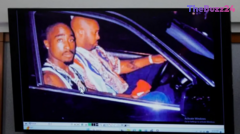
A Las Vegas jury has handed down a guilty verdict in the nearly 30-year-old cold case involving the murder of iconic rap superstar Tupac Shakur. Duane “Keffe D” Davis, a former gang leader, was convicted of one count of murder with a deadly weapon for his role in the 1996 drive-by shooting that claimed the artist’s life at the height of his career.
The 63-year-old stood quietly in a black suit as the verdict was delivered, immediately indicating his intention to appeal the court’s decision. Prosecutors successfully argued that while Davis did not personally pull the trigger, he acted as the “shot caller” who orchestrated the attack, supplied the weapon, and rode in the vehicle from which the fatal bullets were fired by his nephew, Orlando Anderson.
The trial relied heavily on Davis’s own past admissions, including a 2008 police interview and details published in his 2019 memoir, wherein he openly discussed his involvement in the shooting. Although Davis’s defense team claimed those statements were merely exaggerations and fictional bravado designed to boost book sales, the jury ultimately rejected the argument.
Shakur’s family and friends wept and hugged in the courtroom following the verdict, bringing a measure of closure to one of the most heavily scrutinized unsolved homicides in music history. Judge Carli Kierny scheduled Davis’s formal sentencing for October 13.
Key Takeaways
- Former gang leader Duane "Keffe D" Davis was found guilty of orchestrating the 1996 murder of rapper Tupac Shakur.
- Prosecutors established that Davis supplied the weapon and acted as the mastermind behind the Las Vegas drive-by shooting.
- Key evidence included Davis's own previous public admissions, police interviews, and his 2019 memoir.
Editor’s Analysis & Impact
The conviction of Duane Davis marks a historic milestone in music and legal history, closing a chapter on one of the entertainment industry’s most notorious unsolved mysteries. For decades, the murder of Tupac Shakur fueled countless conspiracy theories and symbolized a turbulent era of regional rivalries in American hip-hop. This verdict demonstrates that cold cases can indeed be successfully prosecuted when public confessions and modern legal strategies intersect. Furthermore, it highlights the legal dangers of individuals capitalizing on criminal notoriety through memoirs and media interviews, which can ultimately be leveraged by prosecutors in a court of law to secure convictions long after the initial crime.
Frequently Asked Questions
Q: Who was convicted of Tupac Shakur's murder?
A: Former gang leader Duane "Keffe D" Davis was convicted of orchestrating the 1996 murder.
Q: Did Duane Davis fire the fatal shots himself?
A: No, prosecutors argued and evidence showed that Davis ordered the shooting and supplied the weapon, while his nephew Orlando Anderson fired the shots.
Q: What key evidence was used against Davis?
A: The prosecution relied heavily on Davis's own recorded statements from a 2008 police interview and details he published in his 2019 memoir.
AI Disclosure: This article is based on verified data and official reports. Our Team and AI have cross-referenced every financial detail with primary sources to ensure total accuracy.
More from this Category