Kashmir’s Classrooms Face Content Purge Amidst ‘Objectionable’ Book Directive
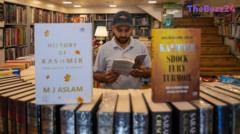
Authorities in Indian-administered Kashmir have initiated a sweeping mandate for all educational institutions to scrutinize books and published materials for content deemed “inappropriate and objectionable.” This directive, encompassing schools, colleges, universities, and coaching centers, has ignited a fervent debate over academic freedom and the state’s role in shaping historical narratives within the region.
The order requires institutions to review all materials, including research papers and academic theses, for content that could violate “religious sentiments, laws, educational values, and established norms.” Any material identified as objectionable must be reported to the authorities. Officials assert that the measure is not intended to restrict reading but rather to eliminate factually inaccurate or unlawful content, specifically targeting material that “promotes, glorifies, legitimizes or justifies terrorism, violent extremism, secessionism, radicalization” or any activity deemed prejudicial to national security.
However, this move has drawn sharp criticism from opposition parties, academics, and students, who perceive it as an infringement on academic freedom and an attempt to suppress Kashmir’s complex and often turbulent history. The region, claimed by both India and Pakistan and administered in parts, has endured decades of conflict. Critics argue that since Delhi revoked Kashmir’s semi-autonomous status in 2019 and imposed direct federal rule, civil liberties have narrowed, and state control has expanded, despite the subsequent restoration of an elected local government.
The directive follows recent protests by the Bharatiya Janata Party (BJP) concerning two government school library books that allegedly glorified separatist leaders. These books, part of a collection on “great personalities” from Jammu and Kashmir, were withdrawn after public outcry, leading to arrests and suspensions of education department officials. The current order, issued in the wake of this controversy, broadly defines “objectionable material” as content violating religious sentiments, laws, national interest, or educational values, and mandates adherence to India’s “age-appropriate” education guidelines. Naseer Ahmad Wani, the school education director, confirmed that a committee would review books but did not provide specific criteria for what would qualify as objectionable.
This is not an isolated incident; last year, 25 books, including works by Booker Prize-winning author Arundhati Roy and scholar A.G. Noorani, were banned for allegedly promoting “false narratives and secessionism.” Political scientist Noor Ahmad Baba contends that such restrictions contravene the constitutional right to freedom of speech. A Kashmir studies teacher, speaking anonymously, highlighted that in a region where history, education, and identity are deeply contested, book screening raises “legitimate questions about academic freedom and the state’s role in defining acceptable narratives.” While leaders like Altaf Bukhari of the Jammu and Kashmir Apni Party allege a “wider conspiracy” to remove academic content, Imran Nabi Dar of the National Conference and BJP spokesperson Sunil Sethi defend the policy, emphasizing the need to prevent controversies and maintain peace, asserting that glorifying separatists under the guise of academic freedom is unacceptable.
Key Takeaways
- Indian-administered Kashmir has issued a directive for all educational institutions to review books for "inappropriate and objectionable" content.
- Authorities claim the move aims to remove factually inaccurate or unlawful material, particularly content promoting extremism or secessionism, while critics argue it's an attack on academic freedom and an attempt to control historical narratives.
- The order follows previous book bans and arrests, intensifying a debate over censorship and the state's role in defining acceptable educational content in the conflict-ridden region.
Editor’s Analysis & Impact
This sweeping directive in Indian-administered Kashmir will significantly impact the region’s education sector, publishers, and authors. It risks fostering an environment of self-censorship among educators and writers, potentially limiting the diversity of academic materials and stifling critical thought. The future outlook suggests a continued tightening of control over information and narratives, which could further erode academic freedom and civil liberties, possibly leading to increased legal challenges and social unrest. Broader implications include setting a precedent for how historical and political narratives are shaped in sensitive regions globally, raising fundamental questions about the balance between state authority and individual freedoms, particularly the right to education and freedom of expression, in politically charged environments.
Frequently Asked Questions
Q: What is the primary purpose of the new directive in Indian-administered Kashmir?
A: The directive mandates educational institutions to review all published materials for "inappropriate and objectionable" content. Authorities state this is aimed at removing factually inaccurate or unlawful material, especially content promoting terrorism, extremism, or secessionism.
Q: Why is the directive controversial?
A: Critics, including opposition parties and academics, argue that the directive is an attack on academic freedom and an attempt to control or erase Kashmir's turbulent history. They point to the vague definition of "objectionable material" and previous instances of book bans and arrests.
Q: What are the potential long-term effects of this policy?
A: The policy could lead to increased self-censorship in educational institutions, limit the diversity of academic discourse, and further restrict civil liberties in the region. It also raises concerns about the state's role in defining historical narratives and the potential for suppressing dissenting viewpoints.
AI Disclosure: This article is based on verified data and official reports. Our Team and AI have cross-referenced every financial detail with primary sources to ensure total accuracy.
More from this Category