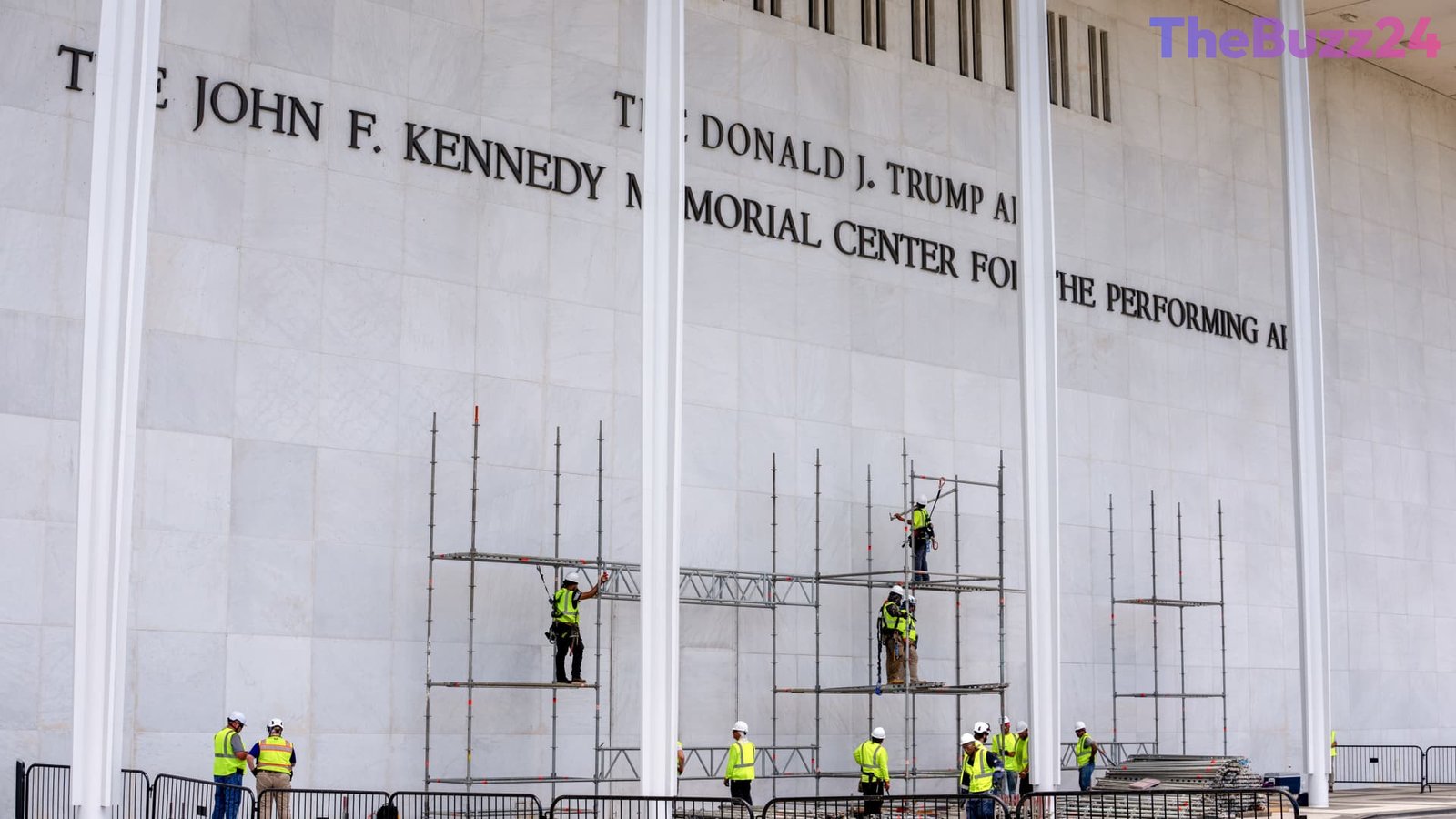
Kennedy Center Board Votes to Reinstate Trump’s Name on Facade, Sparking Fresh Legal Clash
The board of trustees for the Kennedy Center has voted to reinstate President Donald Trump’s name onto the building’s facade, reigniting a contentious legal battle regarding modifications to the prominent Washington, D.C., performing arts venue. The decision follows a previous federal court order that had mandated the removal of the former president’s name from the landmark.
According to details shared by congressional representatives and legal counsel, the board approved a measure to reconfigure the exterior inscription to honor the restoration efforts under the administration, alongside a vote to designate the adjacent outdoor space as ‘the President Donald J. Trump Plaza.’ Furthermore, the board authorized a plan to shutter a significant portion of the facility for a two-year duration to facilitate comprehensive renovations.
Legal representatives representing the opposition condemned the board’s actions as a direct defiance of judicial authority, pointing to a prior ruling by a U.S. District Court judge who emphasized that congressional authority dictates the official naming of the national monument. With the board moving forward despite the earlier legal setbacks, the dispute is expected to return to federal court for further adjudication.
Key Takeaways
- The Kennedy Center board voted to place President Donald Trump's name back on the building's facade and rename the surrounding plaza.
- The board also approved a two-year partial closure of the facility to undergo extensive renovations.
- Legal representatives and opposing lawmakers argue the vote violates a previous federal judge's order and plan to challenge it in court.
Editor’s Analysis & Impact
This ongoing dispute highlights the intersection of political influence, institutional governance, and judicial oversight over national cultural monuments. The board’s persistent efforts to honor the former president, despite clear pushback from federal judges and congressional critics, set a precarious precedent for how politically appointed boards operate within public-interest cultural institutions. As this conflict moves back into the courtroom, the outcome could redefine the limits of board authority over federal properties and national landmarks, potentially drawing broader scrutiny toward the governance structures of similar public-private institutions across the country.
Frequently Asked Questions
Q: Why was President Trump's name previously removed from the Kennedy Center?
A: A U.S. District Court judge ordered the removal of the name, ruling that Congress originally gave the Kennedy Center its name and only Congress has the legal authority to change it.
Q: What additional changes did the Kennedy Center board approve during the vote?
A: In addition to putting the name back on the facade and naming a plaza after Trump, the board voted to close most of the facility for two years for extensive renovations.
Q: How are opponents responding to the board's new vote?
A: Opposing lawyers and lawmakers have condemned the vote as a blatant disrespect of court orders and stated they will take legal action to contest the board's decisions.
AI Disclosure: This article is based on verified data and official reports. Our Team and AI have cross-referenced every financial detail with primary sources to ensure total accuracy.
More from this Category