Kenya’s Lake Naivasha Faces Existential Crisis as Water Levels Surge
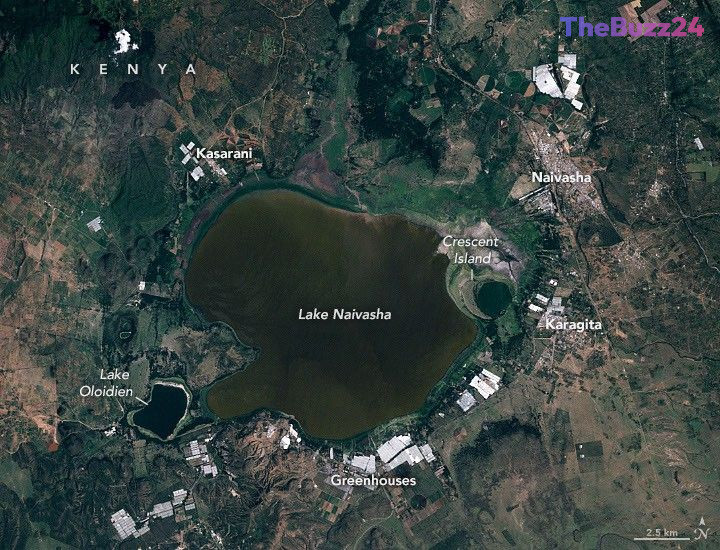
Lake Naivasha in Kenya, a vital hub for wildlife, agriculture, and tourism, is currently grappling with a dramatic and destructive transformation. Over the past 15 years, the freshwater lake has experienced a significant rise in water levels, with satellite data indicating an increase of approximately 7 meters (23 feet) since 2010. This surge has expanded the lake’s surface area by roughly 40 percent, effectively swallowing surrounding land and infrastructure.
The human and economic consequences of this expansion have been severe. Entire neighborhoods, such as Kihoto, have seen town blocks submerged, forcing the displacement of residents and the destruction of essential facilities, including police stations, churches, and electrical substations. Furthermore, the rising waters have caused Lake Naivasha to merge with the neighboring Lake Oloidien, introducing saline, alkaline water into the freshwater ecosystem and complicating local water management efforts.
Hydrologists point to a significant shift in regional climate patterns as the primary catalyst for this phenomenon. Mean annual rainfall in the area has risen by approximately 30 percent over the last decade, with a notable 318 percent increase in high-intensity rainfall events. Because Lake Naivasha is situated in a closed basin with no surface outflow, it is exceptionally vulnerable to these shifts in the water balance. Experts warn that the system is highly sensitive, and once it reaches a tipping point, it responds with rapid and often irreversible changes.
Beyond the immediate flooding, the lake is facing secondary ecological challenges, including the rapid proliferation of water hyacinth, which has hindered fishing and tourism. While some researchers investigate potential tectonic influences on groundwater recharge or sediment accumulation, the immediate reality for the local population is one of uncertainty. As the lake continues to heave and expand, the need for comprehensive research and adaptive infrastructure has become a critical priority for the region’s future.
Key Takeaways
- Lake Naivasha has seen its water levels rise by 7 meters since 2010, expanding its surface area by 40 percent.
- Increased high-intensity rainfall is identified as the primary driver of the flooding, which has displaced thousands and damaged critical infrastructure.
- The expansion has caused the lake to merge with Lake Oloidien, altering the local ecosystem and creating new challenges for agriculture and wildlife.
Editor’s Analysis & Impact
The situation at Lake Naivasha serves as a stark case study in the volatility of closed-basin ecosystems in the face of shifting climate patterns. The economic implications are profound, particularly for Kenya’s flower export industry and local tourism, both of which rely heavily on the lake’s stability. From a market perspective, the destruction of infrastructure and the loss of arable land represent a significant hit to regional productivity. Looking ahead, the ‘heaving’ nature of the lake suggests that traditional land-use planning is no longer sufficient. Future development in the Rift Valley must incorporate more resilient, climate-adaptive strategies. The broader implication is that regions lacking natural drainage outlets are increasingly susceptible to catastrophic flooding, necessitating urgent investment in hydrological monitoring and disaster mitigation to protect both human livelihoods and biodiversity.
Frequently Asked Questions
Q: Why is Lake Naivasha particularly prone to flooding?
A: Lake Naivasha is located in a closed basin with no surface outflow. This means that when rainfall increases, the water has nowhere to drain, causing the lake level to rise rapidly in response to even modest changes in the water balance.
Q: What impact has the rising water had on the local economy?
A: The flooding has caused significant damage to homes, roads, and commercial enterprises, including flower farms and tourism facilities. It has also disrupted the fishing industry due to the spread of invasive water hyacinth and increased human-wildlife conflict, particularly with hippos.
AI Disclosure: This article is based on verified data and official reports. Our Team and AI have cross-referenced every financial detail with primary sources to ensure total accuracy.
More from this Category