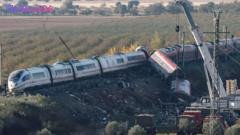
Leaked Audio Suggests Communication Breakdown Preceded Deadly Spanish Train Collision
Leaked audio recordings have surfaced, detailing conversations between train operators and a control center in the moments leading up to a catastrophic collision that claimed 69 lives. The recordings, published by Spanish media outlets, are now a focal point of the official investigation into the disaster, which occurred when a high-speed train traveling from Madrid to Seville struck a stationary train near the town of Urda.
Initial analysis of three audio exchanges suggests a critical error may have occurred. Reports indicate that one of the trains received clearance to proceed despite another train being stalled on the same track approximately 25 kilometers ahead. This occurred while the stalled train’s driver had reported losing communication with the control system and being unable to move. The situation was further complicated by a reported failure in the automatic signaling system, which had necessitated a halt for all trains on that segment.
Survivors have recounted harrowing experiences from the crash, describing scenes of chaos, injuries, and smoke filling the carriages. Spain’s Prime Minister Pedro Sánchez has pledged a thorough investigation to uncover all details of the tragedy and implement measures to prevent future occurrences. The incident marks one of the most severe rail disasters in modern European history and Spain’s worst since 2013. The nation observed three days of mourning following the event.
The moving train, operated by the state-owned Renfe, was carrying 397 passengers, while the stationary train, operated by private firm Iryo, had 147 passengers on board. The transport minister has described the decision to allow the Renfe train to proceed without speed restrictions as “inexplicable,” raising further questions about the protocols followed during the signaling system failure.
Key Takeaways
- Leaked audio recordings suggest a potential communication error between train operators and a control center preceded a deadly train crash in Spain.
- The incident involved a high-speed train colliding with a stationary train, resulting in 69 fatalities and numerous injuries.
- An investigation is underway to determine the exact cause, with initial findings pointing to a possible miscommunication during an automatic signaling system failure.
Editor’s Analysis & Impact
This tragic incident underscores the critical importance of robust communication and fail-safe protocols in transportation systems, particularly in the face of technological failures. The leaked audio recordings raise serious questions about operational procedures and human error within Spain’s rail network. The involvement of both state-owned and private operators adds a layer of complexity to the investigation and potential regulatory oversight. The market impact may include increased scrutiny on rail safety investments, potential compensation claims, and a renewed focus on the reliability of automated signaling systems across the European rail sector. The long-term outlook will likely involve significant upgrades to safety infrastructure and stricter adherence to emergency procedures.
Frequently Asked Questions
Q: What caused the train crash in Spain?
A: The exact cause is still under investigation, but leaked audio suggests a potential communication breakdown between train operators and a control center, possibly involving a miscommunication during an automatic signaling system failure. One train may have been cleared to move despite another being stalled on the track ahead.
Q: How many people were killed or injured in the crash?
A: The crash resulted in 69 fatalities and left dozens of passengers injured. Survivors described harrowing scenes of chaos and trauma.
Q: What is the significance of the leaked audio recordings?
A: The audio recordings provide a timeline of conversations just before the crash and are a key piece of evidence in the investigation. They suggest that instructions were given to proceed under potentially unsafe conditions, leading to the collision.
AI Disclosure: This article is based on verified data and official reports. Our Team and AI have cross-referenced every financial detail with primary sources to ensure total accuracy.
More from this Category