Lebanese Armed Forces Initiate Pilot Deployment Following Israeli Withdrawal
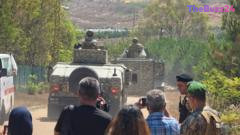
The Lebanese military has officially commenced the deployment of its units into a designated ‘pilot zone’ in the southern region of the country. This strategic move follows the recent withdrawal of Israeli forces, a development facilitated by a trilateral agreement involving the United States, Israel, and Lebanon. Military command confirmed that troops have entered the village of Zawtar al-Gharbiyeh in the Nabatieh district, marking a significant step in the implementation of the ceasefire framework.
In addition to Zawtar al-Gharbiyeh, operations are currently underway in the villages of Froun and Srifa. The primary objective of this pilot initiative is to establish state authority in areas previously impacted by the conflict, while simultaneously addressing the disarmament of Hezbollah. The Lebanese army has urged local residents to exercise caution and refrain from entering these specific zones until the security situation is fully stabilized and official clearance is provided by military authorities.
This development occurs as diplomatic efforts intensify, with high-level meetings scheduled in Washington to discuss the broader scope of the withdrawal. While the Lebanese government seeks a total withdrawal of foreign forces from the southern territory, Israeli officials have indicated that they will maintain a presence in a 10-kilometer security zone along the border to ensure the safety of northern communities. The trilateral coordination group continues to oversee the transition, balancing the need for Lebanese sovereignty with Israel’s stated requirements for regional security.
Key Takeaways
- The Lebanese army has begun deploying troops to three pilot villages in southern Lebanon as part of a US-brokered withdrawal agreement.
- The initiative aims to restore state control in the region and facilitate the disarmament of Hezbollah forces.
- Israel maintains a 10km security zone along the border, citing the need to protect its northern communities from potential threats.
Editor’s Analysis & Impact
The commencement of the pilot zone deployment represents a fragile but critical turning point in the ongoing conflict between Israel and Lebanon. By testing the Lebanese army’s capacity to secure territory previously held by Hezbollah, the international community is attempting to create a buffer that satisfies Israel’s security requirements while upholding Lebanese sovereignty. However, the long-term success of this framework remains uncertain. The primary challenge lies in the delicate balance between the Lebanese military’s operational capabilities and the persistent influence of non-state actors in the south. If this pilot phase proves successful, it could serve as a blueprint for a broader withdrawal; conversely, any security breach or failure to disarm militant factions could lead to a rapid collapse of the agreement and a potential return to active hostilities.
Frequently Asked Questions
Q: What is the purpose of the 'pilot zone' in southern Lebanon?
A: The pilot zone is designed to test the Lebanese army's ability to maintain security and state authority in areas vacated by Israeli forces, with the ultimate goal of disarming Hezbollah and stabilizing the border region.
Q: Are Israeli troops completely out of southern Lebanon?
A: No. While Israeli forces have withdrawn from the specific pilot villages, they have stated they will maintain a 10-kilometer security zone along the border for as long as necessary to ensure the safety of northern Israeli communities.
AI Disclosure: This article is based on verified data and official reports. Our Team and AI have cross-referenced every financial detail with primary sources to ensure total accuracy.
More from this Category