Space Medicine Breakthrough: NASA Tests On-Demand Saline Production for Deep-Space Missions
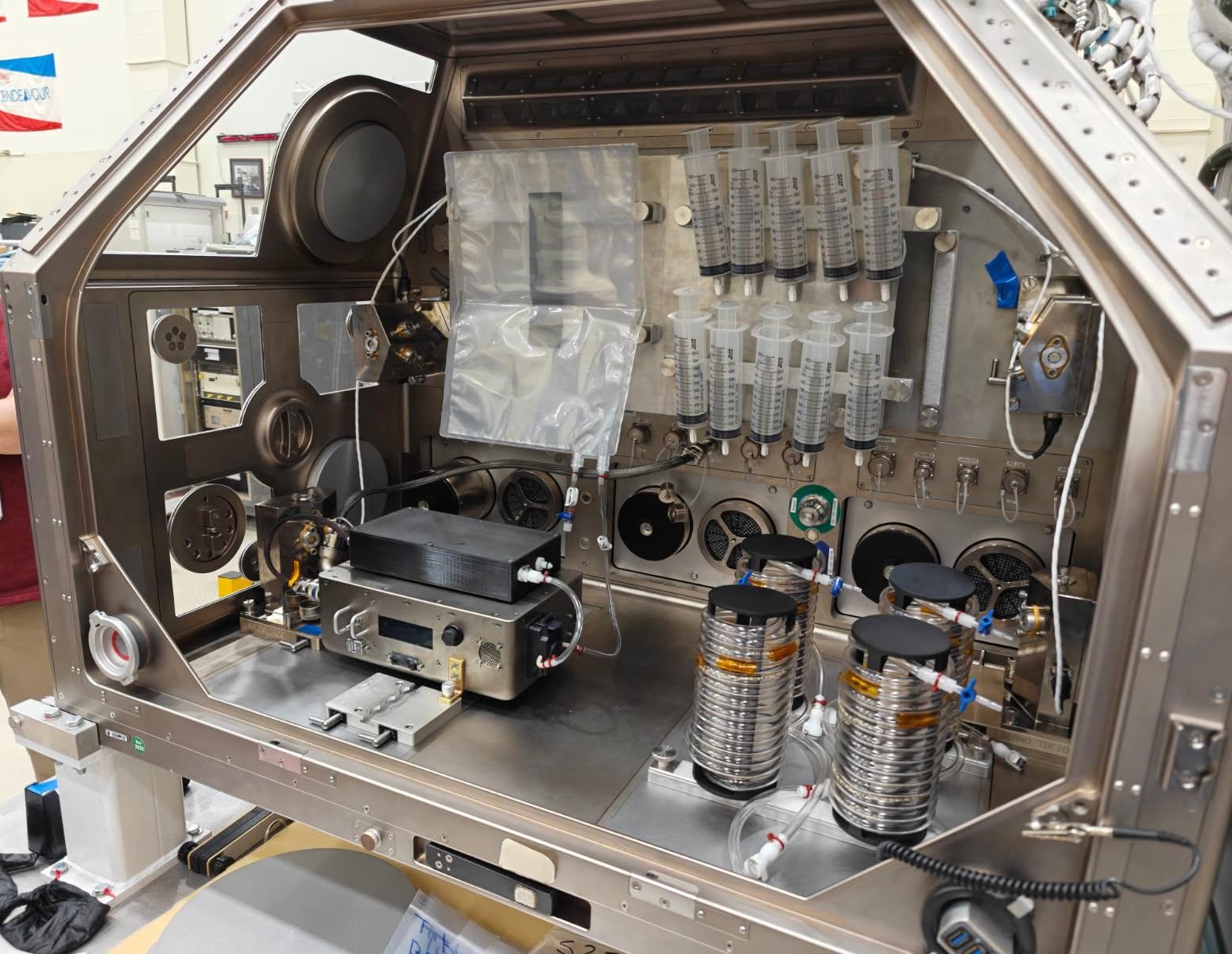
NASA has initiated a pivotal test of a miniaturized medical technology capable of synthesizing sterile intravenous (IV) saline directly from the International Space Station’s water supply. Delivered via a Northrop Grumman Cygnus cargo mission, the device, known as the IVGEN Mini, is designed to address the logistical constraints of long-duration space travel where resupply missions are impossible.
During the evaluation, astronauts are tasked with converting 10 liters of station water into medical-grade saline. The system employs advanced filtration to strip away mineral ions and particulates before integrating a pre-measured sodium chloride cartridge. The resulting solution is engineered to adhere to rigorous United States Pharmacopeia standards for salinity, pH balance, and microbial safety. Following the production phase, the samples will be returned to Earth for comprehensive laboratory analysis to verify the system’s efficacy.
This iteration of the technology marks a significant improvement over previous prototypes, replacing bulky nitrogen-driven mechanisms with efficient electric pumps to reduce the overall weight and footprint. By enabling the on-demand creation of medical fluids, the system eliminates the need to transport heavy, time-sensitive IV bags that have limited shelf lives. This advancement is considered a cornerstone for future human exploration of the Moon and Mars, where cargo capacity is extremely limited and self-sufficiency is a requirement for crew survival.
Key Takeaways
- The IVGEN Mini system allows for the on-demand production of sterile, medical-grade saline using existing water supplies.
- The technology overcomes the shelf-life limitations of traditional IV bags, which are currently unsuitable for multi-year deep-space journeys.
- By shifting to on-demand fluid generation, spacecraft can significantly reduce the mass and volume of cargo required for long-duration missions.
Editor’s Analysis & Impact
The development of the IVGEN Mini represents a critical shift toward ‘in-situ’ resource utilization, a philosophy essential for the success of long-duration space exploration. As missions move beyond low Earth orbit, the dependency on Earth-based supply chains becomes a major vulnerability. By miniaturizing medical manufacturing, NASA is establishing a framework for self-sustaining life support systems that could eventually extend to other pharmaceuticals or diagnostic tools. This modular approach to hardware not only optimizes cargo capacity but also enhances crew safety in isolated environments. If successful, this technology will likely become a standard component of future habitat and transit vehicle design, with potential spin-off applications for medical care in remote or resource-constrained environments on Earth.
Frequently Asked Questions
Q: Will the saline produced during this test be used on the astronauts?
A: No, the saline produced during this initial validation phase is strictly for testing purposes. The samples will be returned to Earth for rigorous laboratory analysis to ensure they meet all medical safety standards.
Q: Why is on-demand saline production necessary for a Mars mission?
A: Traditional IV bags have a shelf life of approximately 16 months, which is insufficient for the multi-year duration of a Mars mission. Furthermore, the weight and volume of carrying enough pre-packaged fluid for such a long journey are prohibitive for current spacecraft cargo limits.
AI Disclosure: This article is based on verified data and official reports. Our Team and AI have cross-referenced every financial detail with primary sources to ensure total accuracy.
More from this Category