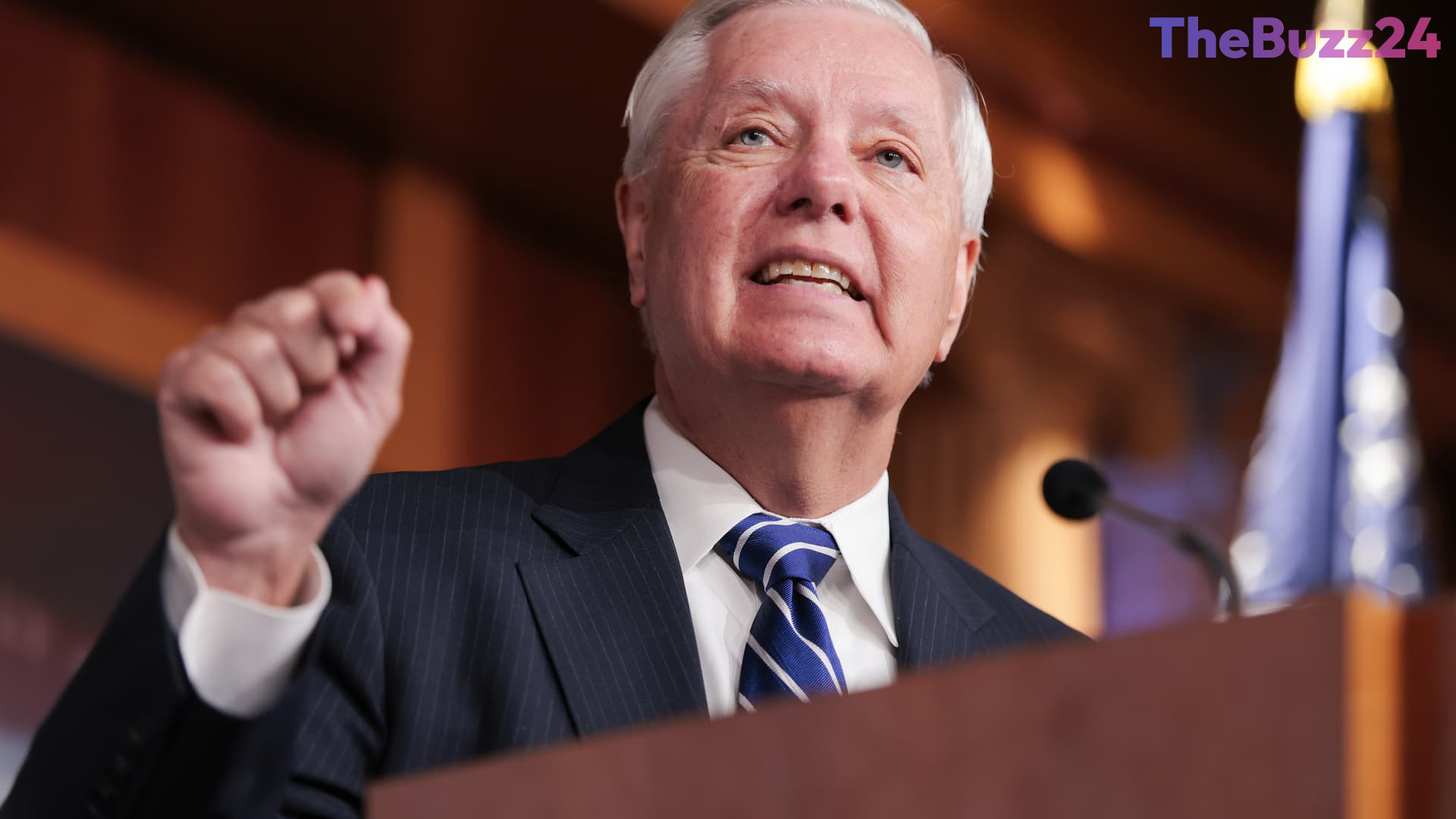
Longtime South Carolina Senator Lindsey Graham Passes Away at 71 After Sudden Illness
United States Senator Lindsey Graham of South Carolina has passed away at the age of 71 following a brief and sudden illness. His office confirmed his passing, which occurred on the evening of Saturday, July 11, shortly after the veteran lawmaker returned from an official diplomatic trip to Ukraine. During his final days, Graham had been in Kyiv meeting with Ukrainian President Volodymyr Zelenskyy to discuss air defense systems and sanctions against Russia, demonstrating his lifelong commitment to foreign policy and international relations.
Graham’s political career spanned over three decades, beginning with his election to the U.S. House of Representatives in 1994, followed by his election to the U.S. Senate in 2002. As one of the most influential Republicans in Washington, he held powerful positions, including chairing the Senate Budget Committee and serving on the Judiciary and Appropriations committees. Before his political career, Graham served in the U.S. Air Force and Air Force Reserves for 33 years, retiring as a Colonel. He grew up in Central, South Carolina, where his family ran a local pool hall, and went on to become the first in his family to attend college.
Known for his complex relationship with Donald Trump, Graham transitioned from a fierce critic during the 2016 presidential primary to one of the former president’s closest allies and advisors on Capitol Hill. Though he occasionally broke with Trump—most notably acknowledging Joe Biden’s victory after the January 6 Capitol riot—he remained a steadfast defender of Trump’s platform, including co-sponsoring the controversial SAVE America Act. Trump praised Graham as a “true American Patriot” following the news of his death.
Graham’s sudden passing leaves a critical vacancy in the Senate, where Republicans hold a narrow 53-47 majority. With South Carolina Governor Henry McMaster tasked with appointing a temporary successor, the state must also navigate a rapid legal process to replace Graham on the upcoming November ballot. The vacancy, combined with other Republican absences, could temporarily stall key conservative legislative priorities in the lead-up to the next election cycle.
Key Takeaways
- Senator Lindsey Graham has died at age 71 following a sudden illness shortly after returning from a diplomatic trip to Ukraine.
- Graham was a highly influential Republican who served in Congress for thirty years and was a key ally of Donald Trump.
- His passing creates an immediate vacancy in a safe Republican Senate seat, complicating the party's narrow majority and legislative agenda.
Editor’s Analysis & Impact
The sudden passing of Senator Lindsey Graham marks a significant shift in the balance of power and legislative momentum on Capitol Hill. As a senior statesman with deep ties to both the establishment and populist wings of the Republican Party, Graham was a crucial bridge-builder and a fierce advocate for conservative policies, particularly in foreign defense and election integrity. His absence, combined with other Republican medical leaves, temporarily shrinks the GOP’s narrow Senate majority, potentially stalling key legislative efforts like the SAVE America Act. Furthermore, his death triggers a rapid political succession process in South Carolina. While the seat is expected to remain in Republican hands, the scramble to replace him on the November ballot—with figures like Representative Nancy Mace already considering a run—will likely ignite an intense internal party debate over the future direction of the state’s conservative leadership.
Frequently Asked Questions
Q: How will Senator Lindsey Graham's vacant Senate seat be filled?
A: Under South Carolina law, Governor Henry McMaster has the authority to appoint a temporary replacement to serve out the remainder of the current term. Additionally, a special election process will be initiated to determine who will replace Graham on the ballot for the upcoming November election.
Q: What was Lindsey Graham's military background?
A: Before his extensive career in Congress, Graham served as an Air Force lawyer on active duty and later in the Air Force Reserves. He served for a total of 33 years, including active service during the first Gulf War, and retired with the rank of Colonel in 2015.
Q: What were some of Graham's major legislative focuses?
A: Graham was heavily involved in foreign policy, national security, and judicial appointments. He was a strong proponent of robust U.S. defense spending, international alliances, and recently focused on updating sanctions against Russia while advocating for election integrity bills domestically.
AI Disclosure: This article is based on verified data and official reports. Our Team and AI have cross-referenced every financial detail with primary sources to ensure total accuracy.
More from this Category