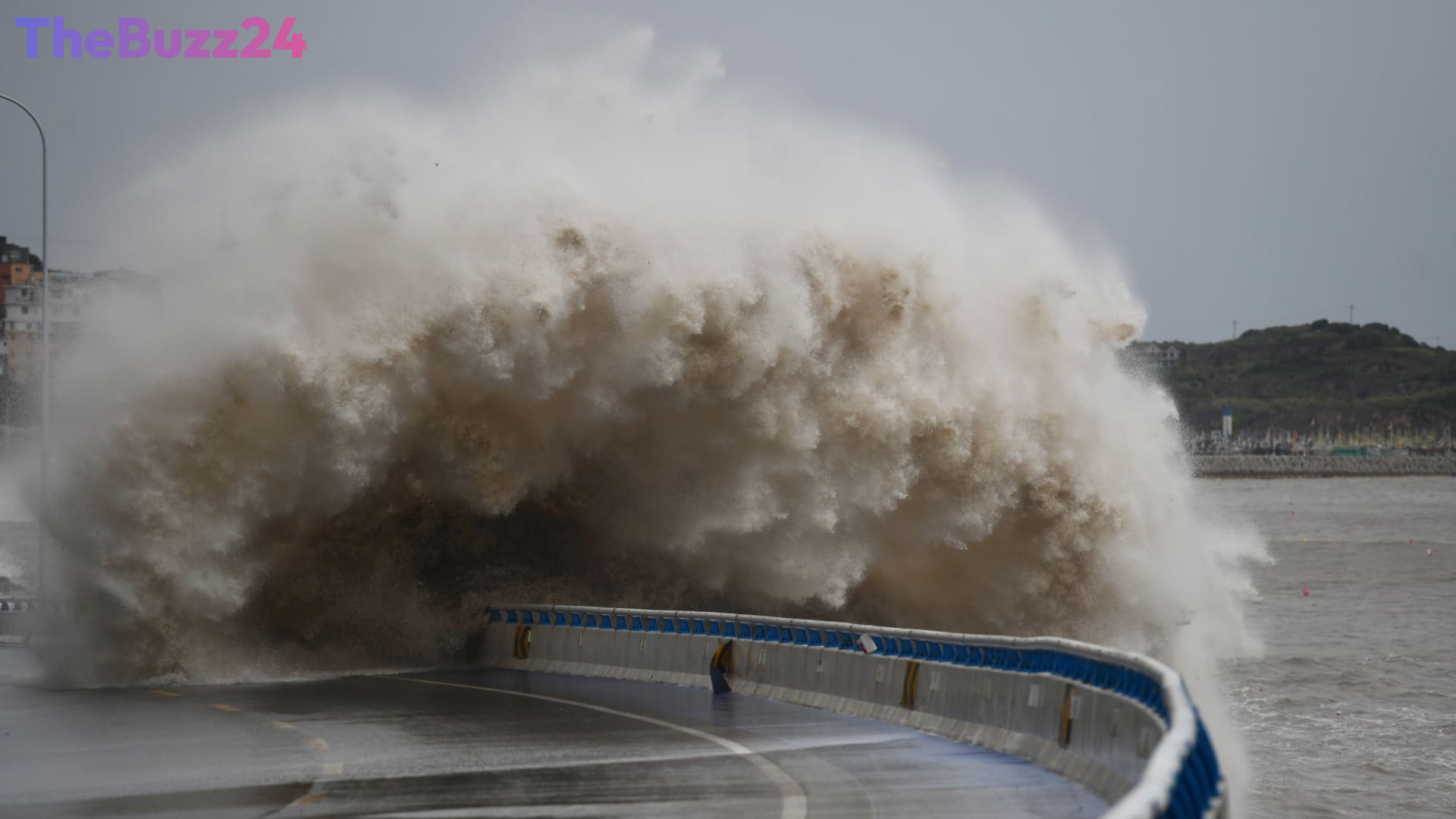
Typhoon Bavi Unleashes Fury on Eastern China, Triggering Mass Evacuations and Widespread Disruptions
Typhoon Bavi, the most potent storm to make landfall in mainland China this year, has battered the country’s eastern coast with intense rainfall and powerful winds. The storm system, which has been compared in size to France, has prompted extensive evacuations and significant disruptions to transportation networks.
In Zhejiang province, a major economic hub, over 2.2 million people were evacuated as Bavi made its initial landfall. The typhoon struck the coastal city of Yuhuan late Saturday before moving inland. Residents described hearing the roar of the wind and witnessing falling debris, with some noting unprecedented flooding in low-lying areas. Emergency services have been deployed to clear fallen trees and debris from streets, with some areas experiencing water levels reaching the height of vehicle tires. Landslides were also reported in mountainous regions, blocking roads.
The storm’s impact has extended beyond Zhejiang. In Taiwan, Bavi caused injuries to over 130 people, primarily due to falling objects and slips. The typhoon led to the cancellation of hundreds of international and domestic flights across the island. On the mainland, major transportation hubs in Hangzhou and Shanghai experienced severe disruptions, with numerous flights and train services suspended. The storm’s trajectory indicates continued heavy rainfall across several northern and eastern provinces, raising concerns about further flooding in areas already saturated from previous weather events.
Meteorologists warn that even as Bavi weakens, its expansive circulation could continue to generate hazardous weather conditions far inland. The increased frequency and intensity of such storms are consistent with scientific projections linking climate change and phenomena like El Niño to more extreme weather patterns impacting China. Experts emphasize that the rapid intensification of typhoons poses a significant challenge for disaster preparedness and response efforts.
Key Takeaways
- Typhoon Bavi, the most powerful storm of the year to hit mainland China, has caused widespread disruption and mass evacuations.
- Over 2.8 million people were evacuated, with significant impacts on transportation, including canceled flights and train services.
- Scientists warn that climate change and patterns like El Niño may contribute to more frequent and intense extreme weather events in the region.
Editor’s Analysis & Impact
The landfall of Typhoon Bavi underscores China’s increasing vulnerability to extreme weather events, exacerbated by global climate shifts. The scale of evacuations and infrastructure disruptions highlights the economic toll these storms can inflict, particularly on vital coastal and economic regions like Zhejiang. The event serves as a stark reminder for governments and industries to bolster disaster preparedness and invest in climate resilience. As typhoons potentially intensify and shift their paths due to changing climate patterns, the need for advanced forecasting, robust infrastructure, and effective emergency response systems becomes ever more critical for safeguarding lives and economic stability.
Frequently Asked Questions
Q: How many people were evacuated due to Typhoon Bavi?
A: According to reports, over 2.8 million people were evacuated across affected regions, with more than 2.2 million in Zhejiang province alone.
Q: What were the main impacts of Typhoon Bavi?
A: The typhoon caused heavy rainfall, strong winds, flooding, landslides, and significant disruptions to transportation, including the cancellation of hundreds of flights and train services.
Q: Are typhoons becoming more frequent or intense in this region?
A: Scientists suggest that climate change and phenomena like El Niño may contribute to an increase in the frequency and intensity of typhoons affecting China, leading to more extreme weather events.
AI Disclosure: This article is based on verified data and official reports. Our Team and AI have cross-referenced every financial detail with primary sources to ensure total accuracy.
More from this Category