Lunar Orbiter Reveals Century-Scale Impact: A Massive New Crater on the Moon
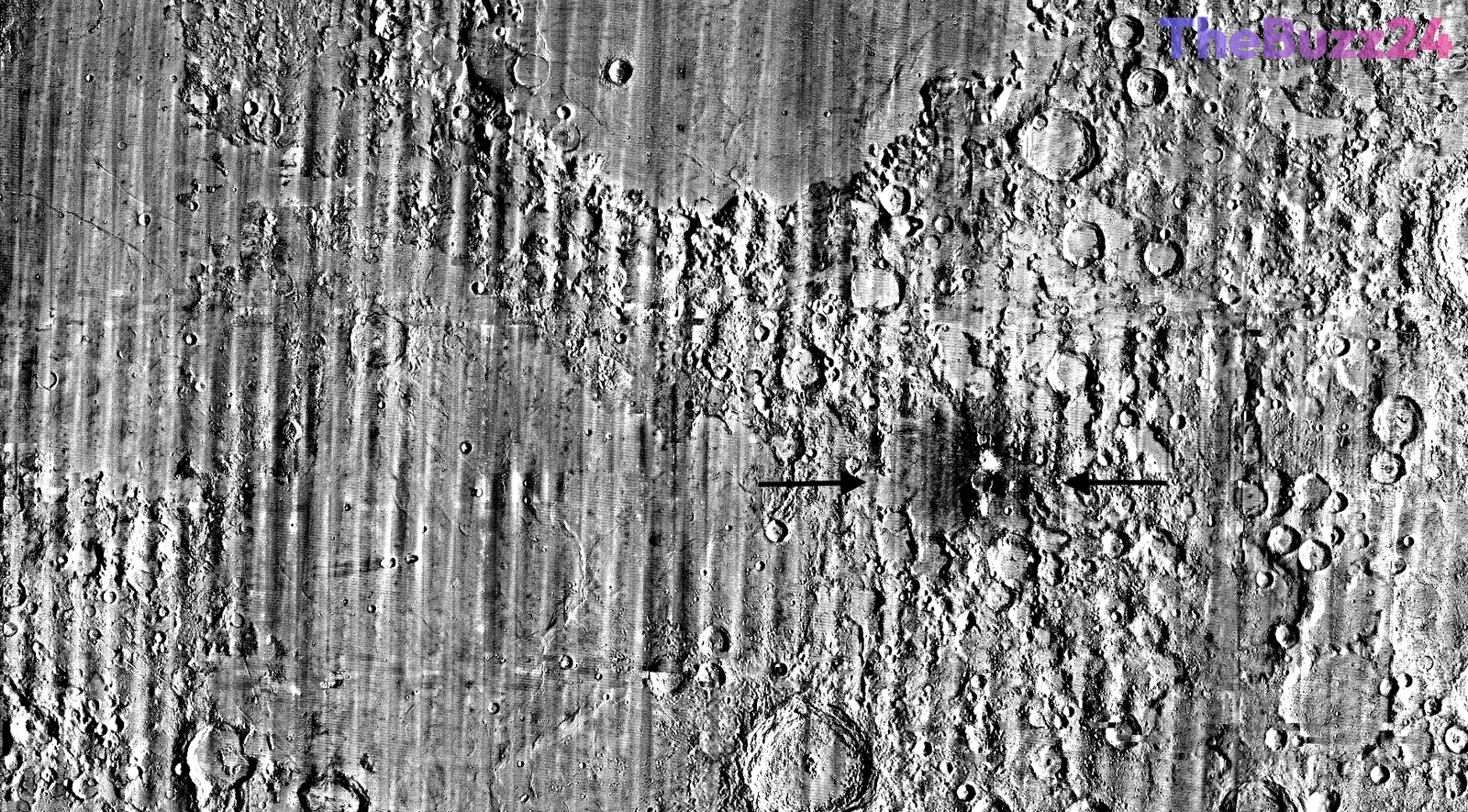
A significant discovery has been made on the lunar surface, with scientists identifying the largest newly formed impact crater in the solar system in over a century. The crater, officially named McGetchin, was spotted by Robert Wagner, an image-processing specialist working with data from NASA’s Lunar Reconnaissance Orbiter Camera (LROC) system, during a routine data quality check. Its unusually large bright spot surrounded by a dark halo immediately indicated a recent and powerful surface disturbance.
By meticulously comparing “before” and “after” images captured by the Lunar Reconnaissance Orbiter (LRO), Wagner confirmed the crater’s formation between April 11 and May 22, 2024. This monumental impact was caused by a comet or asteroid, estimated to be the size of a three- to six-story building, striking the Moon’s eastern edge. The resulting crater measures an impressive 728 feet wide and 141 feet deep, a scale of impact that scientists estimate occurs only about once every hundred years or even less frequently. The findings were detailed in recent papers published in Science Advances.
Beyond its sheer size, the McGetchin crater has provided valuable insights into lunar surface dynamics. Follow-up observations using LRO’s thermal instrument, Diviner, revealed a striking 4-mile-wide “cold spot” around the impact site, registering approximately 16 degrees Fahrenheit cooler at night than its surroundings. This phenomenon occurs because the impact “fluffs up” the lunar regolith, making it less dense and thus less efficient at retaining heat. This extensive modification of the surface, far beyond the immediate crater, has implications for future lunar missions, potentially affecting how rovers interact with the terrain.
The discovery underscores the critical role of LRO, which has been orbiting the Moon for over 17 years, continuously mapping its topography, composition, and environment. The spacecraft’s comprehensive data allows scientists to identify not only new craters but also landslides and other surface changes. The process of identifying McGetchin involved sophisticated software to highlight changes between global Moon maps, followed by careful manual verification to distinguish genuine impacts from lighting shifts. This meticulous work, initially flagging a pixel-wide anomaly, ultimately led to the identification of a truly once-in-a-century lunar event.
Key Takeaways
- Scientists discovered McGetchin, the largest newly formed impact crater in the solar system in over a century, on the Moon's eastern edge.
- Formed between April and May 2024 by a comet or asteroid the size of a multi-story building, the crater is 728 feet wide and 141 feet deep.
- The impact created a 4-mile-wide "cold spot" around the crater, demonstrating how impacts significantly modify lunar regolith and surface properties, with implications for future lunar exploration.
Editor’s Analysis & Impact
This discovery of the McGetchin crater highlights the dynamic nature of the Moon’s surface, even in what might seem like a static environment. The rarity of such a large impact event—estimated at once a century—underscores the continuous, albeit infrequent, bombardment the Moon experiences. From an industry perspective, this reinforces the importance of ongoing lunar observation missions like LRO, providing critical data for future human and robotic exploration. Understanding how impacts modify regolith and create thermal anomalies is crucial for designing durable lunar infrastructure, planning rover routes, and ensuring astronaut safety. The findings also contribute to our broader understanding of planetary geology and impact mechanics across the solar system, informing studies of other celestial bodies. This event serves as a stark reminder of the challenges and considerations for establishing a sustained human presence on the Moon.
Frequently Asked Questions
Q: How large is the McGetchin crater?
A: The crater is approximately 728 feet (222 meters) wide and 141 feet (43 meters) deep, formed by the impact of a comet or asteroid estimated to be the size of a three- to six-story building.
Q: What is the "cold spot" associated with the crater?
A: The "cold spot" is a 4-mile-wide area around the McGetchin crater that is about 16 degrees Fahrenheit cooler at night than its surroundings. This is due to the impact "fluffing up" the lunar regolith, making it less dense and less able to retain heat, demonstrating how impacts modify surface properties.
AI Disclosure: This article is based on verified data and official reports. Our Team and AI have cross-referenced every financial detail with primary sources to ensure total accuracy.
More from this Category