Maple Secures $5.3 Million to Pioneer Privacy-First AI Agents
Maple, a startup co-founded by a former Apple engineer specializing in privacy technologies, has successfully raised $5.3 million in seed funding to develop artificial intelligence products that prioritize user data protection. The company’s core mission is to build AI applications where sensitive information remains private, even from Maple itself, addressing growing concerns about data security as AI assistants become more integrated into daily life.
CEO Mark Suman emphasized Maple’s commitment to transparency and verifiable security. “We wanted to build something that was not only encrypted but also could be proven, and that people could go look at the open-source code, and then they could look at what we call trusted execution environments,” Suman stated. This approach allows users to audit the code running on Maple’s servers, ensuring their data is handled as promised without requiring blind trust in the company.
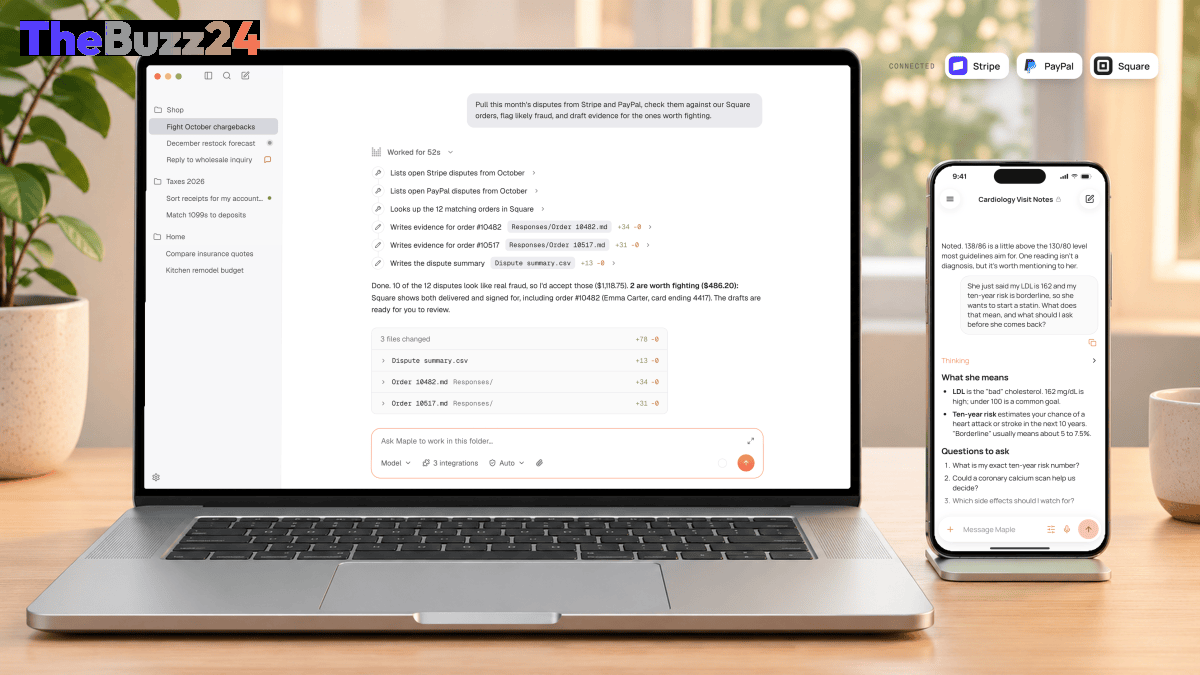
The newly secured funding will fuel the development of Maple’s next product: a cloud-based AI agent designed to operate continuously, even when a user’s computer is offline. This expansion aims to position Maple competitively alongside other advanced AI services. Maple’s existing desktop application, Maple Work, already offers an agentic experience, enabling the AI to manage tasks across files, applications, and web browsing. The company plans to enter the enterprise market next year, focusing on zero-data-retention policies and undergoing SOC 2 compliance and security audits to meet enterprise-level security demands.
Maple’s innovative approach contrasts with many competitors that often necessitate invasive privacy policies and extensive data collection. Instead of asking users to trust that their data won’t be misused, Maple is architecting its systems to prevent access to user data altogether. This strategy is designed to protect users from potential data breaches, unauthorized access, or government subpoenas, as any data handed over would be encrypted and inaccessible to Maple.
Key Takeaways
- Maple has raised $5.3 million in seed funding to develop privacy-focused AI products.
- The company utilizes Trusted Execution Environments (TEEs) and open-source code to ensure user data remains private, even from Maple.
- Future plans include a cloud-based AI agent and expansion into the enterprise market with zero-data-retention policies.
Editor’s Analysis & Impact
Maple’s successful funding round highlights a significant market demand for AI solutions that do not compromise user privacy. In an era where data breaches and privacy concerns are paramount, Maple’s commitment to verifiable security and data inaccessibility positions it as a potentially disruptive force. The company’s strategy of building trust through transparency and technical safeguards, rather than relying on user consent for data usage, could set a new industry standard. As AI agents become more powerful and integrated, Maple’s approach offers a compelling alternative for individuals and businesses wary of current data practices, suggesting a future where advanced AI capabilities can coexist with robust privacy.
Frequently Asked Questions
Q: How does Maple ensure user data privacy?
A: Maple uses a combination of end-to-end encryption, Trusted Execution Environments (TEEs) with hardware encryption, and open-source code. User data is encrypted on the device, decrypted only within the TEE for processing by the AI, and then re-encrypted before being sent back to the user. Maple itself does not have access to the raw, unencrypted data.
Q: What kind of AI products does Maple offer?
A: Maple offers AI chat experiences similar to other chatbots, as well as a desktop application called Maple Work. Maple Work provides a more agentic experience, allowing the AI to manage tasks across files, applications, and web browsing. The company is also developing a cloud-based agent for continuous operation.
Q: What is Maple's business model?
A: Maple generates revenue through subscription plans, with options like Pro ($20/month) and Max plans ($100-$200/month). The company's business model is not based on accessing or utilizing user data.
AI Disclosure: This article is based on verified data and official reports. Our Team and AI have cross-referenced every financial detail with primary sources to ensure total accuracy.
More from this Category