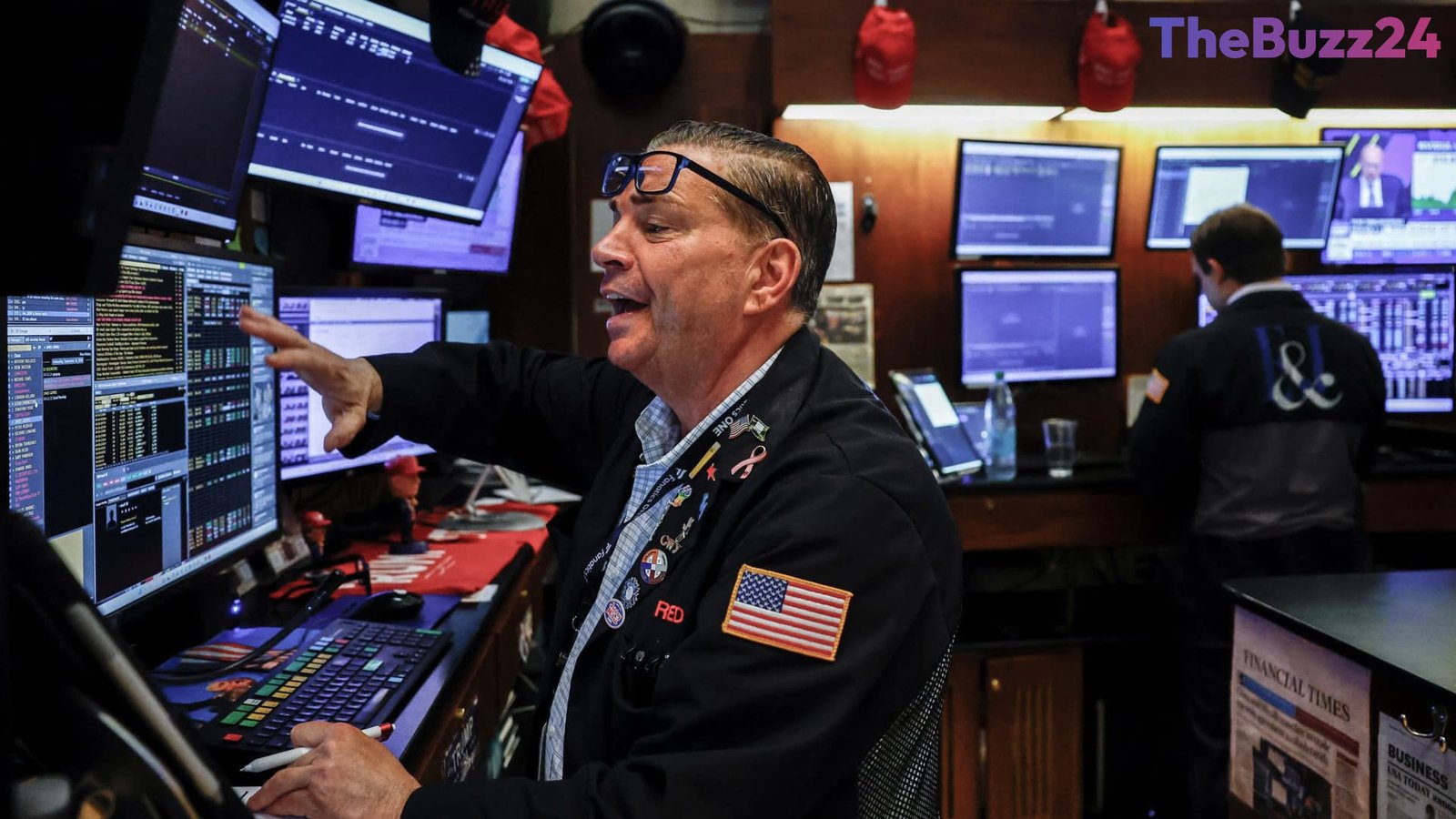
Market Pullback: Stock Futures Dip as Rising Oil Prices and Bond Yields Weigh on Sentiment
Stock futures experienced a modest decline in early trading, signaling a potential cooling period following a strong performance on Wall Street last week. Futures tied to the Dow Jones Industrial Average, the S&P 500, and the Nasdaq-100 all retreated by approximately 0.2%. This downward pressure comes as investors grapple with a combination of rising energy costs and the persistent climb of Treasury yields, which have reached levels not seen in nearly two decades.
The recent market hesitation is largely attributed to a surge in oil prices, with both Brent crude and West Texas Intermediate futures posting gains. Geopolitical tensions in the Middle East have contributed to this volatility, complicating the inflation outlook. Despite these headwinds, the broader market remains focused on the upcoming release of critical economic data, including the personal consumption expenditure price index and the September jobs report, which are expected to provide further clarity on the Federal Reserve’s future interest rate trajectory.
Meanwhile, the landscape of market participants is shifting. While retail investor activity appears to be tapering off, institutional investors have demonstrated notable resilience, maintaining their positions despite the macro-economic uncertainty. This transition in market leadership occurs as companies, particularly those in the capital-intensive artificial intelligence sector, face the prospect of higher borrowing costs. With Treasury yields climbing, the financial environment for debt-reliant industries is tightening, potentially impacting the pace of infrastructure expansion in the coming years.
Key Takeaways
- Stock futures dipped slightly as rising oil prices and surging Treasury yields dampened investor sentiment.
- Institutional investors are showing greater resilience than retail traders in the face of current market volatility.
- Upcoming economic reports, including the Fed's preferred inflation gauge and the September jobs report, are expected to drive market direction this week.
Editor’s Analysis & Impact
The current market environment reflects a tug-of-war between the optimism fueled by the AI boom and the harsh reality of a ‘higher-for-longer’ interest rate regime. The spike in Treasury yields is not merely a technicality; it represents a fundamental repricing of risk that threatens to increase the cost of capital for the very technology firms driving recent market gains. If borrowing costs remain elevated, we may see a deceleration in AI infrastructure investment, which could dampen the growth projections for major tech players. Furthermore, the shift from retail-led momentum to institutional stability suggests a more cautious, defensive market posture. Investors should prepare for continued volatility as the market reconciles the impact of geopolitical instability on energy prices with the Federal Reserve’s ongoing efforts to curb inflation through restrictive monetary policy.
Frequently Asked Questions
Q: Why are rising Treasury yields a concern for the stock market?
A: Rising Treasury yields increase the cost of borrowing for corporations. For growth-oriented sectors like technology and AI, higher interest rates make debt more expensive, which can compress profit margins and reduce the present value of future earnings.
Q: What economic data are investors watching this week?
A: Investors are closely monitoring the August personal consumption expenditure (PCE) price index, new U.S. manufacturing data, and the September jobs report to gauge the health of the economy and the likelihood of further Federal Reserve interest rate hikes.
AI Disclosure: This article is based on verified data and official reports. Our Team and AI have cross-referenced every financial detail with primary sources to ensure total accuracy.
More from this Category