Martian Auroras Reveal Surprising Parallels to Earth’s Magnetic Physics
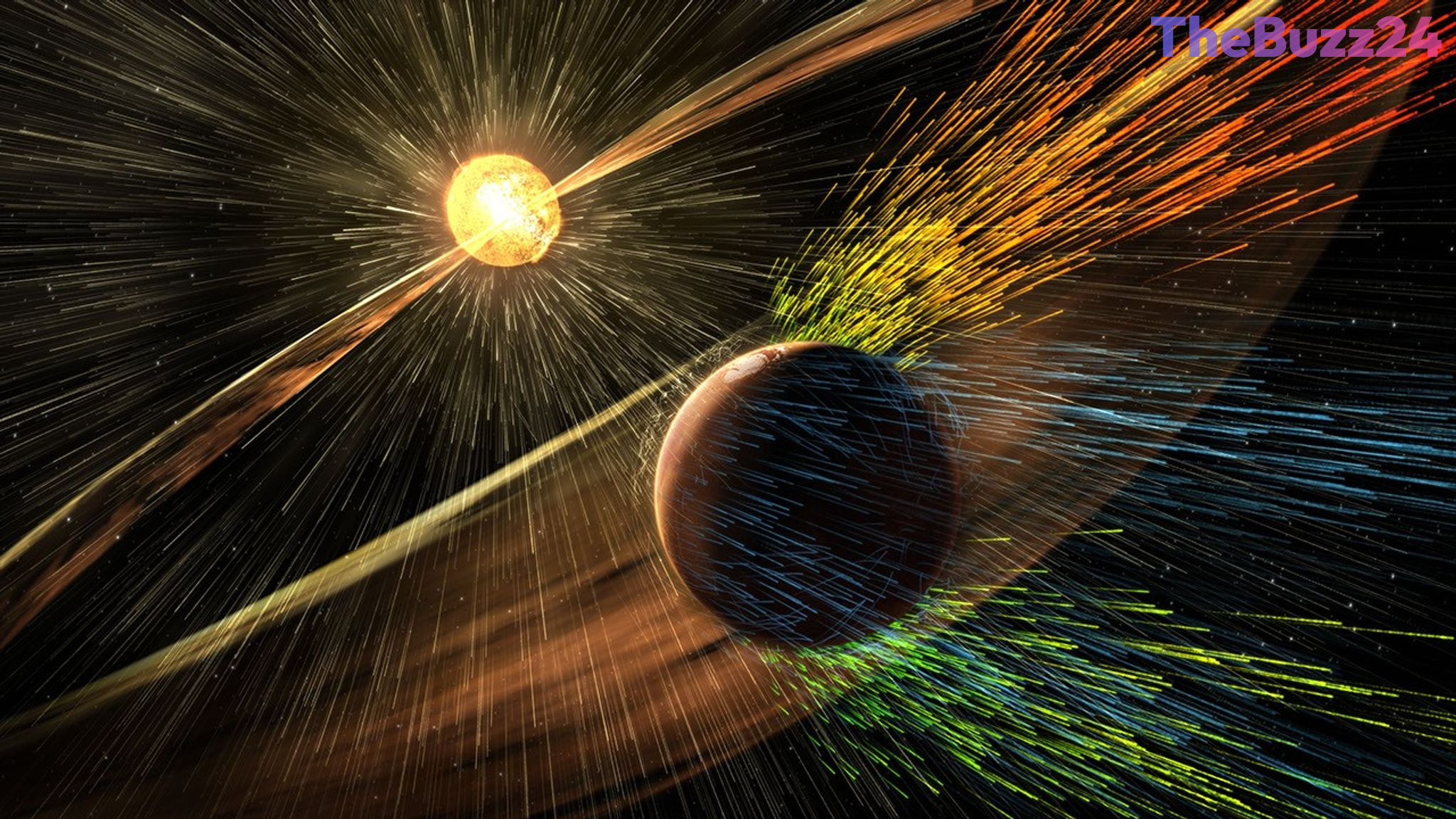
New research has unveiled that Mars experiences a miniature version of the ‘Dungey cycle,’ a fundamental process previously thought to be unique to Earth’s large-scale magnetic environment. By analyzing data collected by the MAVEN spacecraft, scientists discovered that localized magnetic reconnection occurs over the Red Planet’s magnetized crustal regions, effectively mimicking the mechanism that generates auroras on Earth. This finding provides a critical breakthrough in understanding how charged particles are energized in the Martian atmosphere.
Unlike Earth, which possesses a global magnetic field generated by a churning core, Mars relies on scattered, intense magnetic fields embedded within its crust—remnants from billions of years ago. The study demonstrates that these localized magnetic ‘bubbles’ act as miniature magnetospheres. When solar wind interacts with these regions, it triggers a reconnection process that accelerates electrons, resulting in auroras that, while smaller in scale, operate under the same physical principles as those seen at Earth’s poles.
This discovery marks a significant milestone in planetary science, illustrating that the same underlying physics can manifest across vastly different planetary environments. Although the MAVEN mission concluded in 2025, the data continues to yield transformative insights. By decoding how these magnetic cycles function, researchers are gaining a clearer picture of how solar activity interacts with the Martian environment, a factor that remains vital for the safety and planning of future robotic and human exploration missions to the planet.
Key Takeaways
- Mars exhibits a miniature version of the 'Dungey cycle,' the same magnetic process that drives auroras on Earth.
- The auroras on Mars are fueled by localized magnetic fields in the planet's crust rather than a global magnetic field.
- Understanding these magnetic interactions is essential for assessing the impact of solar activity on future crewed missions to Mars.
Editor’s Analysis & Impact
The discovery that the Dungey cycle operates on a miniature scale at Mars is a profound development in heliophysics and planetary science. It suggests that magnetic reconnection is a universal phenomenon that can adapt to diverse planetary architectures, regardless of whether a planet has a global dipole field. From an industry perspective, this research is invaluable for space agencies and private aerospace firms currently developing long-term Mars exploration strategies. As we look toward human colonization, understanding the Martian space weather environment—specifically how the atmosphere interacts with solar particles—is a prerequisite for protecting sensitive electronics and human health. This study confirms that even ‘dead’ planets with remnant crustal magnetism possess complex, active environments that must be accounted for in future mission architecture.
Frequently Asked Questions
Q: Why does Mars have auroras if it lacks a global magnetic field?
A: Mars has localized magnetic fields trapped in its crust, which were formed billions of years ago. These regions act as miniature magnetospheres that can capture and accelerate charged particles from the sun, creating localized auroras.
Q: What is the Dungey cycle?
A: The Dungey cycle is a process where magnetic field lines from the sun reconnect with a planet's magnetic field, injecting energy and mass into the magnetosphere and accelerating electrons to create auroras.
AI Disclosure: This article is based on verified data and official reports. Our Team and AI have cross-referenced every financial detail with primary sources to ensure total accuracy.
More from this Category