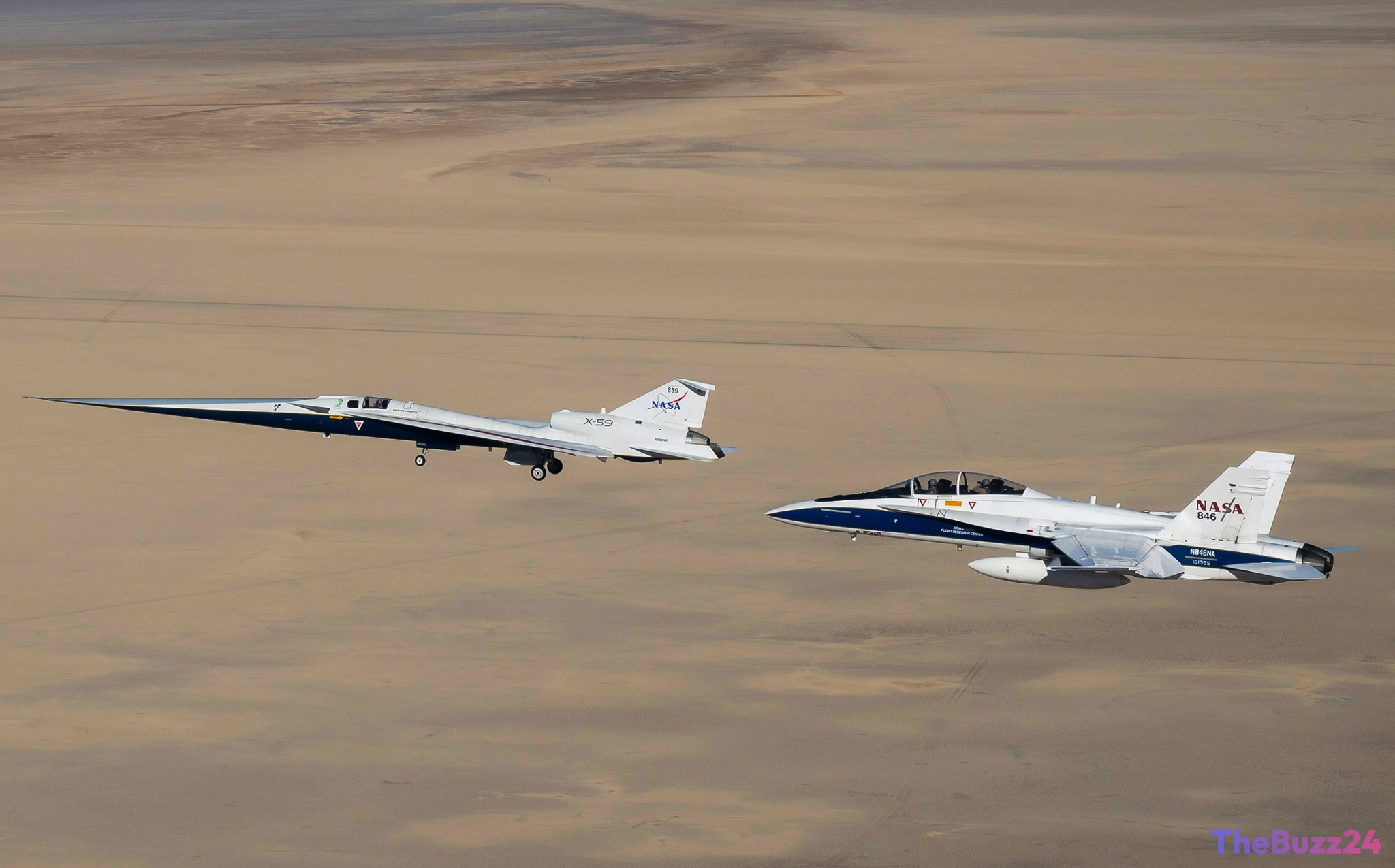
NASA Armstrong Expands Fleet to Pioneer Next Era of Aerospace Research
NASA’s Armstrong Flight Research Center, a cornerstone of aeronautical innovation, is bolstering its already impressive fleet with the addition of several new aircraft. This expansion includes two F-15 supersonic jets, a versatile Pilatus PC-12 utility plane, and a T-34 turboprop trainer. These new assets will be instrumental in supporting the agency’s ongoing and future aerospace research and test missions, building upon a legacy that stretches back nearly 80 years.
The center, located in Edwards, California, has a storied history of pushing the boundaries of flight, from early supersonic experiments with the Bell X-1 to supporting complex missions with aircraft like the 747 Shuttle Carrier Aircraft and F-18 research jets. The recent additions underscore Armstrong’s commitment to maintaining a diverse and capable inventory of aircraft essential for cutting-edge research.
Beyond its role in aeronautics, NASA Armstrong is a critical hub for worldwide airborne science. Its unique fleet and skilled personnel enable scientists from NASA, other government agencies, industry, and academia to conduct vital research. These airborne laboratories are deployed to gather crucial data on everything from air pollution and climate change indicators like glacier melt trends to mapping wildland fires, demonstrating the center’s multifaceted contributions to scientific understanding and environmental monitoring.
Darren Cole, capabilities manager for the Flight Demonstrations and Capabilities project at NASA Armstrong, highlighted the unique expertise at the center. “Armstrong has a rich history of flight research, but it’s the multidimensional skills of the people we have here, and the knowledge they’ve built to handle very unique aircraft maintenance and modifications, that stands out,” Cole stated. This human expertise, combined with a diverse array of aircraft ranging from low-altitude gliders to high-altitude ER-2s, positions Armstrong to tackle the most challenging aerospace and scientific endeavors.
Key Takeaways
- NASA Armstrong Flight Research Center has expanded its aircraft fleet with new F-15s, a PC-12, and a T-34.
- The center plays a crucial role in both advanced aeronautics research and airborne science missions.
- The diverse fleet and specialized expertise at Armstrong are key to its continued success in aerospace innovation.
Editor’s Analysis & Impact
The expansion of NASA Armstrong’s fleet signifies a continued investment in foundational aerospace research and development. By integrating new, advanced aircraft, the center is positioning itself to tackle complex challenges in supersonic flight, advanced aerodynamics, and critical Earth science observation. This strategic enhancement not only supports NASA’s long-term goals, such as the X-59 quiet supersonic jet program, but also reinforces its role as a vital partner for academic and industry collaborators. The ability to maintain and modify such a diverse range of aircraft underscores the unique technical capabilities housed at Armstrong, ensuring its relevance in an evolving aerospace landscape and its capacity to contribute to future breakthroughs.
Frequently Asked Questions
Q: What is the primary mission of NASA Armstrong Flight Research Center?
A: NASA Armstrong Flight Research Center's primary mission is to conduct flight research and develop new technologies for aeronautics and space exploration. It also plays a significant role in supporting airborne science missions.
Q: What types of aircraft are part of NASA Armstrong's fleet?
A: NASA Armstrong operates a diverse fleet that includes supersonic jets like the F-15, utility planes such as the Pilatus PC-12, trainer aircraft like the T-34, high-altitude research planes like the ER-2, and has historically flown experimental aircraft like the X-15 and the 747 Shuttle Carrier Aircraft.
Q: How does NASA Armstrong support scientific research?
A: The center supports scientific research by providing airborne laboratories and expert flight crews to carry scientists and their equipment to specific locations for data collection. This data can range from atmospheric measurements to environmental monitoring.
AI Disclosure: This article is based on verified data and official reports. Our Team and AI have cross-referenced every financial detail with primary sources to ensure total accuracy.
More from this Category