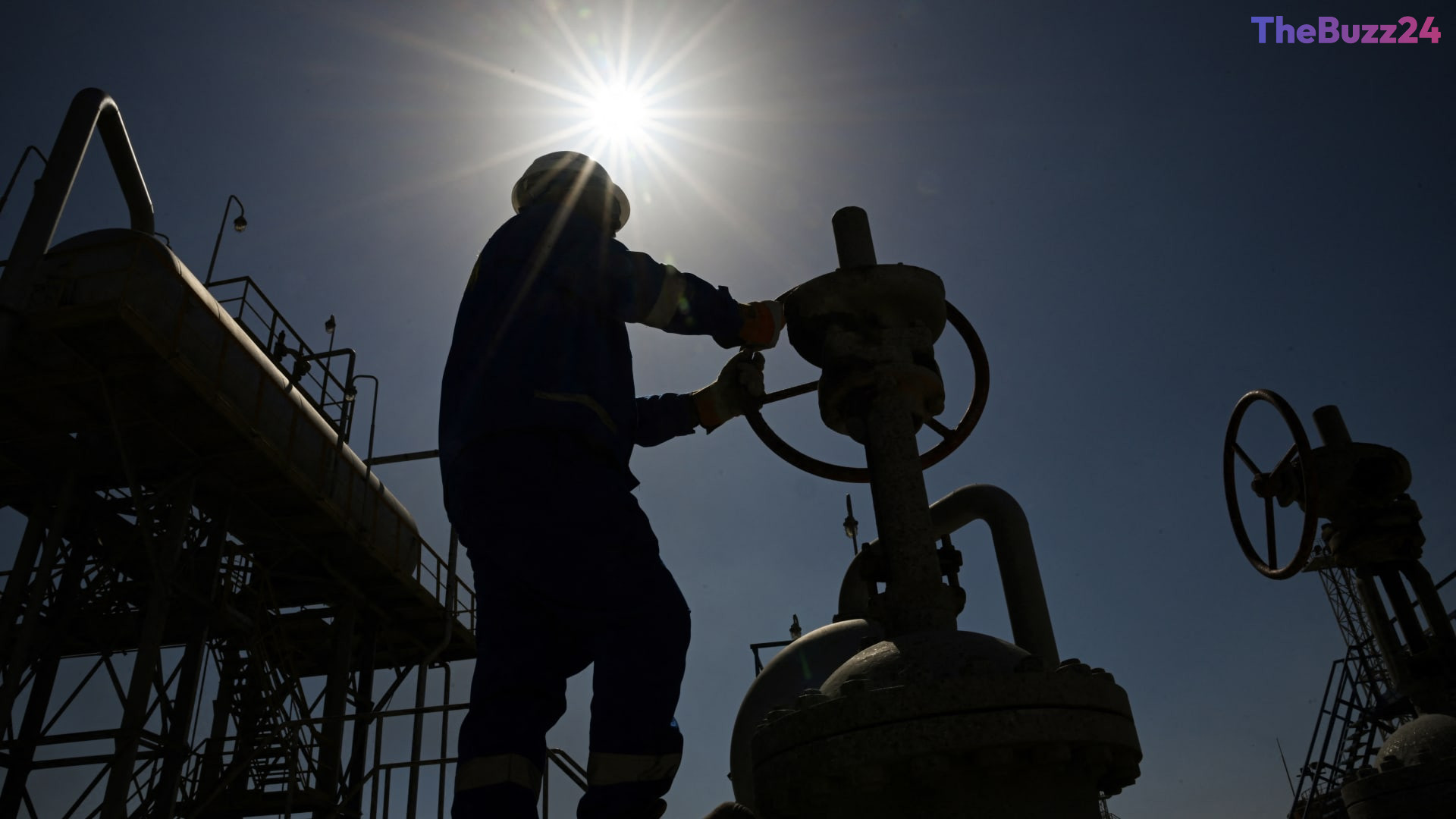
Middle East Nations Race to Reroute Oil Exports Amid Hormuz Closure
Iraq and the United Arab Emirates are aggressively pursuing the development of alternative oil pipelines to mitigate their significant reliance on the Strait of Hormuz, which has seen its transit capabilities severely curtailed. This strategic pivot comes as new data underscores the profound dependency of these nations on the Persian Gulf for their crude exports.
Iraq, whose oil sector contributed over half of its real GDP in 2025, faces a particularly acute challenge. Its overall exports have dramatically decreased since the onset of regional conflict, largely due to its geographical entanglement with Hormuz. In response, the Iraqi government has approved plans to expedite crude shipments through the Kurdistan-Turkey pipeline network. This expansion aims to more than triple existing capacity, boosting exports from 220,000 barrels per day to 770,000. This route, which offers an alternative passage through Kurdistan to Turkey’s Mediterranean port of Ceyhan, is expected to provide crucial relief to Iraq’s oil-dependent economy once fully operational.
Meanwhile, Abu Dhabi is accelerating the construction of its new West-East pipeline to Fujairah. This project, anticipated to be completed by 2027, is designed to double the export capacity of the Abu Dhabi National Oil Company (ADNOC), allowing it to bypass the critical Strait of Hormuz chokepoint. Abu Dhabi Crown Prince Sheikh Khaled bin Mohamed bin Zayed Al Nahyan recently called for the faster delivery of this pipeline to meet growing global energy demand. Unlike Iraq, the UAE possesses other terminals for oil export, which has somewhat eased the impact of the Hormuz disruptions, though existing alternative routes, including Saudi Arabia’s East-West pipeline and the Fujairah terminal, have also faced security threats.
Developing these alternative export routes demands substantial investment in infrastructure and considerable time, often necessitating complex transnational agreements. While the combined capacity of Saudi Arabia’s East-West pipeline and the UAE’s Fujairah pipeline is estimated to be between 3.5 to 5.5 million barrels per day, and Saudi Arabia has reported pumping 7 million barrels per day through its route, these figures remain significantly below the approximately 20 million barrels of oil and petroleum products that transited through the Strait of Hormuz daily before the conflict. Vessel transits through Hormuz continue to be well below pre-war levels, with ships in the Gulf facing risks of attack or sanctions depending on their compliance with various regional powers.
Key Takeaways
- Iraq and the UAE are rapidly developing alternative oil pipelines to reduce their critical dependence on the Strait of Hormuz, which is currently experiencing severe transit limitations.
- Iraq is significantly expanding its Kurdistan-Turkey pipeline network to increase export capacity from 220,000 to 770,000 barrels per day, aiming to alleviate the economic impact of reduced Hormuz access.
- The UAE is fast-tracking its West-East pipeline to Fujairah, projected to double ADNOC's export capacity by 2027, though existing alternative routes in the region face ongoing security risks.
Editor’s Analysis & Impact
The accelerated development of alternative oil pipelines by Iraq and the UAE signals a profound shift in regional energy strategy, driven by the escalating geopolitical risks in the Persian Gulf. This move will have significant market implications, potentially diversifying global oil supply routes and reducing the leverage of the Strait of Hormuz as a chokepoint. However, the substantial investment and time required for these projects, coupled with the inherent security vulnerabilities of even alternative routes, suggest that global energy markets will remain volatile in the short to medium term. For Iraq, successful pipeline expansion is critical for economic stability, while the UAE’s proactive measures aim to bolster its long-term energy security and export reliability. The broader implication is a re-evaluation of energy infrastructure resilience across the Middle East, with a focus on mitigating single-point-of-failure risks.
Frequently Asked Questions
Q: Why are Iraq and the UAE building new oil pipelines?
A: Iraq and the UAE are constructing and expanding new oil pipelines primarily to reduce their critical dependence on the Strait of Hormuz, which has seen its transit capabilities severely disrupted due to ongoing regional conflicts and security concerns.
Q: What is the significance of the Strait of Hormuz for global oil trade?
A: The Strait of Hormuz is a vital maritime chokepoint through which a significant portion of the world's oil and liquefied natural gas (LNG) passes daily. Its disruption can lead to substantial impacts on global energy prices and supply chains, making alternative routes crucial for energy security.
Q: How does Iraq's situation differ from the UAE's regarding oil exports and the Hormuz closure?
A: Iraq is in a more challenging position as a larger proportion of its oil exports traditionally transits through Hormuz, making its economy highly vulnerable to disruptions. The UAE, while also impacted, has existing alternative terminals and is further developing its Fujairah pipeline, giving it more flexibility and resilience in rerouting its crude exports.
AI Disclosure: This article is based on verified data and official reports. Our Team and AI have cross-referenced every financial detail with primary sources to ensure total accuracy.
More from this Category