Missing Six-Year-Old Ebola Patient Recovered Safe in Democratic Republic of Congo Amid Deepening Outbreak Crisis
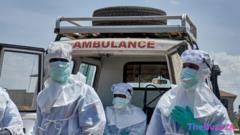
A six-year-old girl who was taken from a hospital in the eastern Democratic Republic of Congo (DRC) by an angry crowd has been located and is reported to be in stable condition. The child and her mother emerged at an Ebola treatment facility approximately 18 kilometers (11 miles) from the city of Butembo, where they had originally been taken. Local health authorities confirmed that the young patient is doing well, bringing a brief moment of relief to a region currently grappling with a highly volatile health crisis.
The abduction highlights the severe distrust, fear, and misinformation that continue to hamper medical efforts in the DRC. Many local communities harbor deep suspicions toward isolation centers and international aid organizations, with some residents believing the virus is a financial scheme fabricated by outsiders. This skepticism has repeatedly boiled over into violence; medical facilities have faced numerous attacks, and riots have erupted when families were prevented from reclaiming the highly infectious bodies of deceased relatives for traditional burials.
Compounding the crisis is the nature of the pathogen itself. The current outbreak is driven by the rare Bundibugyo species of the Ebola virus, for which there is currently no approved vaccine. Health officials warn that the outbreak is evolving rapidly, with over 890 confirmed cases and more than 230 deaths recorded so far. The situation is further aggravated by ongoing armed conflict in the eastern provinces of Ituri, North Kivu, and South Kivu, where the M23 rebel group controls significant territory, severely restricting the mobility and safety of medical response teams.
Despite these immense hurdles, international and regional health bodies are scaling up their interventions. The World Health Organization (WHO) and the Africa Centres for Disease Control and Prevention (Africa CDC) have committed millions of dollars to bolster contact tracing, surveillance, and treatment infrastructure. While neighboring Uganda has successfully contained its minor outbreak with no new cases reported recently, the situation in the DRC remains critical, with health workers paying a heavy price—75 infections and 17 deaths have been recorded among medical staff since the outbreak began.
Key Takeaways
- A young Ebola patient who was taken from a Butembo hospital has been found safe and is receiving care at another treatment center.
- Deep-seated community mistrust, misinformation, and active conflict involving rebel groups like M23 are severely hindering containment efforts in the DRC.
- The outbreak is fueled by the rare Bundibugyo strain of Ebola, which currently lacks an available vaccine, complicating medical responses.
Editor’s Analysis & Impact
The recovery of the young patient highlights a deeper, systemic crisis facing global health initiatives in conflict zones. The intersection of active warfare, deep-seated community distrust, and deadly pathogens creates a worst-case scenario for epidemiologists. Misinformation remains as deadly as the virus itself, transforming medical facilities into targets and preventing safe burial practices. Because the outbreak is driven by the Bundibugyo strain—which lacks the ready-to-use vaccines available for the Zaire strain—containment relies entirely on traditional public health measures like contact tracing and isolation. Moving forward, international agencies must prioritize community engagement and local leadership to dismantle conspiracy theories. Without establishing trust and securing humanitarian corridors in rebel-held territories, containing this outbreak will remain an uphill battle, risking wider regional transmission.
Frequently Asked Questions
Q: Why are Ebola treatment centers being targeted by local communities in the DRC?
A: Deep-seated distrust, lack of public education, and conspiracy theories have led some local populations to believe that Ebola is a hoax created by foreign organizations to generate funding. Additionally, strict protocols preventing traditional burials of highly infectious bodies have sparked anger and grief, leading to clashes.
Q: What makes the current Ebola outbreak in the DRC particularly difficult to contain?
A: The outbreak is driven by the rare Bundibugyo strain, which does not have an active vaccine. Furthermore, the region is plagued by violent conflict involving rebel groups like M23, making it highly dangerous for healthcare workers to track contacts and administer treatment.
Q: Has the virus spread to neighboring countries?
A: Uganda previously reported 19 cases and two deaths linked to the outbreak, but successful containment measures have prevented any new cases from being reported there since early June.
AI Disclosure: This article is based on verified data and official reports. Our Team and AI have cross-referenced every financial detail with primary sources to ensure total accuracy.
More from this Category