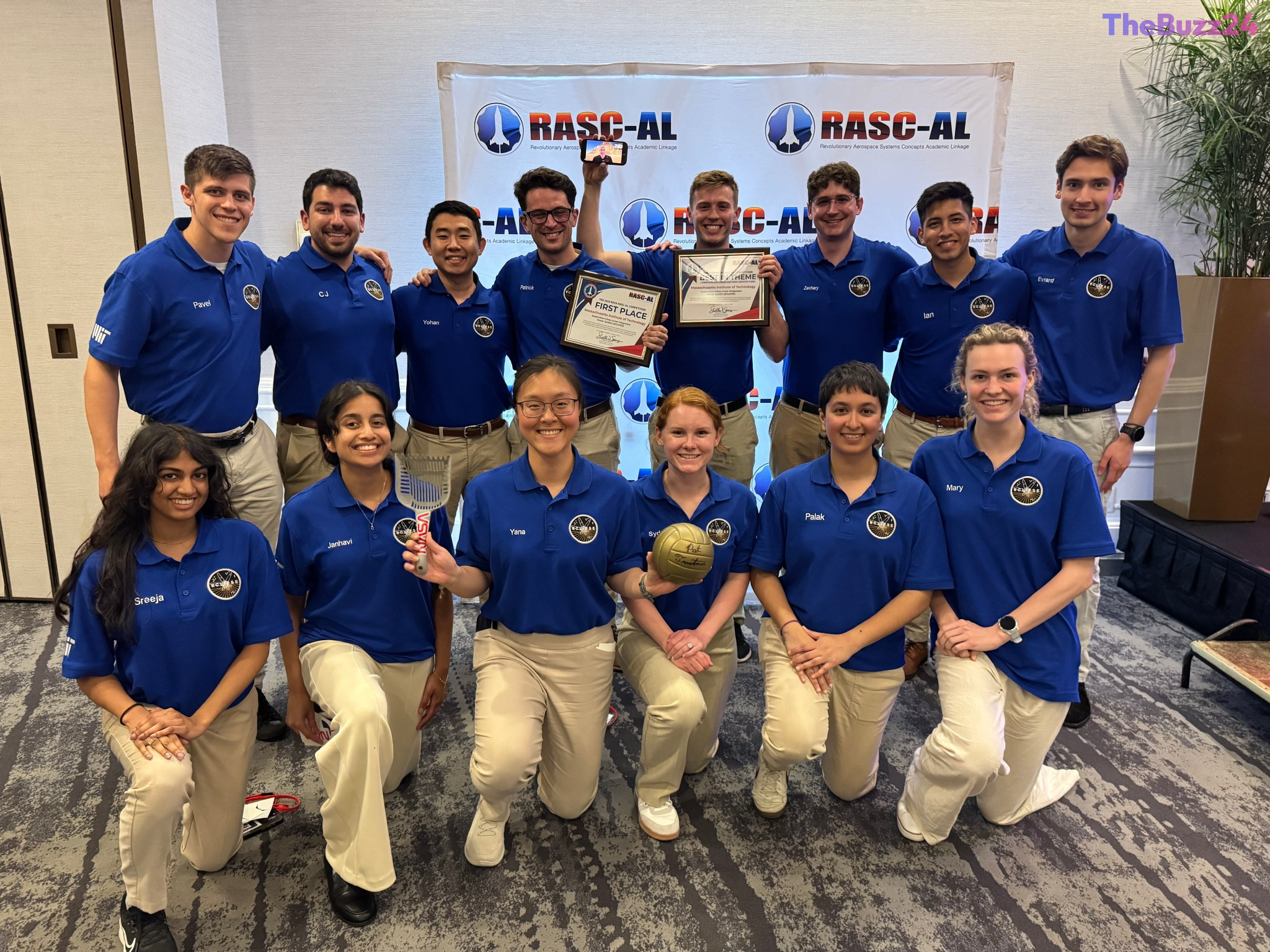
MIT Dominates NASA’s RASC-AL Competition, Unveiling Future Space Innovations
NASA has announced the winners of its 2026 Revolutionary Aerospace Systems Concepts – Academic Linkage (RASC-AL) competition, a prestigious challenge designed to inspire university students to develop groundbreaking solutions for critical aerospace technology gaps. The Massachusetts Institute of Technology (MIT) emerged as a standout, securing both first and second place with their visionary projects. The top honor went to MIT’s “Exploration-Class Lunar Integrated Power SystEm” (ECLIPSE), a concept vital for future lunar operations. Another MIT team earned second place for their “Mars Exploration Layered Infrastructure for Operations, Research, and Advancement” (MELIORA), focusing on sustainable Martian presence. Virginia Polytechnic Institute and State University rounded out the top three with their “Mars Pylon Network.”
The RASC-AL competition serves as a crucial platform for empowering the next generation of aerospace professionals, directly supporting NASA’s workforce development priorities. It offers university teams invaluable hands-on experience in mission architecture development, systems engineering, and technical communication, skills essential for real-world space endeavors. Daniel Mazanek, a senior space systems engineer, emphasized that the winning teams demonstrated how academic innovation directly supports ambitious goals like the Artemis missions. Christopher Jones, chief technologist for the Systems Analysis and Concepts Directorate, added that the program allows students to transform innovative concepts into technically sound studies, reflecting the rigorous standards required for aerospace problem-solving.
Fourteen finalist teams convened at the multi-day RASC-AL Forum in Cocoa Beach, Florida, where they presented detailed mission architectures, technology solutions, and supporting analyses. This forum provided students with critical real-time engineering feedback, exposing them to the intense scrutiny applied to human spaceflight concepts. Beyond the top three, several other teams received special recognition for their contributions. MIT continued its strong showing, earning awards for Best in Communications, Position, Navigation, and Time Architectures for Mars Surface Operations (MELIORA), Best in Lunar Surface Power and Power Management and Distribution Architectures (ECLIPSE), and Best in Lunar Technology Demonstrations Leveraging Common Infrastructure (CHEESEBURGER). South Dakota State University was recognized for the Best in Lunar Sample Return Concept with their “Sample Extraction of Lunar Elements for Network Entry” (SELENE). Prototypes from Embry-Riddle Aeronautical University (Project AUREVO) and the University of Illinois, Urbana-Champaign, in collaboration with Leonardo de Vinci Engineering School (MATRIX), also received accolades for their innovative designs.
The RASC-AL competition is a collaborative effort, administered by the National Institute of Aerospace and managed by the NASA Tournament Lab, which is part of the agency’s Prizes, Challenges, and Crowdsourcing Program. This cross-agency initiative ensures a broad reach and high standards for fostering innovation in space exploration.
Key Takeaways
- MIT secured first and second place in NASA's 2026 RASC-AL competition with innovative lunar power and Mars exploration infrastructure concepts.
- The RASC-AL competition fosters next-generation aerospace talent, providing hands-on experience and aligning student research with NASA's Artemis mission goals.
- Universities across the U.S. presented diverse solutions for critical space challenges, including lunar power, Mars operations, and sample return, showcasing the breadth of academic innovation.
Editor’s Analysis & Impact
The RASC-AL competition highlights a vital pipeline for the aerospace industry, demonstrating how academic institutions are directly contributing to the future of space exploration. The innovative concepts developed by these university teams, particularly those from MIT, Virginia Tech, and others, feed into the broader ecosystem of space technology development, potentially influencing future mission designs for NASA and commercial space ventures. This initiative underscores the importance of nurturing young talent and fostering interdisciplinary collaboration to tackle complex challenges like sustainable lunar habitation and Mars missions. The program not only provides practical experience for students but also ensures a continuous flow of fresh ideas and skilled professionals, crucial for maintaining leadership in the rapidly evolving space sector. Such competitions are instrumental in bridging theoretical knowledge with practical application, preparing the next generation of engineers and scientists to drive humanity’s expansion into space.
Frequently Asked Questions
Q: What is the RASC-AL competition?
A: The Revolutionary Aerospace Systems Concepts – Academic Linkage (RASC-AL) competition is an annual challenge organized by NASA that invites university students to develop innovative system concepts and prototypes to address critical gaps in aerospace technology and support future space exploration missions.
Q: What types of projects were featured in the 2026 RASC-AL competition?
A: The 2026 competition featured a range of projects focused on lunar and Martian exploration, including concepts for lunar integrated power systems, Mars exploration layered infrastructure, Mars pylon networks, lunar sample return, and advanced resource utilization for off-Earth viability.
Q: How does the RASC-AL competition benefit NASA and space exploration?
A: The RASC-AL competition benefits NASA by fostering workforce development, providing hands-on experience to future aerospace professionals, and generating innovative ideas that align with the agency's mission goals, such as the Artemis program. It helps bridge technology gaps and ensures a continuous flow of talent and fresh concepts for advancing space exploration.
AI Disclosure: This article is based on verified data and official reports. Our Team and AI have cross-referenced every financial detail with primary sources to ensure total accuracy.
More from this Category