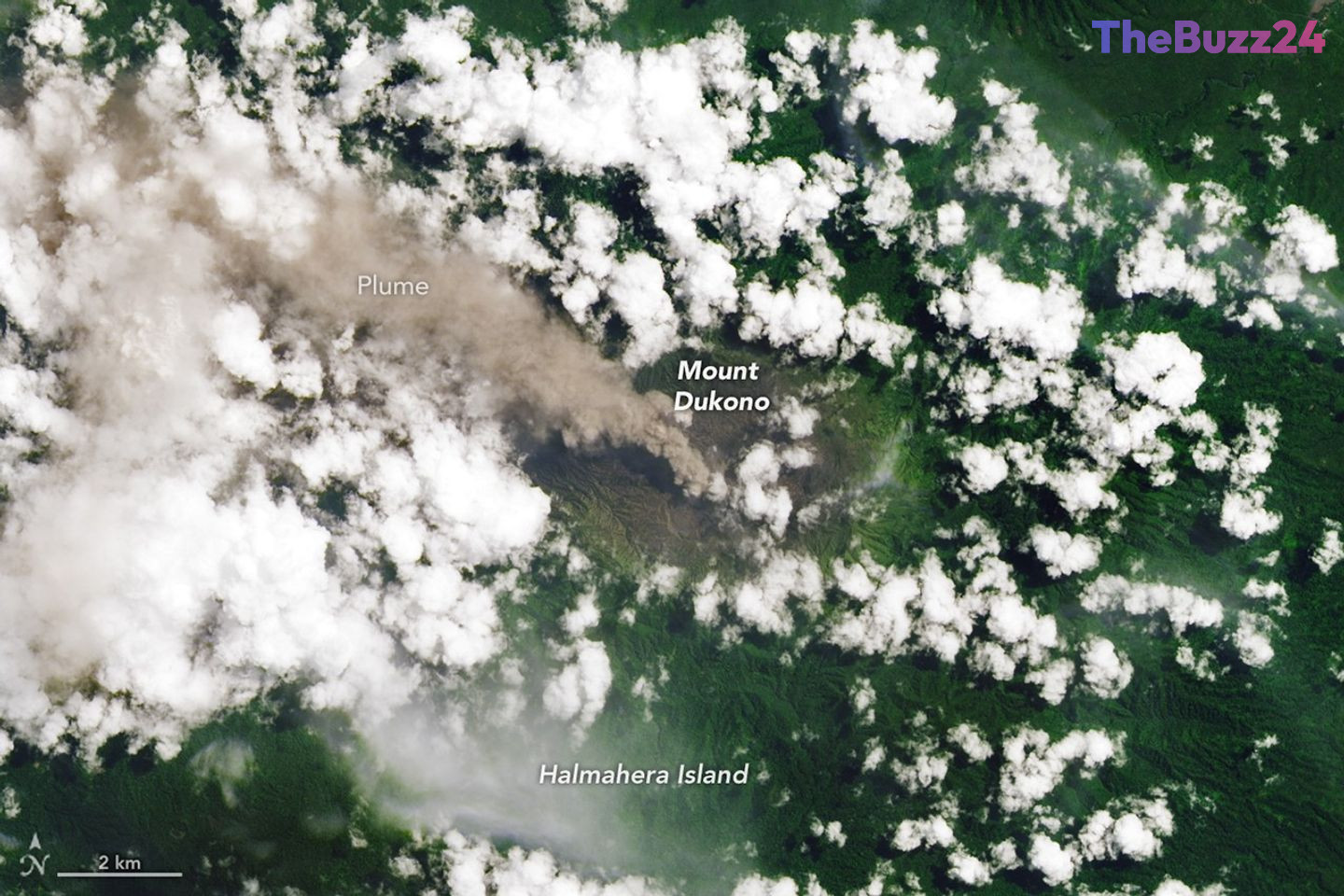
Mount Dukono’s Persistent Eruptions Highlight Indonesia’s Volcanic Activity
Indonesia continues to be a global hotspot for volcanic activity, currently hosting more actively erupting volcanoes than any other nation. Data indicates that the archipelago has seen eruptions at 55 different volcanoes since the 1960s, a figure that surpasses the activity levels recorded in Japan and the United States. Among these, Mount Dukono, situated on the northern end of Halmahera Island, remains one of the most consistently active, having maintained a near-continuous state of eruption since 1933.
The remote stratovolcano frequently emits ash and volcanic gases, occasionally ejecting semi-molten rock known as volcanic bombs. This persistent volatility resulted in a tragic incident on May 8, 2026, when a group of hikers was struck by falling ash and debris. Following the event, the mountain maintained a high level of intensity, with authorities documenting an average of 52 eruptive events daily between May 9 and May 16. During this period, ash plumes reached heights of up to 4,300 meters above the summit.
Satellite monitoring has confirmed ongoing thermal anomalies and significant sulfur dioxide emissions emanating from the site. In response to the heightened danger, local authorities have maintained an alert level of 2 on a 4-point scale. Officials have issued a strict warning to the public, mandating that all individuals remain at least 4 kilometers away from the crater to avoid the hazards posed by the unpredictable and ongoing volcanic activity.
AI Disclosure: This article is based on verified data and official reports. Our AI have cross-referenced every financial detail with primary sources to ensure total accuracy.
More from this Category