Breakthrough Material Discovery Paves the Way for Lunar Bases and Advanced Jet Engines
Researchers have reached a major milestone in materials science by developing a substance capable of enduring the extreme thermal environments required to process lunar regolith. This innovation offers a practical pathway for extracting vital resources such as oxygen, fuel, and metals directly from the Moon’s surface. By facilitating in-situ resource utilization, this development addresses the significant logistical and financial hurdles that have historically complicated the creation of permanent lunar outposts, effectively minimizing the necessity for expensive supply missions launched from Earth.
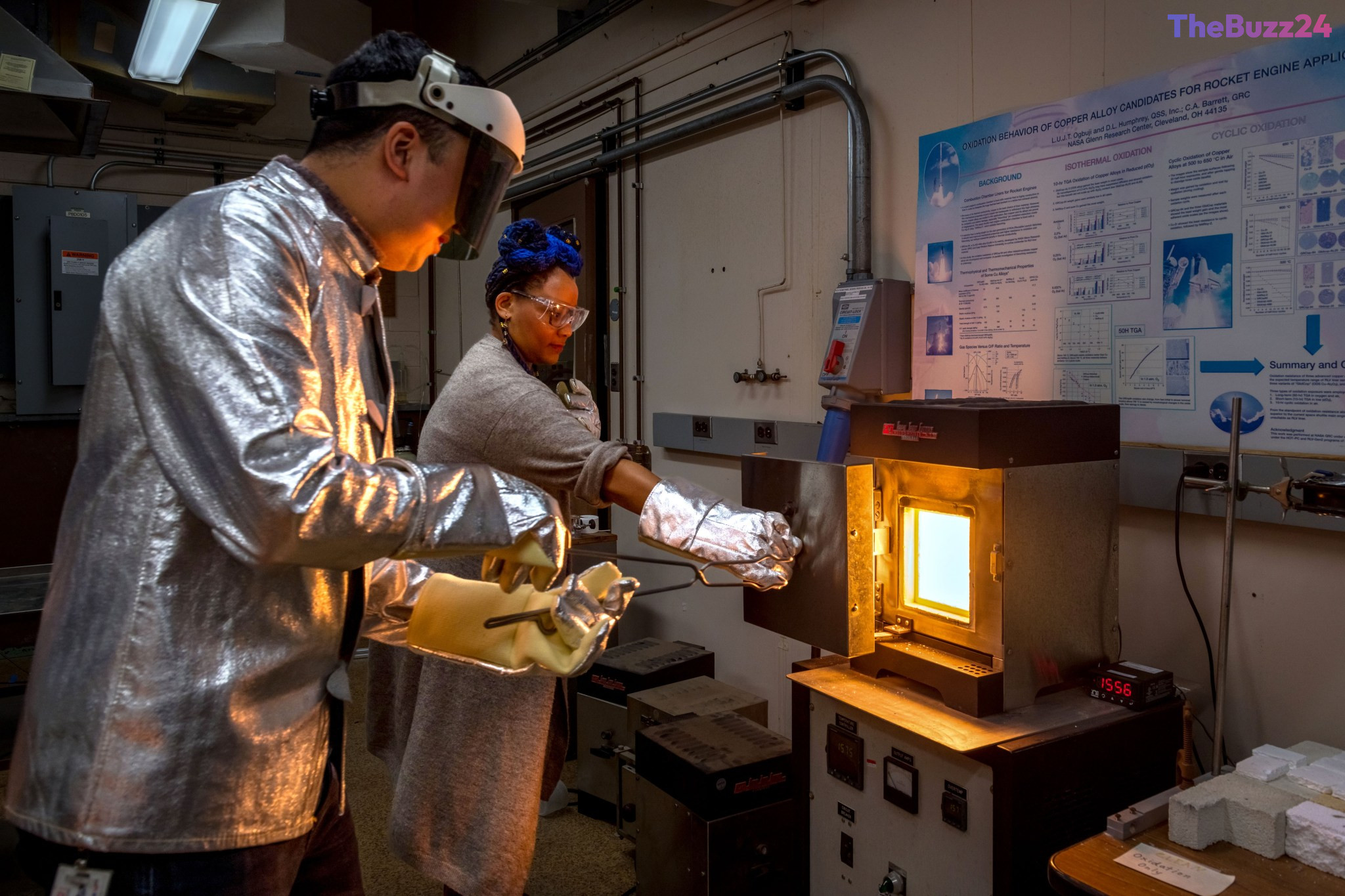
The research team, led by Dr. Kevin Yu and Dr. Jamesa Stokes, synthesized the material by combining simulated lunar dust with scandium oxide. When heated to temperatures surpassing 2,900 degrees Fahrenheit, the mixture undergoes a chemical transformation, resulting in a novel compound. This substance, which shifts from a pink powder to a light beige material during the heating process, exhibits exceptional durability and remains stable even when exposed to the corrosive properties of molten lunar rock.
Beyond its utility in space exploration, the material presents significant potential for terrestrial industrial applications. Its combination of low density and superior heat insulation makes it a viable, cost-effective alternative to precious metals like platinum. Currently, engineers are evaluating the substance for use in high-performance protective coatings, particularly for jet engine components that must withstand intense thermal stress. This discovery highlights the increasing synergy between space-focused research and industrial innovation, demonstrating how extraterrestrial exploration can yield transformative solutions for aerospace technology on Earth.
Key Takeaways
- A newly engineered material can withstand the extreme temperatures required to extract oxygen and fuel from lunar soil.
- The compound is created by heating a mixture of simulated lunar dust and scandium oxide to over 2,900 degrees Fahrenheit.
- The material's unique properties make it a potential low-cost substitute for platinum in high-heat industrial applications like jet engines.
Editor’s Analysis & Impact
This breakthrough marks a pivotal shift toward true in-situ resource utilization (ISRU), which is the cornerstone of any viable long-term lunar presence. By reducing the dependency on Earth-bound supply chains, this material lowers the barrier to entry for permanent lunar habitation. From a market perspective, the dual-use nature of this discovery is highly significant. If the material can be produced at scale, it has the potential to disrupt the high-temperature coatings market, currently dominated by costly precious metals. This development highlights a broader trend in the aerospace sector where extreme-environment research is increasingly yielding high-value, commercially viable materials. The ability to bridge the gap between deep-space requirements and terrestrial industrial needs will likely drive further investment in materials science, fostering a symbiotic relationship between space agencies and private manufacturing sectors.
Frequently Asked Questions
Q: Why is this material considered a game-changer for lunar exploration?
A: It allows for the local extraction of oxygen, fuel, and metals from lunar soil, which reduces the need to transport heavy, expensive supplies from Earth, making long-term lunar missions more sustainable and cost-effective.
Q: What are the potential uses for this material on Earth?
A: Due to its high heat resistance and low density, it is being explored as a protective coating for components in extreme environments, such as jet engines, where it could serve as a cheaper and more efficient alternative to platinum.
Q: How was the material created?
A: The research team combined simulated lunar dust with scandium oxide and heated the mixture to over 2,900 degrees Fahrenheit, resulting in a novel compound that showed exceptional stability against molten rock.
AI Disclosure: This article is based on verified data and official reports. Our Team and AI have cross-referenced every financial detail with primary sources to ensure total accuracy.
More from this Category