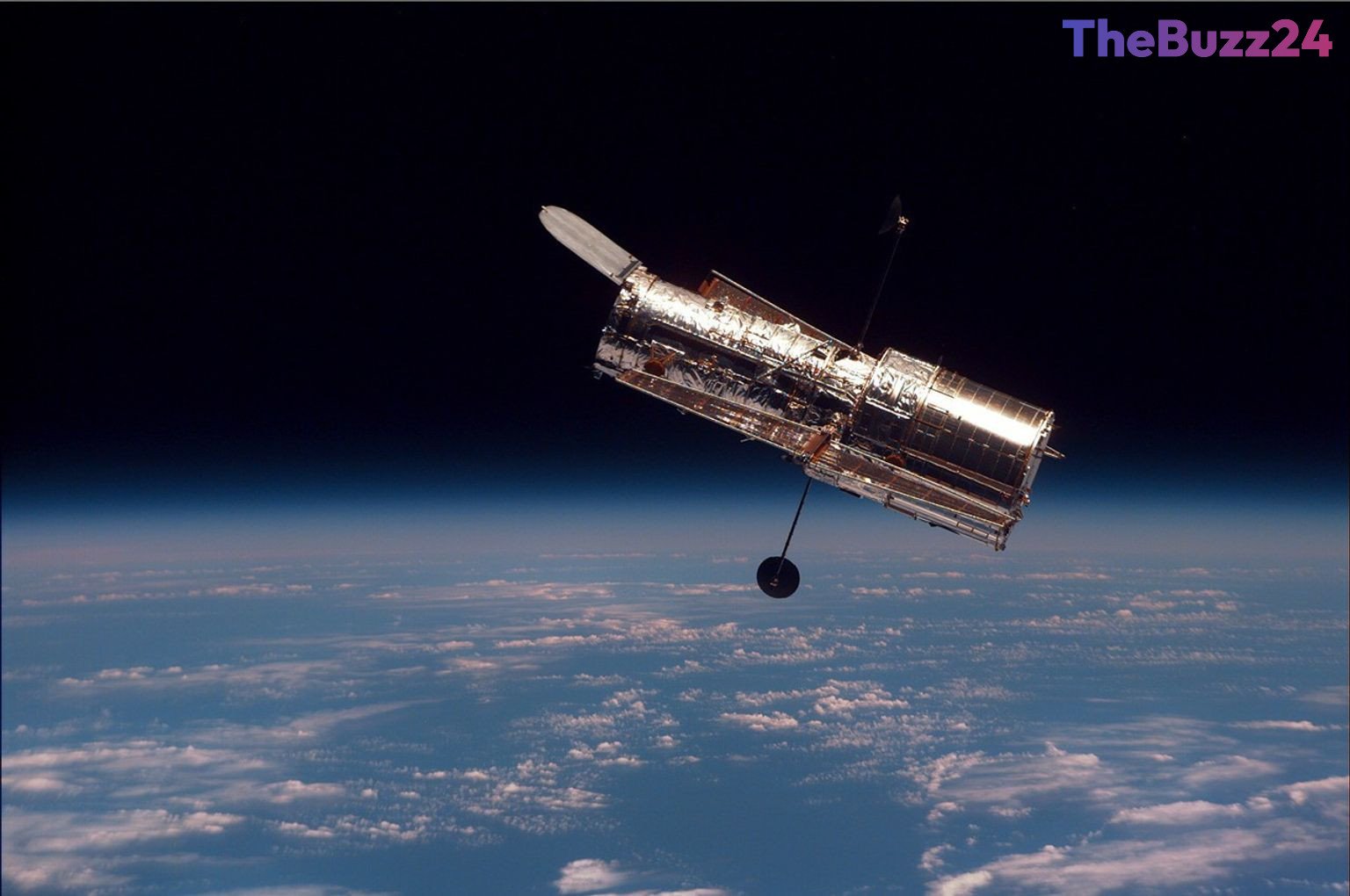
NASA Seeks Commercial Solutions to Prolong Hubble Space Telescope’s Historic Orbit
NASA is opening its doors to the private space sector to determine whether commercial spacecraft can service, boost, or safely deorbit the iconic Hubble Space Telescope. In a newly released Request for Information, the agency is exploring capabilities across the aerospace industry to evaluate feasible, cost-effective missions aimed at preventing the observatory’s premature orbital decay and expanding its scientific return.
Without an active onboard propulsion system, Hubble has been subject to continuous atmospheric drag over its three-and-a-half decades in low Earth orbit. Current orbital modeling predicts that the telescope could re-enter Earth’s atmosphere between 2033 and 2034 if left unattended. To counter this steady descent, mission planners anticipate that a specialized rendezvous spacecraft would need to dock with Hubble by approximately 2032 to either elevate its altitude or guide it through a controlled end-of-life disposal.
Beyond simply raising the observatory’s orbit, NASA is inviting proposals that could enhance its operational capabilities through in-space servicing. The rapid advancement of robotic rendezvous and satellite-capturing technologies among commercial operators has opened new avenues that were previously limited to government-crewed missions, such as the retired Space Shuttle program. Extending the lifespan of an already deployed flagship observatory offers substantial scientific rewards while maximizing investments already made by taxpayers.
Since its launch in 1990, Hubble has revolutionized astrophysics, operating as a joint effort between NASA and the European Space Agency. Day-to-day operations continue under the stewardship of Goddard Space Flight Center in Maryland, alongside Lockheed Martin Space and the Space Telescope Science Institute. By tapping commercial innovation, mission leaders hope to ensure the legendary telescope continues unveiling the mysteries of deep space well into its fourth decade.
Key Takeaways
- NASA has formally issued a Request for Information to evaluate commercial capabilities for servicing or re-boosting the Hubble Space Telescope.
- Hubble lacks onboard propulsion and is slowly falling toward Earth due to atmospheric drag, with natural re-entry anticipated around 2033–2034 without intervention.
- Any potential commercial mission would need to be executed by roughly 2032 to safely extend Hubble's observational life or execute a controlled deorbit.
Editor’s Analysis & Impact
NASA’s outreach to the private sector marks a critical pivot in how legacy space infrastructure is managed. With the Space Shuttle long retired, the agency is embracing the rapidly maturing in-space servicing, assembly, and manufacturing (ISAM) market. Commercial ventures have made significant strides in autonomous docking, propellant transfer, and orbital maneuvering. By soliciting commercial solutions for Hubble, NASA is not only attempting to stretch the lifespan of one of humanity’s most productive scientific instruments, but it is also stimulating commercial demand for high-stakes robotic satellite servicing. If a private mission successfully interfaces with Hubble, it will validate commercial capabilities for complex deep-space servicing and establish a blueprint for maintaining future government and private orbital assets indefinitely.
Frequently Asked Questions
Q: Why does the Hubble Space Telescope need an orbital boost?
A: Hubble orbits in low Earth orbit where faint atmospheric drag gradually slows the spacecraft down over time. Because it was designed without onboard propulsion engines, it cannot raise its own altitude, placing it on track to re-enter Earth's atmosphere by 2033–2034 without an external push.
Q: How was Hubble serviced in the past?
A: Hubble was originally designed to be serviced by astronauts aboard NASA's Space Shuttle fleet. Astronauts conducted five separate shuttle servicing missions between 1993 and 2009 to replace degraded components and install upgraded scientific instruments.
Q: What is the deadline for industry responses to the RFI?
A: Commercial organizations and aerospace contractors have until November 30 to submit their capabilities, technical concepts, and operational proposals to NASA.
AI Disclosure: This article is based on verified data and official reports. Our Team and AI have cross-referenced every financial detail with primary sources to ensure total accuracy.
More from this Category