NASA Taps Northrop Grumman for Advanced Weather Instruments on NOAA Satellites
NASA, acting on behalf of the National Oceanic and Atmospheric Administration (NOAA), has awarded a significant contract to Northrop Grumman Systems Corporation. The agreement, valued at $290.6 million, focuses on the development and production of Sounder for Microwave-Based Applications (SMBA) instruments. These cutting-edge instruments are destined for NOAA’s upcoming Near Earth Orbit Network (NEON) satellites, which are designed to enhance our understanding and prediction of Earth’s atmosphere.
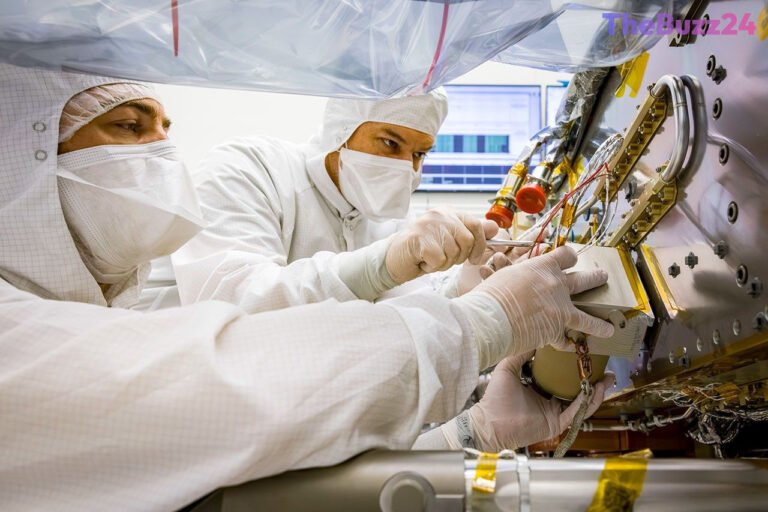
The contract, a hybrid of cost-plus-fixed-fee, firm-fixed-price, and time-and-materials, spans from November 23rd through April 1, 2042. Northrop Grumman will be responsible for the complete lifecycle of the SMBA instruments, encompassing design, development, manufacturing, rigorous testing, and ongoing mission support. This initiative aims to deliver three next-generation low Earth orbit microwave sounders, crucial for atmospheric monitoring.
Microwave sounders play a vital role in meteorology by providing essential data on atmospheric temperature and moisture levels, factors that profoundly impact weather systems. The advanced capabilities of the SMBA instruments are expected to lead to substantial improvements in medium-range weather forecasts issued by NOAA’s National Weather Service. The NEON mission itself is a collaborative effort between NASA and NOAA, with NOAA leading the mission’s operational aspects and funding, while NASA manages the satellite development and launch.
This partnership underscores the commitment of both agencies to leveraging advanced technology for critical environmental monitoring. By integrating commercial partners in the design and construction of the spacecraft and instruments, the NEON mission aims to foster innovation and efficiency in Earth observation. The data collected by these new instruments will be made available to users globally, contributing to a more informed approach to weather prediction and climate research.
Key Takeaways
- NASA has awarded Northrop Grumman a $290.6 million contract for advanced microwave sounder instruments for NOAA's NEON satellites.
- The SMBA instruments will enhance atmospheric temperature and moisture measurements, aiming to improve medium-range weather forecasts.
- The NEON mission is a joint NASA-NOAA project focused on next-generation Earth observation from low Earth orbit.
Editor’s Analysis & Impact
This contract award signifies a crucial investment in NOAA’s next-generation weather monitoring capabilities. By equipping the NEON satellites with advanced SMBA instruments, the U.S. is bolstering its capacity for accurate, medium-range weather forecasting. The collaboration between NASA and NOAA, alongside commercial partners like Northrop Grumman, highlights a strategic approach to leveraging technological advancements for critical environmental services. The long-term performance period suggests a sustained commitment to improving weather prediction, which has significant implications for public safety, agriculture, and various economic sectors reliant on predictable weather patterns. This initiative positions the U.S. at the forefront of atmospheric science and meteorological technology.
Frequently Asked Questions
Q: What is the primary function of the SMBA instruments?
A: The Sounder for Microwave-Based Applications (SMBA) instruments are designed to measure atmospheric temperature and moisture levels using microwave technology. This data is critical for understanding and predicting weather patterns.
Q: What is the Near Earth Orbit Network (NEON) mission?
A: The NEON mission is a collaborative project between NASA and NOAA focused on deploying satellites in low Earth orbit to gather advanced atmospheric data. NOAA leads the mission operations and funding, while NASA manages satellite development and launch.
Q: How will this contract benefit weather forecasting?
A: The advanced capabilities of the SMBA instruments are expected to significantly improve the accuracy and range of weather forecasts provided by NOAA's National Weather Service, particularly for medium-range predictions.
AI Disclosure: This article is based on verified data and official reports. Our Team and AI have cross-referenced every financial detail with primary sources to ensure total accuracy.
More from this Category