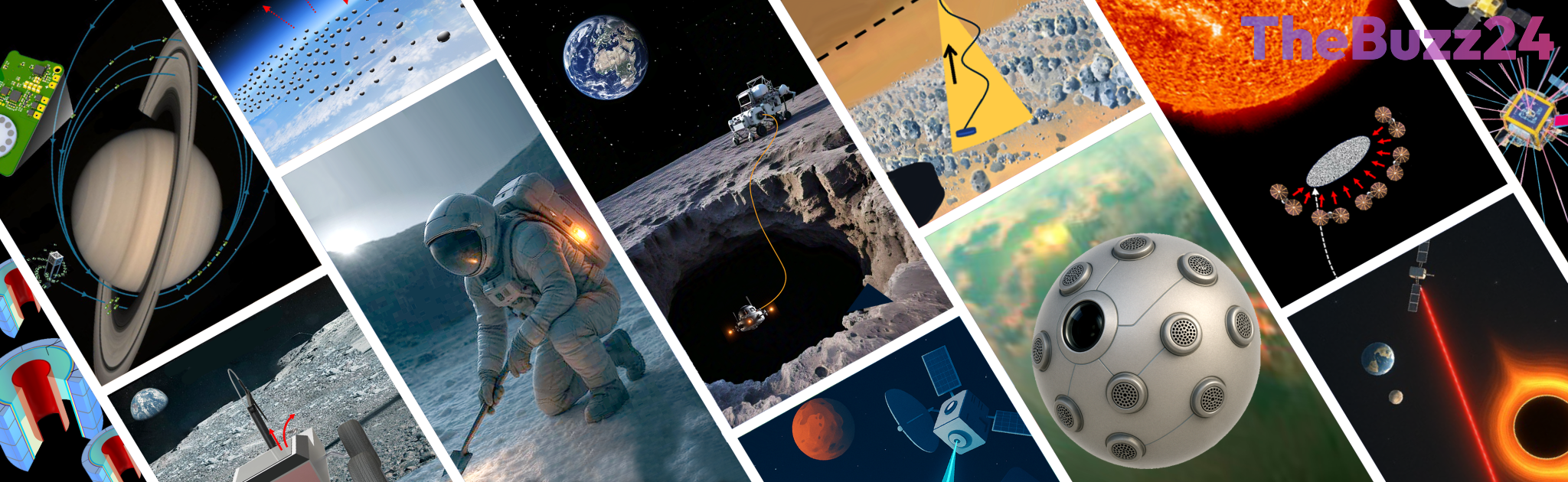
NASA Unveils Ambitious 2026 NIAC Concepts for Future Space Exploration
NASA has officially announced the selection of its 2026 Innovative Advanced Concepts (NIAC) awardees, highlighting a diverse array of futuristic technologies designed to push the boundaries of space exploration. The program, which focuses on early-stage research, aims to transform science fiction-like ideas into viable engineering solutions for future missions to the Moon, Venus, and beyond.
This year’s Phase I selections feature a wide range of cutting-edge proposals, including advanced power generation systems, novel propulsion methods, and sophisticated sensing technologies. Among the notable projects are the ‘DimSun’ concept, which explores using controllable dust clouds to manage solar insolation, and the ‘EARENDIL’ project, designed to support astronaut operations in the harsh, icy environments of deep space. Other proposals focus on lunar exploration, such as the ‘LUX’ project, which utilizes power-over-fiber technology to enable underground exploration on the Moon.
The selection also emphasizes the importance of miniaturization and autonomy in space missions. Projects like the ‘Actively Steerable Femtosat Constellations’ aim to revolutionize how we study planetary rings and atmospheres by deploying swarms of tiny, coordinated satellites. Meanwhile, researchers are looking at innovative materials and robotics, such as robotically assembled electromagnetic metamaterials, to enhance long-range space situational awareness and planetary resource surveys.
By funding these high-risk, high-reward concepts, the program continues to foster a culture of innovation within the aerospace sector. These studies represent the initial steps in a long development pipeline, providing the foundational research necessary to address the complex challenges of navigating, powering, and surviving in the extreme conditions of the solar system.
Key Takeaways
- NASA has selected a new cohort of NIAC Phase I concepts aimed at radical advancements in space mission capabilities.
- The 2026 projects cover a broad spectrum of technologies, including solar management, deep-space power generation, and autonomous satellite swarms.
- These early-stage studies are designed to bridge the gap between theoretical research and practical application for future planetary and interstellar exploration.
Editor’s Analysis & Impact
The 2026 NIAC selections underscore a strategic shift toward modular, autonomous, and highly efficient space technologies. By prioritizing concepts like femtosat constellations and solid-state propulsion, the industry is signaling a move away from monolithic, expensive spacecraft toward more resilient, distributed systems. This approach not only reduces the risk of mission failure but also lowers the barrier to entry for complex exploration tasks, such as subterranean lunar mapping or deep-space resource surveying. The inclusion of diverse academic and private sector partners suggests a robust ecosystem of innovation that is increasingly capable of tackling the ‘impossible’ challenges of the next decade. As these technologies mature, they will likely become the backbone of sustainable human and robotic presence in the solar system, fundamentally altering the economics and feasibility of deep-space operations.
Frequently Asked Questions
Q: What is the NIAC program?
A: The NASA Innovative Advanced Concepts (NIAC) program is an initiative that funds early-stage, visionary research into futuristic aerospace technologies that could change the future of space exploration.
Q: What happens after a project is selected for NIAC Phase I?
A: Phase I projects receive funding to conduct initial feasibility studies. If successful, these concepts may eventually compete for further funding in subsequent phases to advance their technical readiness levels.
AI Disclosure: This article is based on verified data and official reports. Our Team and AI have cross-referenced every financial detail with primary sources to ensure total accuracy.
More from this Category